USN flexes naval interoperability with major Asia-Pacific partners at ‘Malabar 2020'
The US Navy (USN) is demonstrating its ability to interoperate multilaterally with its largest Asia-Pacific partners at the 2020 iteration of exercise ‘Malabar’. The drills, which are being hosted by New Delhi in the Bay of Bengal, also involve the Japan Maritime Self Defense Force (JMSDF) and the Royal Australian Navy (RAN), with the latter featuring in the exercise for the first time since 2007 after accepting an invitation from India.
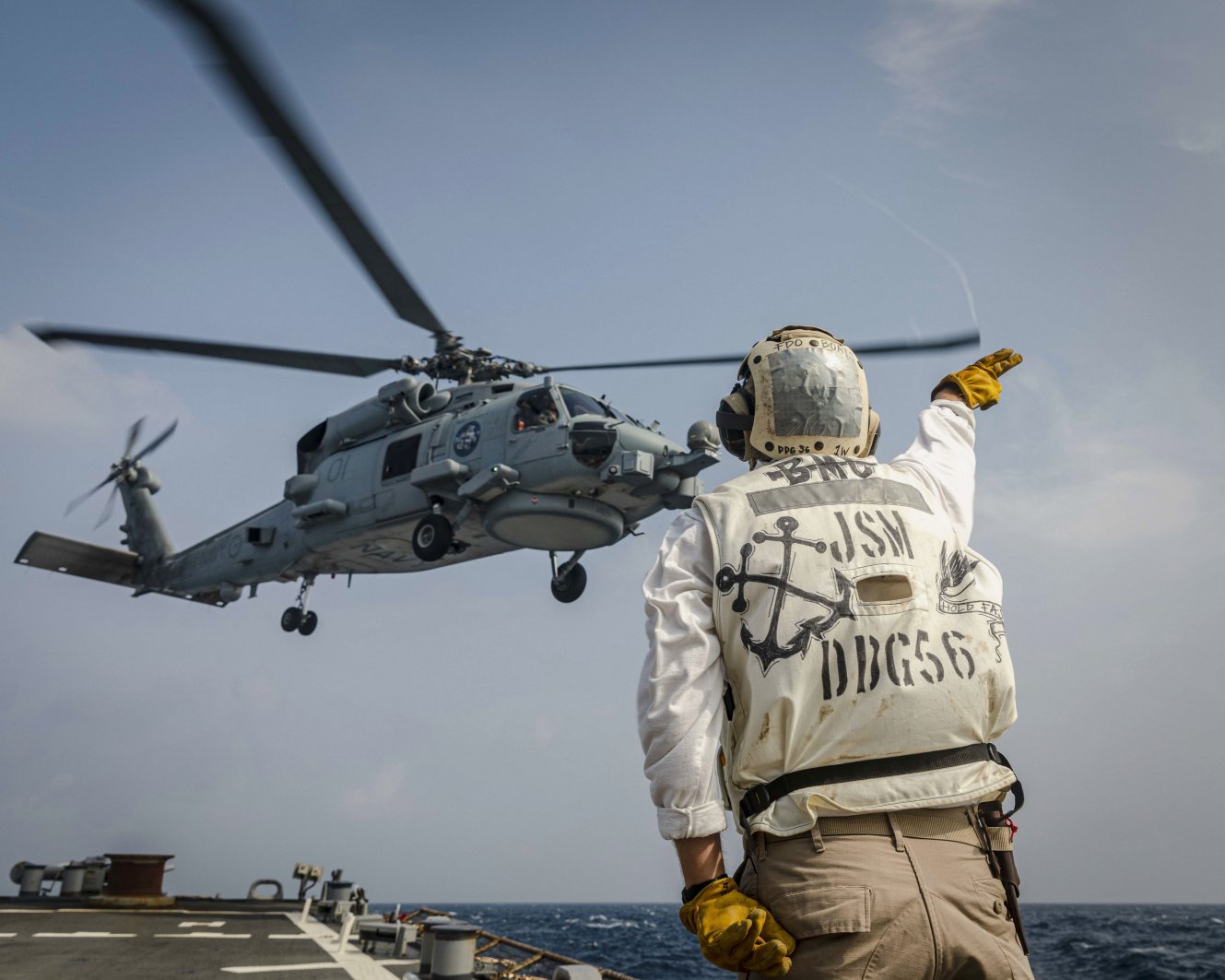
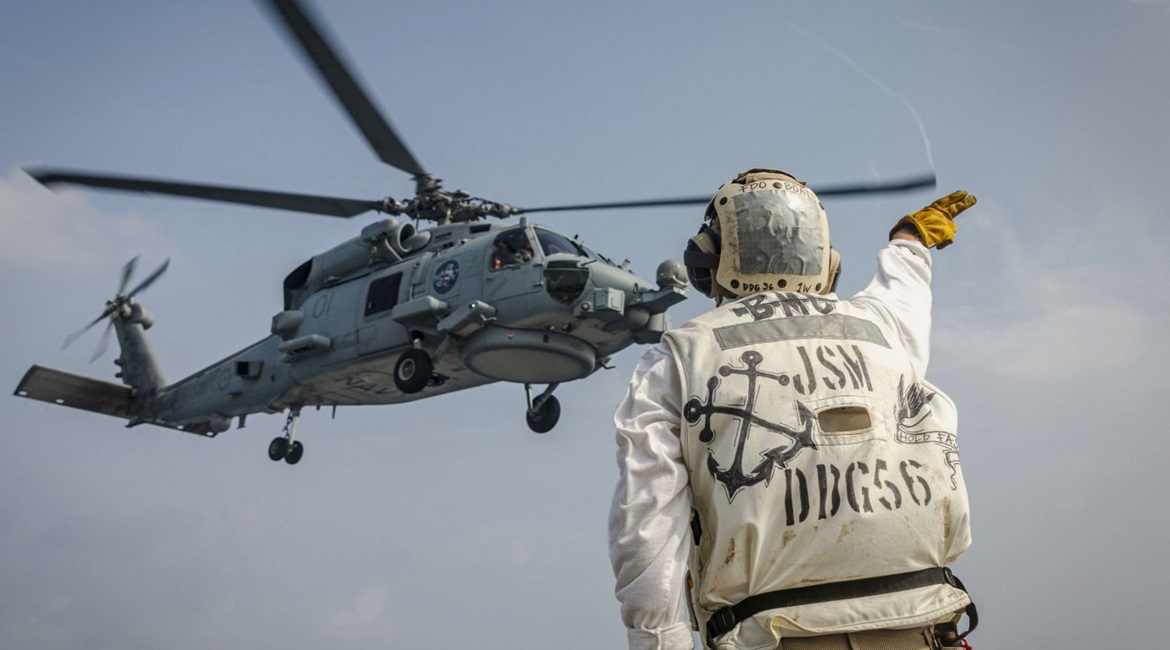
An MH-60R Sea Hawk helicopter from the Royal Australian Navy Anzac-class frigate HMAS Ballarat (FFH 155) takes off from the flight deck of the Arleigh Burke-class guided-missile destroyer USS John S. McCain (DDG 56) as part of ‘Malabar 2020’. (US Navy)
The iteration’s at-sea activities include a variety of high-end tactical training, including specific interactions that are designed to enhance interoperability between the four services. These include cross-deck helicopter landings, such as those undertaken by an RAN MH-60R helicopter onboard the USN’s Arleigh Burke-class guided-missile destroyer, USS John S. McCain (DDG 56).
The Pentagon has continually cited the need to strengthen relationships with US partners, especially in the Western Pacific, to contain China’s ambitions. Speaking to the policy institute RAND in September, US Secretary of Defense Mark Esper called such relationships a strategic advantage. He noted the Indo-Pacific as the priority US theatre, with the objective being to push back against China.
US Navy officers involved in this year’s Malabar underscored that sentiment. India, Japan, and Australia form the core of our strategic partners across the Indo-Pacific,” Captain Steven DeMoss, commodore, Destroyer Squadron Fifteen (DESRON 15), said in statement. “It is fitting to see our navies operate in a high-end, tactically relevant exercise like Malabar. It is another opportunity to further strengthen our combined capabilities and enhance our partnerships.
Go beyond the headlines - with direct links to interconnected entities
Get full access to validated equipment, military capabilities, and market insights.