Special Report: Small-arms ammunition makers adapt more rounds to shoot down UAVs
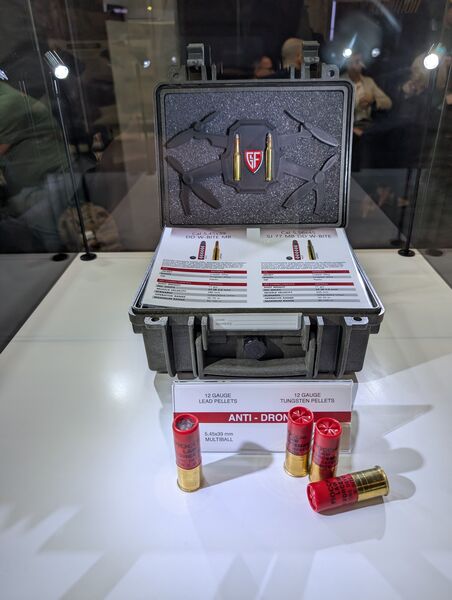

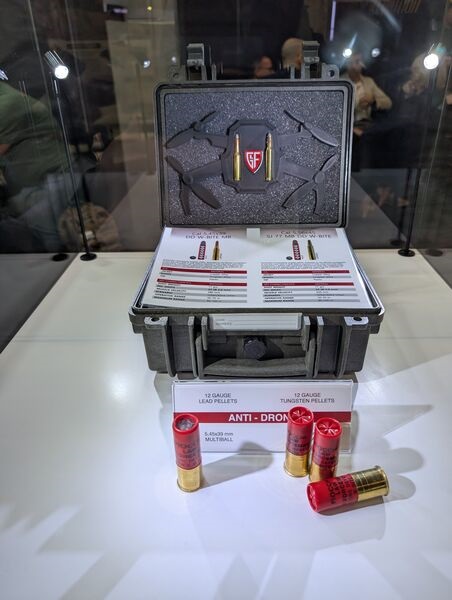
Fiocchi 12-gauge anti-drone ammunition (Janes/Sean Reardon)
Over the course of the fighting in Ukraine since February 2022 it has become apparent that dismounted soldiers serving on or near the front line are poorly defended against the threat posed by armed, so-called ‘kamikaze', first-person-view (FPV) unmanned aerial vehicles (UAVs).
Shotguns
Shotguns quickly entered service, finding official and unofficial routes to Russian and Ukrainian units alike. 12-gauge counter-UAV (C-UAV) shotgun ammunition was the earliest entrant, with common chambering in military and civilian shotguns. Ammunition manufacturers have produced a wide array of dedicated C-UAV cartridges configured to maximise range, dispersion, and kinetic energy on target. This has primarily been achieved through the use of high-density tungsten shot ,which can be fired from military and civilian shotguns.
FPV UAVs can move in excess of 140 km/h, with a reported one to ten second window of engagement. Adaptation has come in the form of a specialist squad member, required to identify and engage targets whilst carrying a shotgun and their service weapon. The kinetic energy of tungsten C-UAV shot is superior to lead shot. However, the ballistic characteristics of shotguns limit their effective range to around 100 m. Given ammunition incompatibility and the need for vigilance and rapid reaction, C-UAV shotgun specialists are unlikely to be able to perform other duties during operations, certainly while in certain high-threat areas.
One of the benefits of C-UAV shotguns is lower firing pressure than rifles, variable chokes, and the lack of rifling, meaning a wide array of projectiles can be fired. Some manufacturers have said that the 12-gauge cartridges have enough volume to house fuzed solid or explosive projectile.
Go beyond the headlines - with direct links to interconnected entities
Get full access to validated equipment, military capabilities, and market insights.