Belt and Road Monitor, Edition 15, 2026
This edition of the Belt and Road Monitor covers developments from 1 to 31 March 2026. If you enjoy our Belt and Road coverage, consider checking out Janes IntelTrak, a visual analytics tool that tracks and maps the global activities of Chinese and Russian companies in real time and includes expanded analysis of projects highlighted in 'Top Developments.' The monitor draws from transactional data collected daily by our proprietary tool, Janes IntelTrak, as well as research compiled by our team of analysts.
Belt & Road at a glance
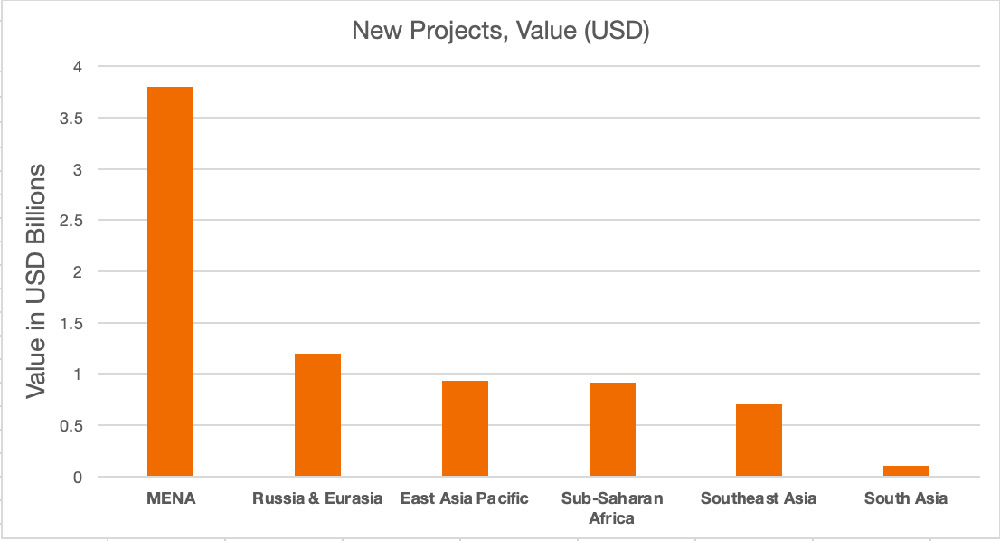
Value of all new BRI projects

USD7.7 Billion
(Estimated)
Middle East & North Africa
the Region with the highest value of new bri projects
Largest New Transaction
USD 1.9 Billion
Solar Power & battery storage Project
ABU DHABI, united arab emirates
5
Highway and Road Construction Transactions

Chinese BRI Transactions in USD Billions
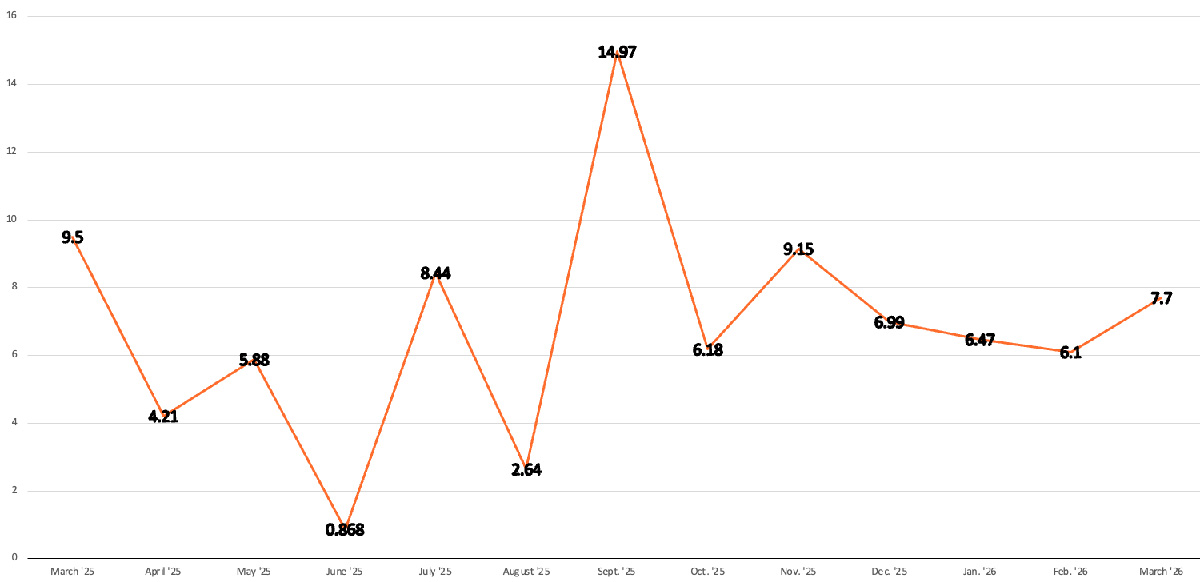
Graph notes: These transactions include Chinese loans, grants, contracts, and subcontracts across multiple BRI-linked sectors. The graph depicts transactions involving Chinese entities operating overseas, which could include both Chinese-funded projects and foreign-funded projects.
Belt and Road Initiative top developments
Geely Satellite Subsidiary Geespace Advances International Expansion Plans
On 9 March 2026, Geespace signed agreements with the Algerian Space Agency and Morocco-based Soremar Group demonstrating a dual-track approach to market entry. In Algeria, the company is pursuing upstream integration through the development of a domestic satellite manufacturing facility and a research and applications centre. In Morocco, Geespace is focusing on downstream service integration, commercialising its GEESATCOM platform to support satellite-enabled communications for maritime and logistics operations.
PowerChina Developing Integrated Solar-Storage Project in Abu Dhabi
On 12 March 2026, PowerChina signed a USD1.9 billion engineering, procurement, and construction (EPC) contract to develop a large-scale hybrid renewable project in Abu Dhabi. The solar and storage project is expected to take 21 months to build, combining 2.1 gigawatts (GW) of solar capacity with 7.75 gigawatt hours (GWh) of battery storage to deliver clean energy and support grid stability.
Huawei’s Smart City Programme to Expand Surveillance Across Guinea
On 13 March 2026, Guinea’s National Transitional Council (CNT) ratified a USD56 million financing agreement with the Export-Import Bank of China (China EXIM Bank) for a 'Smart City' programme. Plans include the installation of 324 surveillance sites across eight Guinean cities. Huawei will provide equipment for the project including 900 portable communication terminals for police and security officers, and 100 mobile terminals. To support this, six LTE base stations will be built around the country, establishing a secure private wireless broadband network for law enforcement use only.
Vietnam’s Police-owned Telecom in 5G Talks with Chinese Firms Marking Gradual Sector Opening to China
As of 20 March 2026, Vietnam’s state-owned telecommunications operator Mobifone is negotiating with multiple Chinese technology companies to develop parts of its 5G network, marking a notable shift in Vietnam’s earlier posturing of limiting Chinese firms’ presence in Hanoi’s telecom sector. Mobifone, which falls under the Ministry of Public Security's authority, is planning to roll-out a tender for 5G antennas.
Cross-Border Rail to Deepen Economic Integration Between China and Northern Vietnam
On 25 March 2026, Vietnam and China signed co-operation agreements to expand cross-border railway connectivity, outlining two standard-gauge railways for the Hanoi–Dong Dang and Haiphong–Ha Long–Mong Cai routes. This could deepen economic intergration between the two countries.
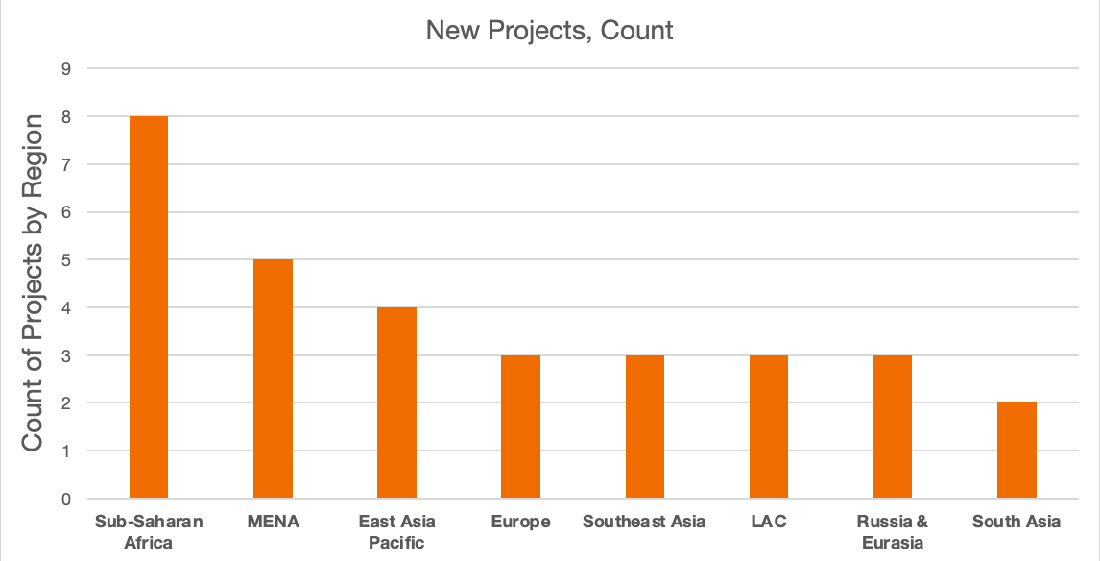
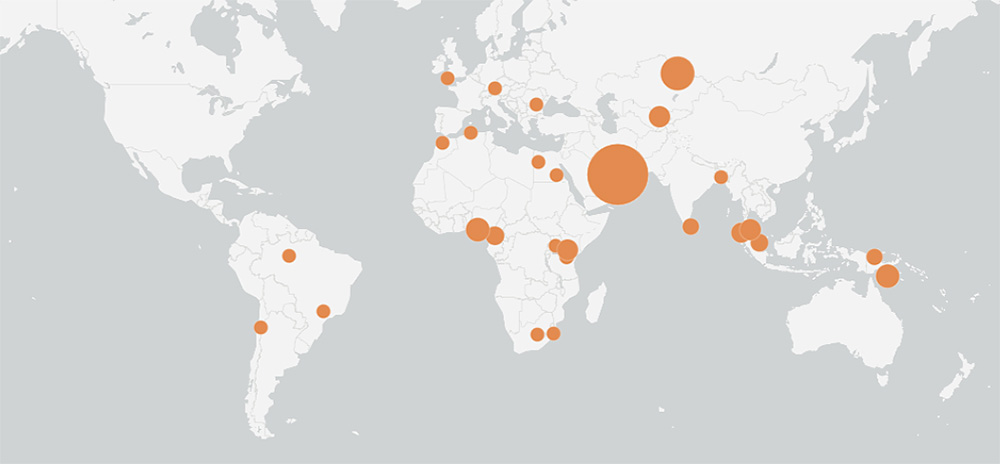
New Project Locations by Value
What They're Saying
MERICS, Mercator Institute for China Studies
On the relative importance of China’s bilateral relationships with Russia and Iran.
“Despite Iran’s inclusion in what Western foreign-policy experts dub the “axis of upheaval” alongside China, Russia, and North Korea, Beijing’s muted reaction to the US-Israeli war on Iran shows that Tehran is not central to its geopolitical strategy in the way Moscow is. While Xi Jinping was willing to risk straining ties with the US and EU by supporting Russia through diplomatic and economic means after the 2022 invasion of Ukraine, Beijing’s approach to Iran since the beginning of March reflects cool economic and geopolitical pragmatism rather than any anti-Western ideology.”
By the Numbers