Hizbullah activity monitor: 1-31 October 2026
The report provides an operational update on the Israel-Hizbullah conflict in Lebanon. It highlights the notable events and operations that were conducted by the Lebanese Armed Forces (LAF), Hizbullah, and the Israel Defense Forces (IDF) between 1-31 October 2026, and provides an assessment on the conflict in the one to six months outlook.
Lebanon’s domestic stability
Assessment 1: Janes assesses that the Lebanese government’s condemnation and ban of Hizbullah’s military activities indicate that the government is willing to deploy the Lebanese Armed Forces (LAF) and the state’s security forces to disarm Hizbullah according to the Israel-Lebanon framework agreement of 26 June 2026.
As noted by the statements of Hizbullah’s secretary general and members of parliament between September and October 2026, Hizbullah remains very unlikely to voluntarily disarm and dismantle its military infrastructure in areas north of Litani River while the IDF's operations and presence continue in southern Lebanon.
Attempts by the LAF and security forces to disarm Hizbullah in areas north of Litani River will very likely increase the risk of protest and riots by the supporters of Hizbullah and Amal Movement in Beirut and southern Lebanon. This in turn increases the risk of violent altercations between the LAF and Hizbullah supporters, further exacerbating the risk of social instability in affected areas in Lebanon in the 6-12 months outlook.
Based on protest events in Lebanon that were recorded by Janes between 2023 and 2026, pro-Hizbullah demonstrations are likely to occur in Beirut city centre and the city's southern suburb. Demonstrators frequently disrupt traffic along main motorways connecting Beirut’s city centre and international airport. The presence of LAF and security forces in Beirut city and its southern suburb mitigates traffic disruptions as evidenced by protest events in Beirut that were recorded by Janes in 2025 and 2026.
The Israel-Hizbullah framework agreement of 26 June 2026 will likely increase political tensions between Hizbullah and the Lebanese government. This is evidenced by the statements made by Hizbullah’s secretary general and members of parliament regarding the framework agreement between June and October 2026. Political tensions between Hizbullah and the Lebanese government are mitigated by the mediation of the Speaker of Parliament and Head of Amal Movement, Nabih Berri, who often plays a reconciliatory role between Hizbullah and the Lebanese government.
Despite affirming its objection to the Israel-Lebanon framework agreement, Hizbullah did not claim to have conducted any military operations against the IDF between 1 July and 31 October 2026. Instead, Hizbullah will very likely negotiate security arrangements with the Lebanese government that would potentially be similar to the mechanism established by the LAF between November 2024 and March 2026. If such an arrangement materialises in the six months outlook, it would likely allow Hizbullah to informally disarm and dismantle its military infrastructure in areas south of Litani River in coordination with the LAF.
As highlighted by official Israeli and Lebanese statements, the Israel-Lebanon framework agreement was partially intended to decouple Lebanon from the US-Iran ceasefire negotiations. On 17 June 2026, Lebanese President Joseph Aoun said in a statement on his account on X (formerly Twitter) that Lebanon supported the US-Iran ceasefire announcement in June; however, the Lebanese state affirmed its independent course of negotiations. Aoun added that any settlement related to Lebanon could only be achieved through negotiations with the Lebanese government, and not at its expense. For their part, Iran and Hizbullah officials maintained their assertion that the US-Iran memorandum of understanding of June 2026 included US guarantees of a cessation of hostilities in Lebanon.
Assessment 2: The substantial damage to infrastructure and the displacement of civilians in southern Lebanon will very likely negatively impact the economic and social stability in the affected areas in the 12-24 month outlook.
The World Bank’s Lebanon Economic Monitor, published in August 2026, noted that Lebanon entered 2026 on a path of economic stabilisation; however, the renewed escalation of conflict between Israel and Hizbullah in March 2026 has reversed this path and put Lebanon’s economy under significant strain.
As noted by the World Bank, the escalation of conflict resulted in a heavy humanitarian toll, triggered mass internal displacement, and caused significant damage to housing and infrastructure, particularly in southern Lebanon and the southern suburbs of Beirut. The World Bank concluded that the economic losses of the conflict have redirected the attention of the Lebanese government towards crisis response and increased uncertainty towards Lebanon’s economic outlook.
Events
2 October
Lebanese Prime Minister Nawaf Salam said in a statement on his account on X (formerly Twitter) that the Lebanese government affirmed its objective to ensure the complete Israeli withdrawal from the Lebanese territory. Salam added that the Lebanese government was committed to extending its authority over the entirety of Lebanon in accordance with the Israel-Lebanon framework agreement.
According to Salam, the framework agreement was built on reciprocity and phased implementation. However, Salam noted that the agreement lacked a defined timeline for an Israeli withdrawal from southern Lebanon. Salam also noted that the agreement lacked legal obligations for implementation, since the agreement was a political arrangement or roadmap, and not a legally binding treaty or convention.
15 October
Lebanese President Joseph Aoun said in a statement on his X account that he requested US Secretary of State Marco Rubio to press Israel to halt its military operations in southern Lebanon in order to allow farmers to return to their farmland in southern Lebanon.
23 October
Lebanese newspaper al-Modon said that a round of US-mediated negotiations was held between Israel and Lebanon at the United States Central Command (CENTCOM) headquarters in Florida, United States. As reported by al-Modon, the negotiations were held on 20 and 21 October 2026 and included military delegations from Israel, Lebanon, and the United States. As reported by al-Modon, the round of negotiations did not result in agreement or progress in the de-escalation process of the conflict in Lebanon.
According to al-Modon, the LAF representatives rejected proposals to create a direct coordination mechanism between the LAF and IDF while the Israeli military operations continue in southern Lebanon. As noted by al-Modon, the demands of the Lebanese delegation were instead centred around calling for Israeli withdrawal, the deployment of the LAF in southern Lebanon, the release of Lebanese detainees by the IDF, the return of displaced civilians and the launch of reconstruction projects in southern Lebanon.
On 20 October 2026, Asharq al-Awsat newspaper reported that Israel declined a Lebanese proposal that called for Israel to halt its military operations in southern Lebanon for a period of two months; until 20 December 2026. According to Asharq al-Awsat, the Lebanese proposal aimed to facilitate the LAF’s deployment in southern Lebanon, Israeli withdrawal from southern Lebanon, and the launch of the demarcation process of the Israel-Lebanon border.
30 October
Lebanon’s Ministry of Public Health reported on its website that the cumulative number of casualties as a result of the conflict in Lebanon was 16,817 casualties between 2 March and 30 October 2026. The cumulative number of casualties included 4,389 killed and 12,428 injured. This included 261 children killed and 1,059 injured in various parts of Lebanon during this period.
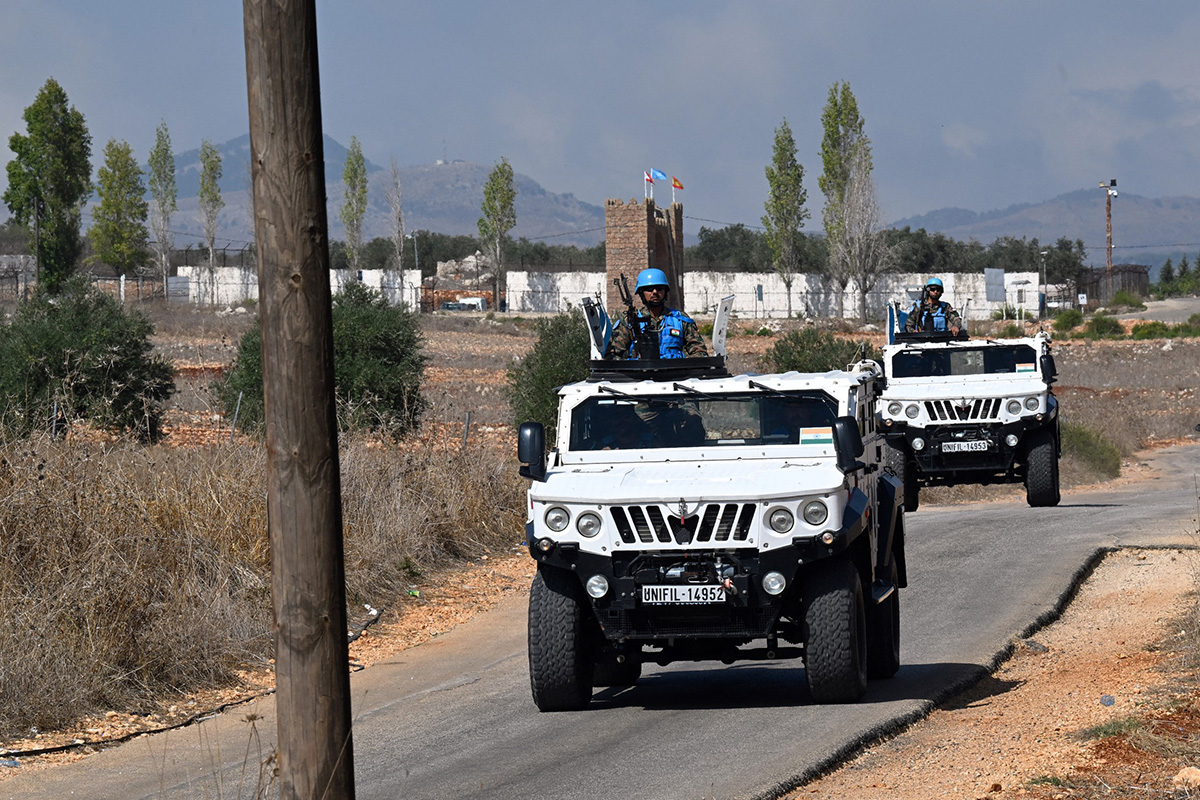 A convoy of armoured vehicles from the Indian contingent of the UNIFIL moves past the UNIFIL's Spanish contingent base in Lebanon's southern border village of Ebel al-Saqi on 13 October 2026.
Image credit: Joseph Eid/AFP via Getty Images
The UNIFIL mandate in southern Lebanon
Assessment
The Lebanese government has stated its preference to extend the mandate of the United Nations Interim Force in Lebanon (UNIFIL). The Lebanese government also remains likely to accept the deployment of an alternative international force in southern Lebanon if the government is unable to extend the UNIFIL mandate, which is set to end on 31 December 2026.
On 28 August 2025, the United Nations Security Council (UNSC) said on its official website that it voted not to renew the UNIFIL’s mandate in Lebanon. Adopted as UNSC Resolution 2790 of 2025, the vote requires the UNIFIL to cease its operations on 31 December 2026 and to fully withdraw from southern Lebanon within no more than one calendar year. The United States’ representative at the UNSC welcomed the vote and said that the US would not support further extension of the UNIFIL deployment in Lebanon.
As noted by the statements of the Lebanese president and prime minister in September and October 2026, the Lebanese government stated its preference to extend the UNIFIL’s mandate in Lebanon, which would require a new UNSC vote. If extending the UNIFIL’s mandate was not possible, the Lebanese government said it would accept the deployment of alternative international forces in southern Lebanon in accordance with the UNSC Resolution 1701 of 2006.
Events
17 September
Pro-Hizbullah Lebanese newspaper al-Akhbar reported that Hizbullah stated its rejection of the presence of international military or security forces in southern Lebanon unless they are affiliated with the UN or are operating according to the UNSC Resolution 1701 of 2006.
According to al-Akhbar, Hizbullah refused to consider the Israel-Lebanon agreement of 26 June 2026 as a framework for deploying international forces in southern Lebanon and claimed that Hizbullah would not accept actions that were taken under this agreement. Instead, Hizbullah said it considered the Israel-Lebanon ceasefire agreement of 27 November 2024 as the main basis for negotiations regarding the potential deployment of alternative international forces in Lebanon.
23 September
Lebanese President Joseph Aoun said in a statement on X that Lebanon welcomed alternative forces in southern Lebanon if extending the UNIFIL mandate was not possible. Aoun added that Lebanon would expect the alternative international forces to resume implementing UNSC Resolution 1701 and support the LAF in extending the Lebanese state’s authority in southern Lebanon. According to Aoun, failure to extend the UNIFIL mandate and the absence of alternative forces would create a security vacuum, especially if Israeli control of the southern villages continues.
2 October
Lebanese Prime Minister Nawaf Salam said on his X account that the Lebanese government wanted to ensure that no security vacuum occurs in southern Lebanon after the UNIFIL mission ends. Salam added that Lebanon remains in need of an international force to be present in southern Lebanon under the mandate of the UNSC.
14 October
Lebanon’s President Joseph Aoun said on his X account that Lebanon was committed to the continued presence of UNIFIL, given the importance of the role it has played since the start of its mission in 1978. Aoun added that the continued IDF military operations and control of the southern villages in southern Lebanon, most of which fall within UNIFIL’s areas of operations, make the presence of international forces in southern Lebanon of significant importance. According to Aoun, the withdrawal of UNIFIL would result in the absence of international oversight over what is happening in southern Lebanon, as well as the essential humanitarian and logistical services provided by it in southern Lebanon.
17 October
Lebanon’s President Joseph Aoun said in a statement on his X account that Lebanon had requested the UNSC to extend the UNIFIL mandate through 2027. If extending the UNIFIL’s mandate was not possible, Aoun said that the Lebanese government would welcome an alternative formula that would ensure an international presence in southern Lebanon and this aims to prevent a security vacuum. As noted by Aoun, this aims to avoid a scenario where the LAF are left in direct contact with the IDF along the IDF-controlled areas in southern Lebanon.
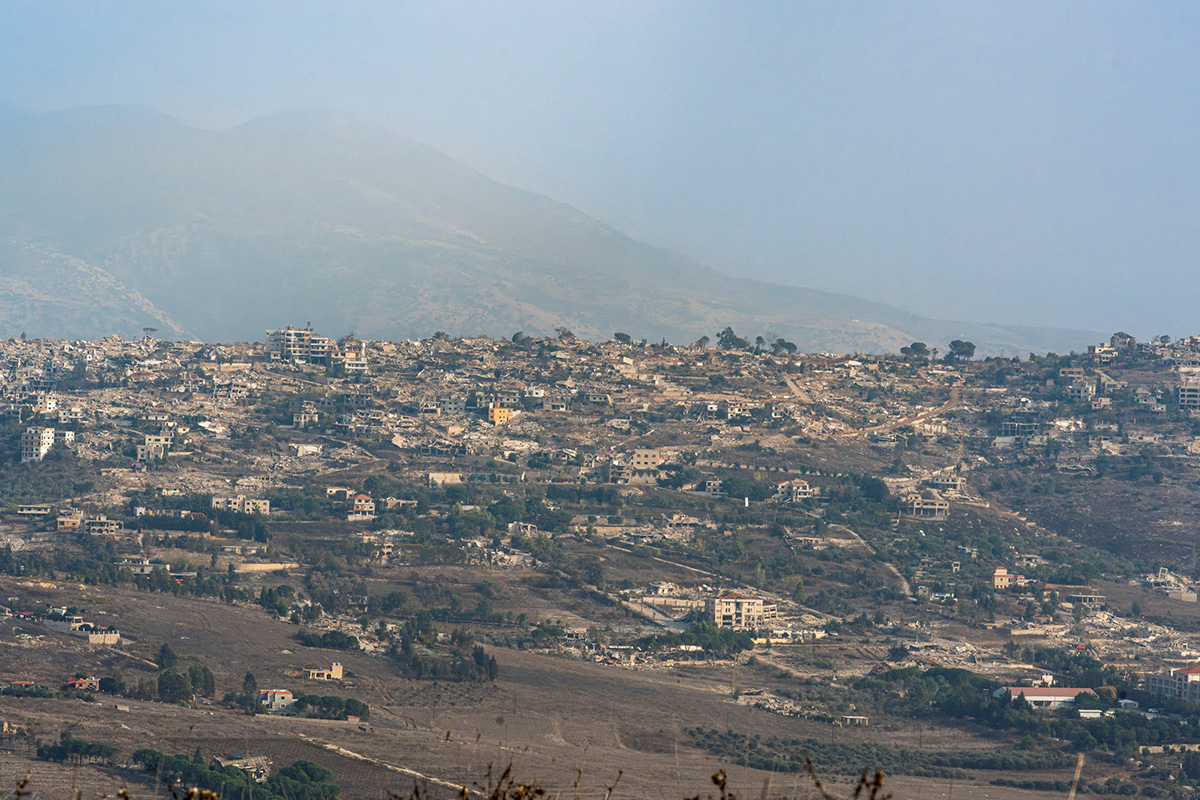 A view shows the village of Khiam in Nabatieh, southern Lebanon on 29 October 2026.
Image credit: Silvia Casadei/Middle East Images/AFP via Getty Images
LAF operational update
Assessment
According to LAF statements between March and October 2026, the LAF will likely continue to prioritise its security operations in southern Lebanon as part of the implementation process of the Israel-Lebanon framework agreement. As noted by the LAF’s statements in September and October 2026, the continued Israeli operations and presence in southern Lebanon had negatively impacted the LAF’s ability to conduct its security operations as part of the framework agreement.
Based on the statements of Hizbullah’s secretary general and members of parliament between September and October 2026, Hizbullah remains very unlikely to voluntarily disarm and dismantle its military infrastructure in areas north of Litani River while the IDF's operations and presence continue in southern Lebanon. As noted by the statements of Hizbullah’s members of parliament in October 2026, attempts by the LAF and security forces to disarm Hizbullah in areas north of Litani River increase the risk of violent altercations by the LAF and supporters of Hizbullah, particularly in Beirut’s southern suburb and Beqaa region.
Events
1 October
The LAF said it seized around 245kg of highly explosive Trinitrotoluene (TNT) material, four explosive devices, eight detonators and electrical wires for detonators, that were being smuggled from Syria into Lebanese territory in northeastern Lebanon.
8 October
Lebanon’s President Joseph Aoun said in a statement on his X account that the LAF was fully performing its duties in southern Lebanon in accordance with the Israel-Lebanon framework agreement, although, according to Aoun, Israel had not yet implemented the provisions of the agreement.
9 October
The LAF said it seized an unspecified number of rocket-propelled grenades (RPGs) and around 24kg of TNT explosive material that were prepared to be smuggled into Lebanon across the border with Syria near al-Qasr in Hermel in northern Lebanon.
12 October
The LAF reported on its official website that LAF units seized around 200kg of explosive materials near the town of al-Qasr in Hermel area. As reported by the LAF, the materials were packed in bags and prepared to be smuggled from Syria into Lebanese territory.
17 October
Lebanon’s President Joseph Aoun said on his X account that the LAF and security forces were fully implementing the Lebanese government’s decision regarding the extension of state authority, preventing the presence of armed groups, and seizing weapons and ammunition in southern Lebanon. Aoun noted that organising an international conference to support the LAF would strengthen the LAF and supply it with the equipment necessary to enable the LAF to carry out its tasks in Lebanon.
17 October
The LAF reported on its official website that LAF units deployed and implemented security measures in Beirut city and its southern suburbs. As reported by the LAF, the security measures included motorised and foot patrols, the establishment of temporary checkpoints, and the pursuit and apprehension of wanted individuals in the area.
20 October
The IDF said that it highlighted to the LAF a significant military facility in the Kafra area in southern Lebanon that was used by Hizbullah for weapons storage. The facility was referred to the LAF through the US-led monitoring mechanism in December 2025. According to the IDF, the LAF subsequently stated that it had taken the necessary measures regarding the facility, however, Hizbullah continued to operate at the site for several months following the LAF announcement. The IDF highlighted IDF-captured footage that showed Hizbullah operatives loading weapons onto a truck in an attempt to remove them from the site. After the activity was identified, the IDF said its troops struck the truck carrying the weapons.
The IDF’s Arabic spokesperson said on its X account that the Israel-Lebanon ceasefire agreement of November 2024 required the LAF to ensure the removal of Hizbullah’s combat means and military infrastructure from southern Lebanon. The IDF claimed that, between November 2024 and March 2026, the LAF did not execute this task as required, allowing Hizbullah to continue consolidating its military presence and activities while enhancing its armament, and establishing military infrastructure in southern Lebanon.
The IDF statement concluded by saying that the LAF remains responsible for ensuring the full and thorough implementation of all tasks assigned to it and the IDF expects the LAF to act more decisively and effectively to fulfil its responsibilities to dismantle Hizbullah’s combat means and military infrastructure in southern Lebanon.
20 October
The LAF posted a statement on its official website that denied the IDF claims that were made in regards to the LAF operations south of the Litani River. The LAF statement said that LAF units began in December 2025 to address a military facility in the town of Kafra near Bint Jbeil district in southern Lebanon. The LAF unit continued to carry out its mission until 16 March 2026, when the operations inside the facility were halted and the surrounding area was evacuated at the request of the ceasefire oversight committee (also known as the Mechanism) due to Israeli intentions of targeting the facility.
The LAF added that its Command informed the ceasefire oversight committee that the LAF mission was not yet complete, and that unspecified quantities of military equipment and ammunition remained inside the facility, which was subsequently subjected to Israeli strikes.
The LAF noted that it had requested to resume its operations to secure and empty the facility, however, the LAF said its requests were met with Israeli refusal. The LAF said its units were able to resume their operations on 15 August 2026 and completed the closure of the facility on 16 October 2026.
The LAF added that the video that was shared by the IDF, which showed a truck that was targeted by an IDF strike, took place on 3 July 2026 in Siddiqine near Tyre district, around one week after the signing of the Israel-Lebanon framework agreement on 26 June 2026.
The LAF statement concluded by affirming the LAF’s commitment to carry out its operations in southern Lebanon despite being undermined by the continued Israeli operations and control in southern Lebanon, which the LAF described as violations of the existing understandings.
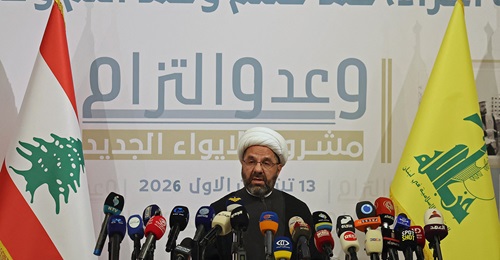
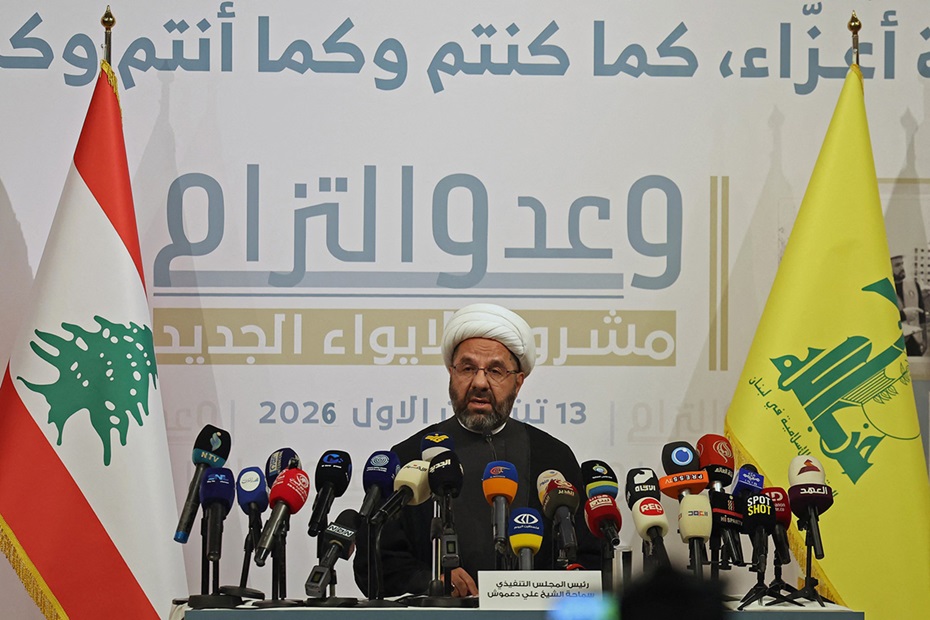
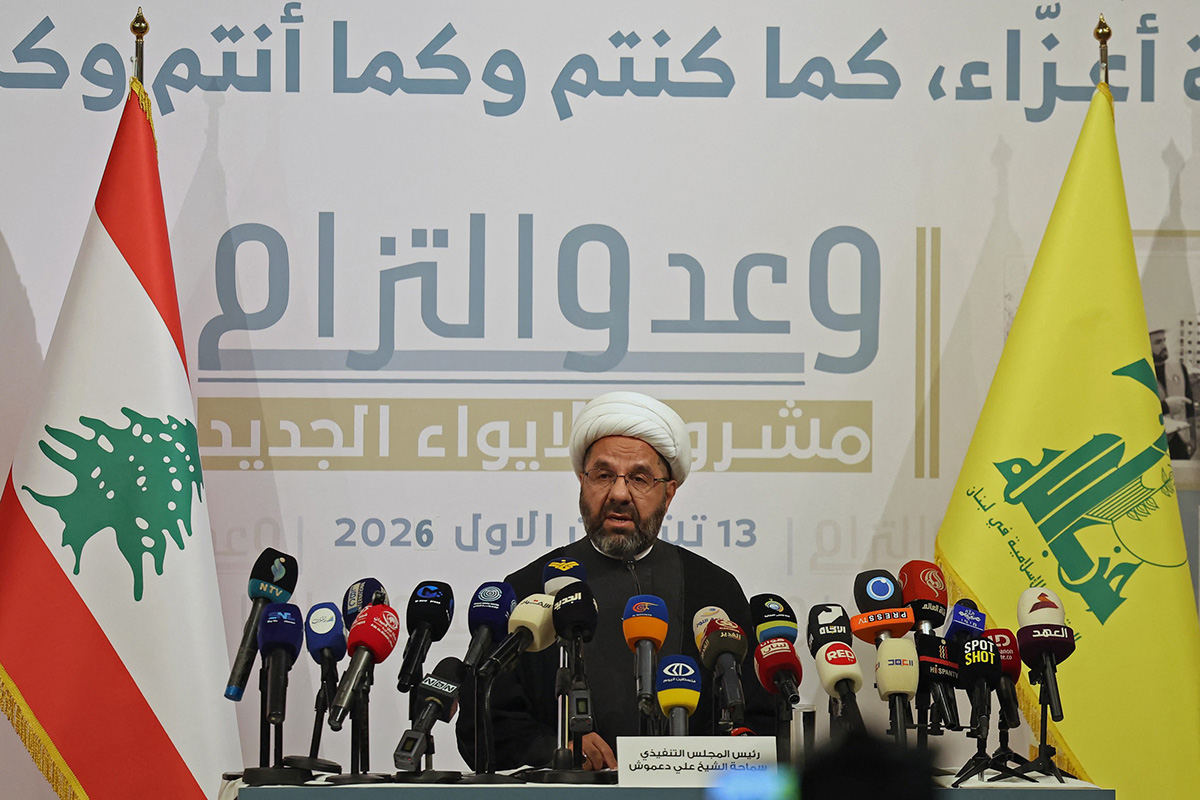 The Head of Hizbullah’s Executive Council, Ali Damoush addresses a press conference in the southern suburbs of Beirut on 13 October 2026.
Image credit: Anwar Amro/AFP via Getty Images
Hizbullah’s operational update
Hizbullah’s capabilities
Assessment 1: Janes assesses that Hizbullah’s organisational and operational capabilities in Lebanon have likely been degraded by sustained Israeli military operations against the group between October 2023 and October 2026.
This assessment is based on official Israeli statements and the extensive Israeli airstrikes and ground operations conducted against Hizbullah in southern Lebanon. This includes the IDF claimed seizures and dismantlement of Hizbullah’s command centres, weapons storage facilities, and tunnel networks in southern Lebanon as reported by the IDF Arabic and English accounts on X between March and October 2026.
The assessment is also based on the gradual decrease in the number and scale of Hizbullah’s operations in Lebanon between March and October 2026, as compared with the period between October 2023 and November 2024. Janes has a moderate confidence in this assessment based on the pictures and videos shared by the IDF and the LAF on social media between October 2023 and October 2026 that showed seized weapons and dismantled military infrastructure affiliated with Hizbullah in southern Lebanon.
As reported by official Israeli statements, IDF operations in Lebanon have killed thousands of Hizbullah’s personnel, including senior leaders and commanders between October 2023 and October 2026. The precise number of Hizbullah’s personnel who were killed by IDF operations remains unavailable in public sources. The IDF claimed that their operations have degraded Hizbullah’s capabilities in southern Lebanon. This included Hizbullah’s equipment, command and control centres, installations and tunnel networks, and sustainment operations.
Between 1 March and 30 October 2026, the LAF also claimed to have seized and dismantled Hizbullah-affiliated equipment and installations in areas south of the Litani River in southern Lebanon. This also included seizing shipments of explosive materials that were smuggled from Syria into Lebanese territory in north and northeast Lebanon.
Assessment 2: It is likely that Hizbullah lacks the ability to replenish its stocks of surface-to-surface missiles and launchers, as well as anti-armour guided and cruise missiles in the 6-12 months outlook. This assessment is based on the degradation of Hizbullah’s military capabilities as claimed by the IDF and as a result of the extensive Israeli air and ground operations against Hizbullah in Lebanon between October 2023 and October 2026.
The assessment is also based on the seizures of weapons and explosive materials that were reported by the Syrian and Lebanese security forces along the Lebanon-Syria border, and the disruption of Hizbullah’s main ground routes for sustainment to Iran and Iraq through Syria. This disruption has occurred since the collapse of the Assad government in December 2024 and the assertion of the Hayat Tahrir al-Sham-led Syrian government, which remains antagonistic towards Hizbullah and Iran.
Based on Hizbullah’s previous reported presence near the Lebanon-Syria border and collaboration between Hizbullah and the former Syrian government prior to December 2024, it is likely that Hizbullah was able to transfer unspecified quantities of weapons from former Syrian Arab Army (SAA) inventories near the border with Lebanon in Homs and Rif Dimashq governorates prior to the collapse of the Assad government in December 2024.
Janes has moderate confidence in this assessment based on the available open-source reporting in Syrian and Lebanese media sources on the collaboration between Hizbullah and the Assad government prior to 2025. Janes remains unable to verify through publicly available information the extent to which Hizbullah has depleted its stocks of surface-to-surface and guided missiles, including missiles that were sourced from former SAA inventories in Syria.
While Hizbullah’s ground supply routes to Iran and Iraq through Syria likely remain disrupted since December 2024, Hizbullah likely retains limited access to smuggling routes into Syria through the Lebanese towns bordering Homs and Rif Dimashq governorates in western Syria. This is based on the anti-smuggling operations and the seizures of weapons, explosive materials, and unmanned aerial vehicles (UAVs) reported near the Lebanon-Syria border by the LAF and Syrian security forces between January and October 2026.
Janes acknowledges source limitations and the challenges in independently verifying Hizbullah’s operational capabilities and stocks of offensive weapons in publicly available sources. Assessing Hizbullah’s operational capabilities between March and October 2026 relied on official Israeli reporting as well as media reports by Lebanese and Syrian online news outlets and social media sources.
For more, please see Hizbullah activity monitor: 1-31 October 2026