Portuguese Navy moves towards operational integration of Shiver USV
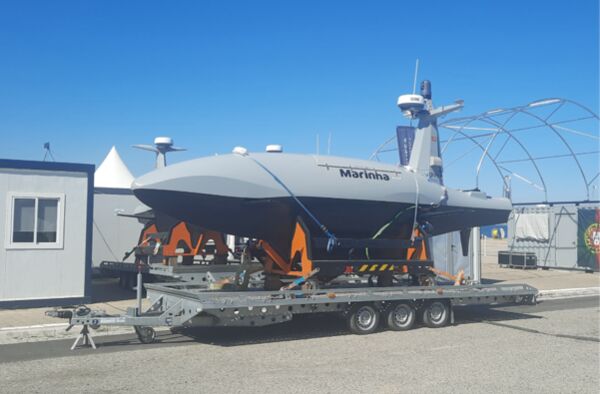

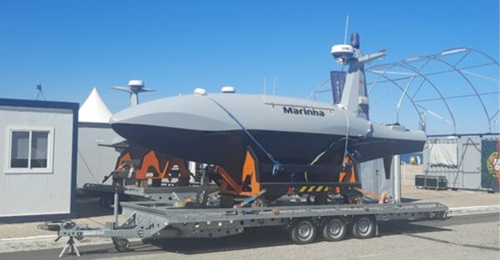
A Portugese Navy Shiver USV, seen at REPMUS 2026. (Janes/Neil Dee)
The Portuguese Navy is moving towards operational integration of its Shiver unmanned surface vehicle (USV), it was confirmed at NATO Exercise ‘REPMUS 26' (Robotic Experimentation and Prototyping with Maritime Unmanned Systems), which took place from 31 August to 25 September 2026 in Portugal.
Speaking to media at REPMUS 26 on 22 September 2026, Commander Marco Guimarães, director of the Portuguese Navy's Unmanned Vehicles Operational Experimentation Cell (Célula de Experimentação Operacional de Veículos Não Tripulados: CEOV) said that the USV is moving towards operational use, with additional updates also planned.
Shiver was also operated by the Portuguese Navy's X31 unmanned systems unit at REPMUS 26, and will be handed over to X31 in due course, Commander Guimarães said. In parallel, the Navy plans to increase Shiver's endurance and integrate new sensors and payloads, he added. Commander Guimarães further said that Shiver will be capable of deploying towed-array sonar.
Commander Guimarães said that there are also plans to commence launch and recovery trials of the USV from the Portuguese Navy's future multi-purpose ship D. João II. Discussions of launch and recovery methods are ongoing in the Navy, with possible means including the ship's crane and stern A-Frame launch and recovery system (LARS), he said. Shiver will also be capable of being launched from either the upper or lower deck, which fits into the flexible concept of the ship, he added. D. João II was launched at Damen's facility in Galați, Romania, in April 2026 and is expected to enter service with the Portuguese Navy in the first half of 2027.
Go beyond the headlines - with direct links to interconnected entities
Get full access to validated equipment, military capabilities, and market insights.