Sudan claims numerous UAV attacks launched from Ethiopia
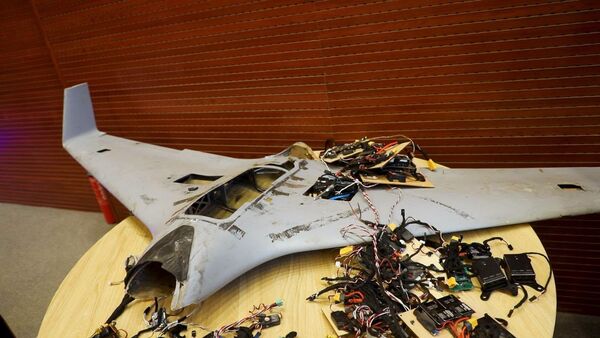

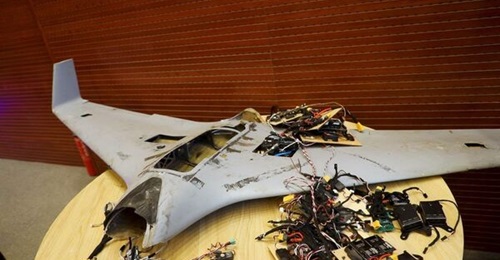
The remnants of a previously undocumented type of one-way attack UAV displayed during the 28 October press conference. (Sudan News Agency (SUNA))
Sudan's intelligence services have claimed that Ethiopian territory continues to be used to launch unmanned aerial vehicle (UAV) attacks in support of the rebel Rapid Support Forces (RSF).
The claims were made in a detailed briefing as part of a press conference by representatives from Sudan's defence, foreign affairs, and information ministries, as well as General Intelligence Service (GIS) on 28 October.
Badged as a joint product of the GIS and Military Intelligence Directorate, the slides listed 64 incidents where UAVs were launched from Ethiopia at targets in Sudan from 15 February to 27 October, although multiple targets were recorded for several of them.
Strategic drones
A small majority of the incidents recorded attacks by ‘strategic drones', the Sudanese Armed Forces' (SAF's) term for medium-altitude long-endurance (MALE) UAVs that require a runway to take off and land. These sorties often involved the UAVs launching multiple missiles.
The locations of the runways used for these sorties was not always identified, but where they were it was claimed to be Asosa in western Ethiopia for all but two that came from Bahir Dar further to the north and ended when the UAVs were shot down on 17 and 23 May. Both these UAVs were identified as Turkish-made Bayraktar Akıncıs.
Go beyond the headlines - with direct links to interconnected entities
Get full access to validated equipment, military capabilities, and market insights.