US Army signs CRADA for electromagnetic-powered C-UAS
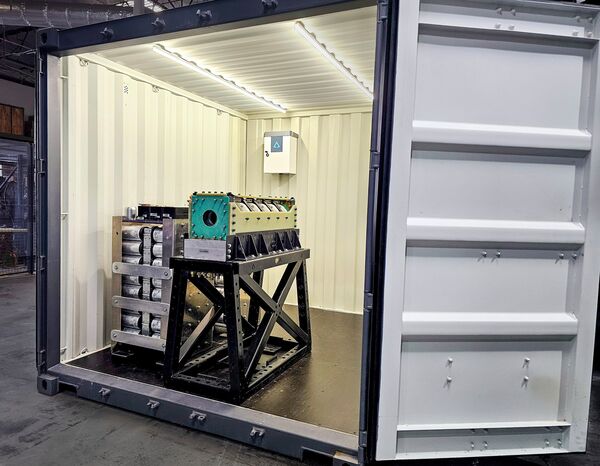

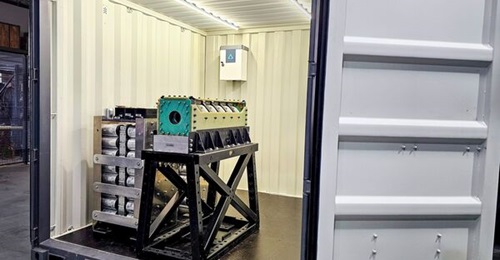
Auriga Space Hermes is electromagnetic launcher prototype inside a 10 ft shipping container. (Auriga Space)
US Army Combat Capabilities Development Command (DEVCOM) signed a Cooperative Research and Development Agreement with Auriga Space to develop electromagnetic powered interceptors for counter-unmanned aerial systems (C-UAS), the company announced on 15 July.
Auriga Space is working with the army to continue development on the Hermes launcher that the company plans to eventually be able to take down UAS at several kilometre- ranges, CEO Winnie Lai told Janes in an interview on 21 July. Though the electromagnetic propulsion technology is not novel, the partnership with the army will help the company determine features like launcher form factor and type of projectile, she noted.
The company connected with DEVCOM through Joint Interagency Task Force 401 (JIATF 401), the Pentagon's newest organisation to centralise C-UAS technology, said Lai.
Hermes works like an electromagnetic railgun, using a linear electric motor instead of a solid rocket motor to launch projectiles, enabling the munition to reach high speeds in a short time. The key difference is that the launcher incorporates magnetic levitation technology, similar to the technology used on high-speed trains, explained Lai.
The magentic levitation technology protects the bore of the launcher from being degraded overtime, she said. “We can avoid the physical contact and therefore the heating and therefore the wear and tear problems,” Lai added.
The company has performed more than 1,000 launches at its facility but has not executed any live fires with explosive projectiles, Lai said. Hermes was able to launch a projectile through steel impact plates during a demonstration for the army earlier this year, highlighting the potential for the technology.
Go beyond the headlines - with direct links to interconnected entities
Get full access to validated equipment, military capabilities, and market insights.