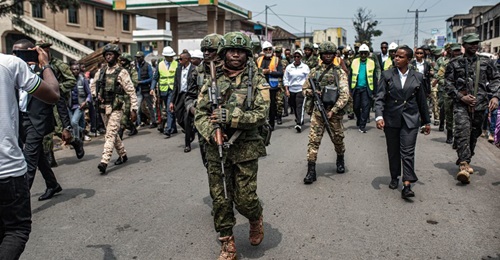
Ethiopian military and TPLF clashes risk broader internal and regional escalation
Event
In a statement released on 1 August, the Tigray People’s Liberation Front (TPLF)-led regional government accused the Ethiopian National Defense Force (ENDF) of launching “an open war” in the Shererina area of western Tigray, near the border with Sudan, earlier that day.
The TPLF alleged that the ENDF “and proxy armed forces”, including the pro-government militia Tekeze Guards, had conducted attacks against the TPLF involving artillery strikes. At the time of publication, the federal government had not commented on the clashes, but multiple credible news sources – such as AFP, Al Jazeera, and France24 – confirmed that clashes had taken place. AFP reported on 2 August that the clashes had stopped.
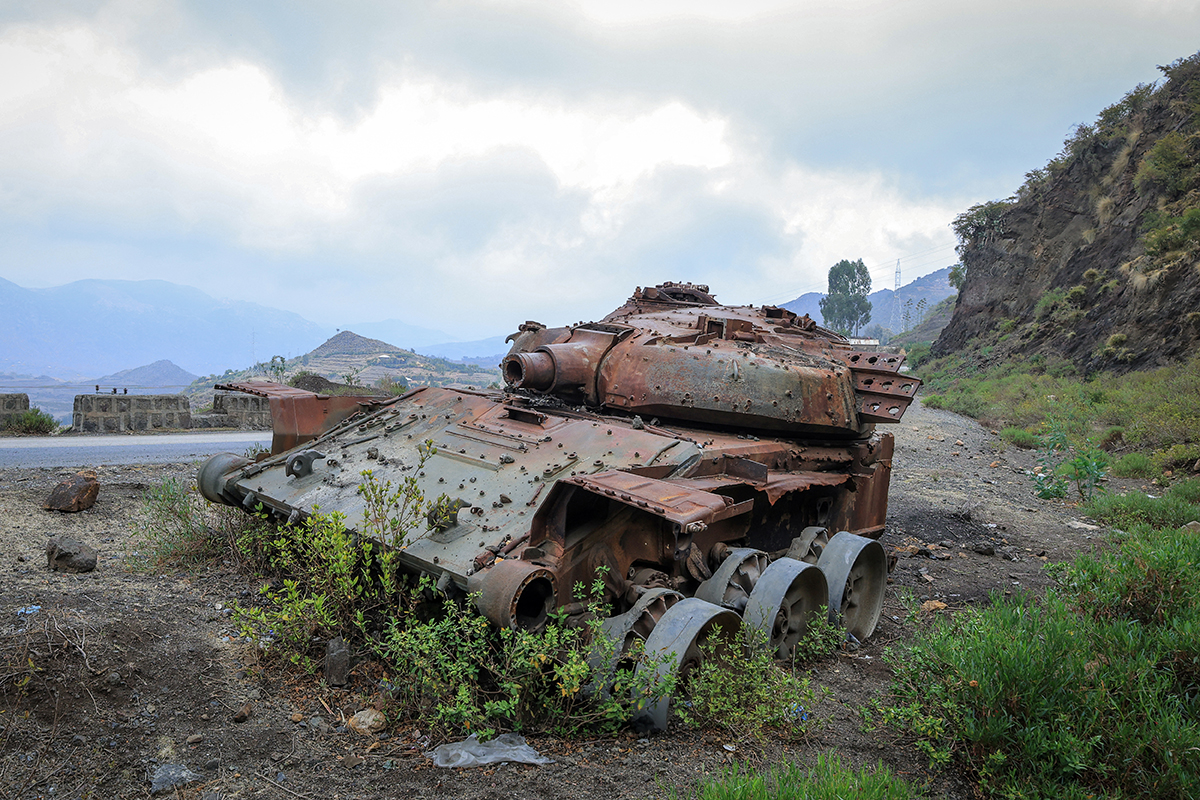 The charred remains of a tank from clashes between the Ethiopian National Defense Force (ENDF) and the Tigray People's Liberation Front (TPLF) lie on a road near Gereb Agew, Southern Tigray, on 3 March 2026.
Image credit: Abel Gerezgiher/AFP via Getty Images
Significance
The clashes were the first armed confrontation between the TPLF and ENDF since January 2026. Tensions escalated after the TPLF took de facto administrative control of Tigray region from the federally-backed administration in May, culminating in renewed violence.
In April 2026, the TPLF rejected the federal government’s decision to extend the mandate of the Interim Regional Administration of Tigray (IRAT). The IRAT was implemented as part of the 2022 peace agreement signed in Pretoria, that ended the 2020–22 conflict between the two sides. In May, the TPLF re-established its pre-war parliament and took control of the Tigray region. Since then, tensions between the TPLF and federal government have increased with both sides accusing the other of preparing for war.
Additionally, the TPLF executive committee member Fetlework Gebregziabher told TPLF-owned outlet Dimtsi Weyane TV on 20 July that the federal government had blocked budget transfers and fuel deliveries to Tigray since November 2025. She said that “There are things you cannot tolerate just for the sake of peace”.
The 1 August clashes also indicate the risk of spillover into neighbouring countries. AFP reported on 3 August that refugees and wounded TPLF fighters had crossed into Sudan from Tigray and the Sudan Tribune reported on 2 August that projectiles fired during the clashes had hit Sudanese territory.
Diplomatic relations between Sudan and Ethiopia have deteriorated in 2026. The Sudanese government has accused Ethiopia of facilitating Rapid Support Forces (RSF) unmanned aerial vehicle (UAV) attacks in Sudan (please see Khartoum accuses UAE of carrying out UAV strikes from Ethiopian airbase) with the Ethiopian government counter-accusing the Sudanese government of supporting the TPLF in May. Furthermore, the TPLF claimed on 3 August that the RSF had participated in the 1 August clashes alongside the ENDF. Janes could not independently verify the claim.
Additionally, BBC Monitoring reported on 2 August that the pro-Eritrean government outlet Nakfa Press had posted footage showing Eritrean military and TPLF commanders meeting in the town of Zban Hutsa, near the border with Eritrea, on an undisclosed date. Although Eritrea fought against the TPLF during the 2020–22 war, the two sides reconciled culminating in the May 2025 Tsimdo cross-border co-operation agreement. Concurrently, Eritrea-Ethiopia relations have strained with Ethiopian political and military leadership repeatedly publicly calling for Ethiopia to take control of the Port of Assab to restore Ethiopia’s sea access since 2025.
Outlook
Janes assesses that further clashes in Tigray are likely in the immediate term (one to four weeks) because of the TPLF’s rhetoric around securing victory and no planned dialogue with the federal government to ease tensions. This assessment is made with moderate confidence given the volatility of the situation. The likelihood of further clashes is moderated by the clashes on 1 August and those in January being contained to single incidents.
In February 2026, Janes assessed (please see Ethiopian troop movements indicate renewed conflict in Tigray region very likely, increasing risk of war with Eritrea) that non-state armed groups (NSAGs) in other regions in Ethiopia will exploit instability to further consolidate their positions. This assessment is unchanged following the 1 August attacks. Fetlework’s 20 July comments included highlighting that a “situation where we could form alliances with many groups has emerged”, including the Amhara Fano National Movement and Oromo Liberation Army (OLA), indicating the potential for inter-NSAG coordination.
It is very likely that further clashes between the TPLF and ENDF will increase the likelihood of inter-state armed conflict between Ethiopia and Eritrea because of the publication of the alleged presence of Eritrean military officials in TPLF territory, giving potential Ethiopian pretext for action against Eritrea. This assessment is made with high confidence as Ethiopia continues to state its pursuit of sea access through Eritrea’s Port of Assab, including through military means. However, Janes assesses that the ENDF would struggle to maintain concurrent operations against the TPLF, Eritrea, and ongoing operations against the AFNM and OLA due to shortcomings in its logistics capabilities.
Indicators
Risk positive indicator:
- Internationally mediated dialogue between the TPLF and Ethiopian government would decrease the likelihood of the conflict escalation, particularly if it results in troop withdrawals and restoration of federal funding to Tigray.
Risk negative indicators:
- Confirmed reports of ENDF troop reinforcement in Tigray would indicate an increased likelihood of escalation and prospect of a military offensive.
- Confirmed Eritrean materiel support for the TPLF could prompt the ENDF to target Eritrea under the pretext of self-defence while attempting to secure its ambition of restoring sea access.
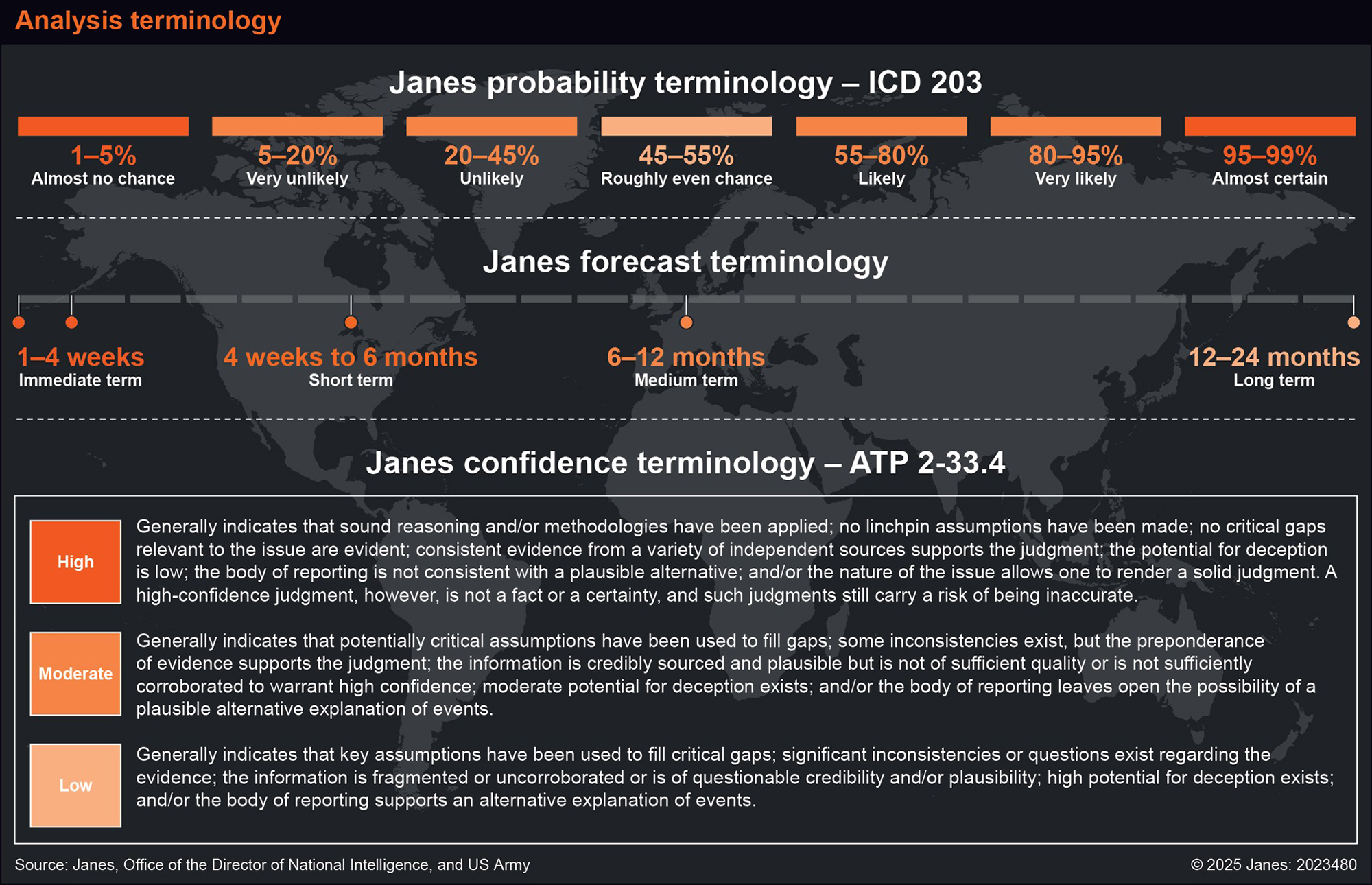 Analysis terminology
Image credit: Janes