Feature: US Navy, Pentagon tap growing unmanned naval vessel market
The US Navy (USN) and Department of Defense (DoD) have ramped up parallel efforts to accelerate the development and deployment of unmanned naval platforms, sparking increased private investment and interest in those programmes.
USN officials recently confirmed a series of organisational changes and contract awards meant to underscore the service’s growing commitment to making unmanned naval platforms and integral part of the future fleet.
Meanwhile, the Pentagon made its own organisational shifts to oversee unmanned development while funding contractor competition to more quickly develop naval unmanned equipment.
The moves come after years of relatively slow and measured USN movement toward harnessing such technology, as navy officials said publicly they were working on developing organisational and operational foundations for introducing equipment and platforms into the fleet.
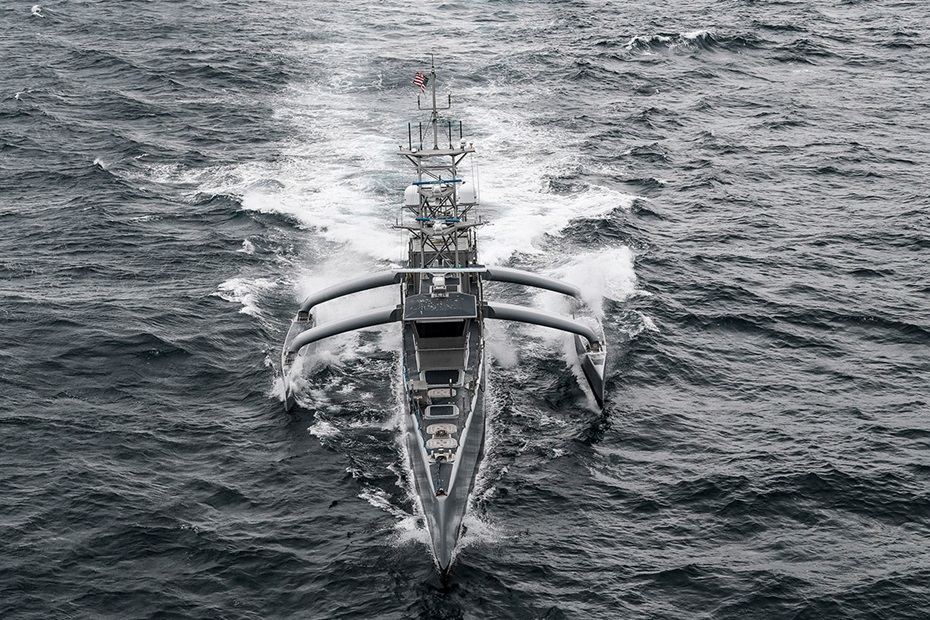
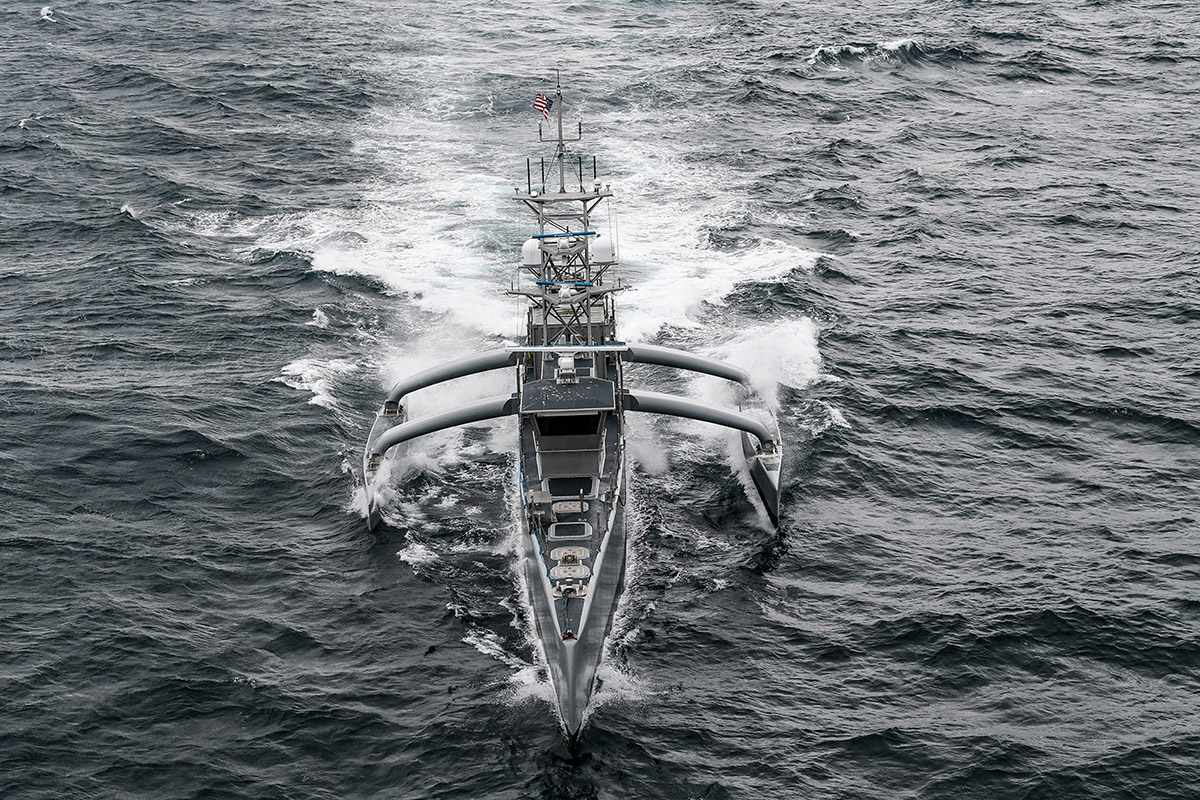 The Seahawk USV, shown here, is one of the early US Navy efforts to develop and demonstration unmanned surface platforms. Image credit: US Navy
In the US, a growing focus on unmanned and autonomous naval systems has captured global private industry interest in securing a foothold in that market, with companies vying for military contracts and funding opportunities.
The USN has taken note of the greater use of autonomous and unmanned systems in combat during conflicts like in Ukraine war and the US war with Iran, Admiral Daryl Caudle, chief of Naval Operations (CNO), acknowledged on 26 August during a media round table at US Fleet Forces headquarters in Norfolk, Virginia.
“We recognise their warfighting value,” Adm Caudle said, adding that Ukrainian operations and one-way attack UAVs had put unmanned naval benefits “on the map”.
The CNO underscored those benefits further while delivering a State of the Navy keynote address at a Navy League dinner in Norfolk that same day, noting the navy is working now on establishing some of that capability in the fleet.
“We are taking unmanned systems out of perpetual experimentation and putting them alongside operational forces,” Adm Caudle said.
He observed: “The Theodore Roosevelt Carrier Strike Group is integrating a medium unmanned surface vessel [MUSV] into strike-group operations. In the Middle East, unmanned vessels have already operated alongside our forces in a real-world operational environment.”
However, he added, “I don't need another unmanned system that looks impressive during a demonstration. I need systems that deploy. Systems that sustain. Systems that integrate. Systems that fight.”
Speaking at the media round table, the CNO said the challenge for effective USN global operations is to “understand the concept for deployment” of the unmanned and autonomous systems. “We’re working through that concept of deployment, on how to integrate robotic and autonomous with the navy,” Adm Caudle said, noting the importance of developing unmanned systems for the USN’s proposed hedge or tailored forces for specific global mission sets.
The navy wants to make sure it does “not just buy a bunch of them [autonomous systems]” in an effort to add combat power,” he said. “We’re not doing this from land,” he noted. “I have to have my mothership -- I need access and overflight agreements for unmanned capacity.”
Adm Caudle noted, “In the Iran conflict, most of the unmanned surface vessels are coming from partners.”
The navy needed to create its own appropriate warfighting development centre for those systems, he noted. Accordingly, the service established the Robotic and Autonomous Systems Warfighting Development Centre (RASWDC) on 24 September at Joint Expeditionary Base Little Creek-Fort Story in Virginia.
The centre is meant to accelerate “the development, operational integration, and employment of robotic and autonomous systems (RAS) across the maritime domain”, the USN said in a 24 September statement.
RASWDC is an Echelon 3 warfighting development centre operating under US Fleet Forces Command. The centre is meant to operate in tandem with the new Direct Reporting Portfolio Manager for Robotic and Autonomous Systems (DRPM RAS), the USN confirmed.
RASWDC focuses entirely on operational employment, the USN explained, while DRPM RAS remains the single accountable portfolio authority for RAS acquisition, requirements implementation, budgeting, technical standards, and fielding. RASWDC is designed to rapidly test, learn, iterate, and field capabilities, the USN said, adding the centre will conduct operational testing in representative environments and synchronise efforts across the navy’s warfare communities.
"RASWDC is the critical bridge between capability development and operational employment," Adm Caudle said in the statement about the centre’s establishment.
For more information, please see Feature: US Navy, Pentagon tap growing unmanned naval vessel market