Future Armoured Vehicles Survivability 2022: IMOD outlines plans for Phase 2 of Carmel programme
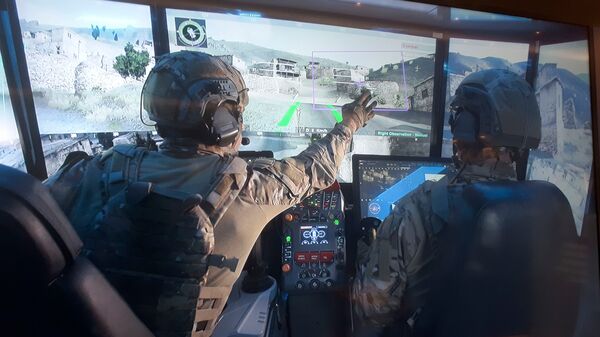

Interior of a Carmel armoured fighting vehicle (AFV) prototype, showing touchscreen controls and crew layout. Phase 2 will see an Eitan AFV equipped with a single panoramic screen at the front of the vehicle and four separate operator stations, each with a 24-inch screen. (Janes/Mark Cazalet)
The Israel Ministry of Defense (IMOD) provided further details on the aims, concepts, and timeline for Phase 2 of its Carmel Future Combat Vehicles (FCV) programme at the SAE Media Group Future Armoured Vehicles Survivability 2022 conference.
Speaking at the conference on 17 November 2022, a team member of the Carmel FCV programme from the IMOD explained that whereas Phase 1 was focused on proving the feasibility of operating armoured vehicles with two-person crews under armour, Phase 2 will extend the development of sensor fusion, artificial intelligence (AI), and networking technologies to support formation-level trials with a small number of manned platforms teamed with swarms of unmanned vehicles.
Under Phase 2, the IMOD and prime contractor Israel Aerospace Industries (IAI) will attempt to show how a “much smaller, much leaner force based on only two manned vehicles and a whole host of unmanned platforms” can allow for more efficient operations that involve fewer personnel and thus reduce the risk of a mission having to be compromised due to incurring unacceptable casualties.
Go beyond the headlines - with direct links to interconnected entities
Get full access to validated equipment, military capabilities, and market insights.