US think-tank proposes cost-per-effect metric for better weapon system cost analysis

The US Air Force (USAF) should adopt a cost-per-effect metric for weapon systems to maximise mission value instead of relying on simplistic metrics such as unit cost or cost per flying hour, according to a Washington, DC, think-tank.
The Air Force Association’s Mitchell Institute for Aerospace Studies, in a report released on 8 July, said this cost-per-effect metric is necessary to better measure the enterprise expense associated with accomplishing missions. A cost-per-effect assessment measures the sum of what it takes to achieve a desired mission result, not just a single system’s acquisition and support costs that would lack necessary context surrounding the capability’s actual use.
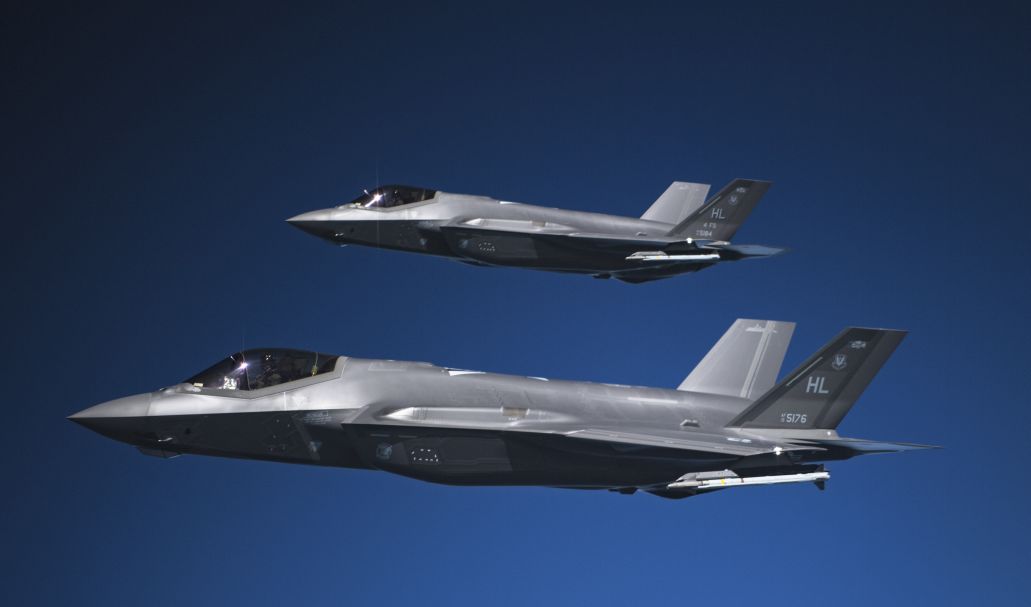
A pair of F-35As fly in formation on 15 May 2019. The Mitchell Institute for Aerospace Studies argues in a new report that the USAF adopting a cost-per-effect metric for assessing weapon systems would better analyse weapon system value than traditional metrics such as unit price. (US Air Force)
Cost-per-effect includes mission aircraft to execute the actual task and direct supporting assets, including aerial refuelling tankers, electronic jamming platforms, and surface-to-air missile suppression efforts. It also includes aircrews and requisite infrastructure such as basing and related maintenance support.
For example, Lockheed Martin F-35 Lightning II Joint Strike Fighters (JSFs) and Northrop Grumman B-21 Raider long-range strike bombers and other advanced weapon systems may appear more costly on a per-unit basis than less capable legacy aircraft designs. The think-tank argues enterprise assessments illustrate the potential of these modern aircraft to complete mission objectives more efficiently and capably, thereby lowering their overall operational expense. This would make them a more cost-effective option.
Go beyond the headlines - with direct links to interconnected entities
Get full access to validated equipment, military capabilities, and market insights.