Think tank proposes using US UAVs for ‘deterrence-by-detection' in great power competition
The United States should use its existing unmanned aerial vehicles (UAVs) better for persistent, wide-area intelligence, surveillance, and reconnaissance (ISR) missions to help degrade, delay, and, if necessary, defeat aggression in the Western Pacific and Eastern Europe, according to a new report.
The Center for Strategic and Budgetary Assessments (CSBA) think tank proposes in its 14 April report ‘Deterrence by Detection: A Key Role for Unmanned Aircraft Systems in Great Power Competition’, that a deterrence-by-detection operational concept using a network of existing non-stealthy long-endurance UAVs can deter Chinese and Russian aggression. This concept relies on the premise that US adversaries are less likely to commit opportunistic acts of aggression if they know they are being watched constantly and that their actions can be publicised widely.
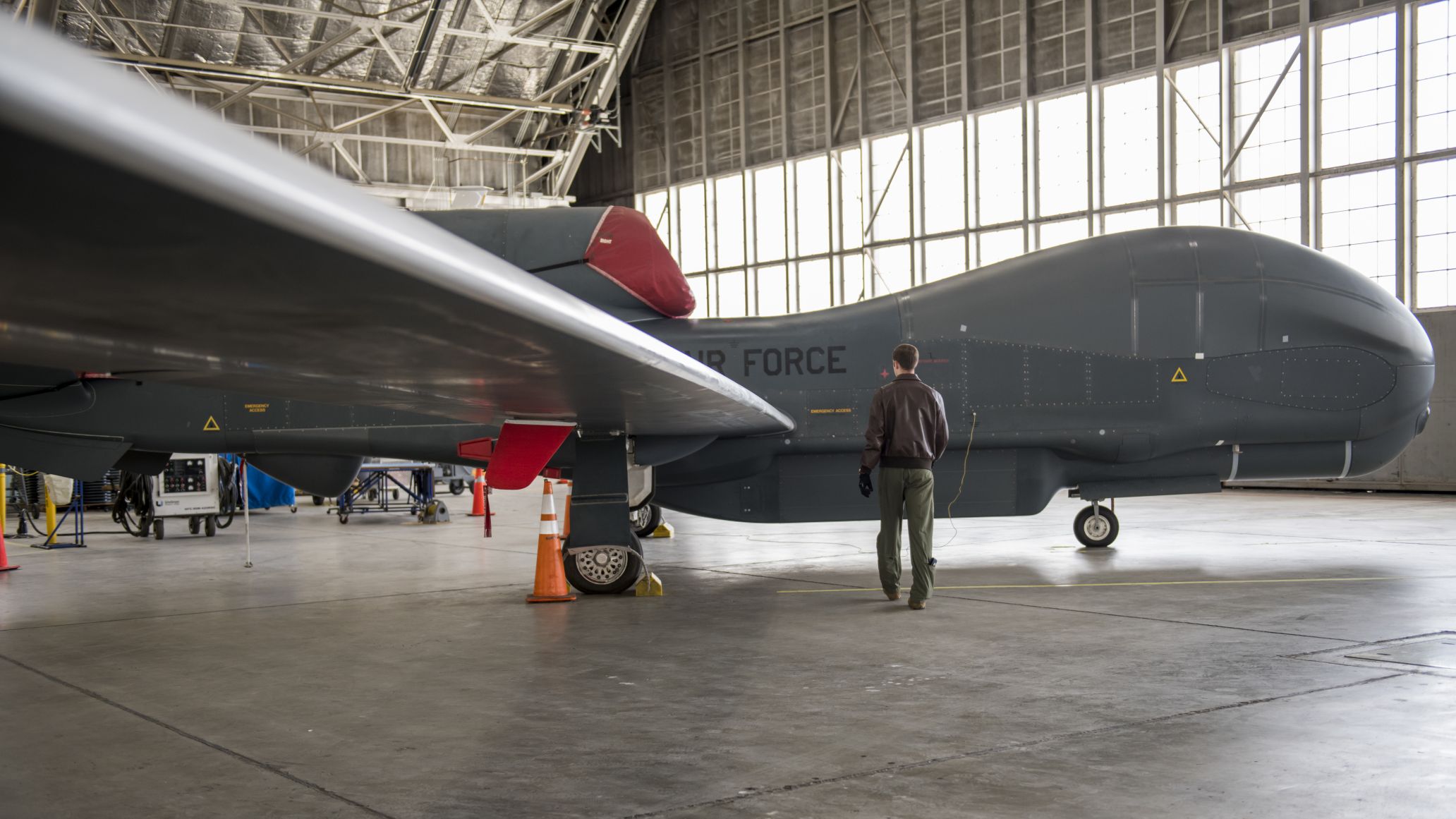
A US Air Force airman on a walk-through inspection of an RQ-4 Global Hawk UAV on 6 April 2020. A new report proposes the US use existing UAVs such as the Global Hawk to better perform ISR missions to help deter aggression by China and Russia. (US Air Force)
The CSBA argues that China and Russia have used sub-conventional ‘grey zone’ aggression to erode international norms, undermine US-led rules-based order, and shift the balance of power in their favour, all without sparking open armed conflict with the US or its allies. China has used paramilitary naval force such as fishing fleets and its maritime militia to harass its maritime neighbours’ military and commercial vessels in order to further its claims over disputed territory, it said.
Go beyond the headlines - with direct links to interconnected entities
Get full access to validated equipment, military capabilities, and market insights.