Russia's 50th Varyag Brigade using AI-Molniya UAVs against Ukraine's decoy platforms
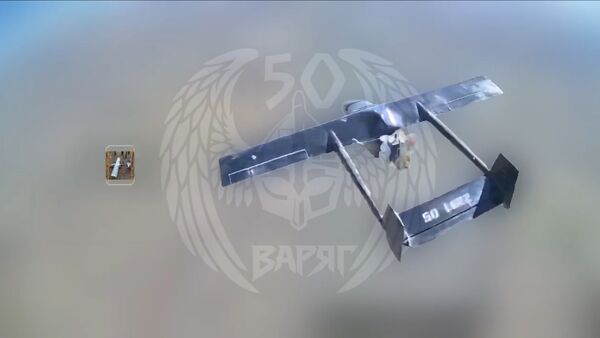

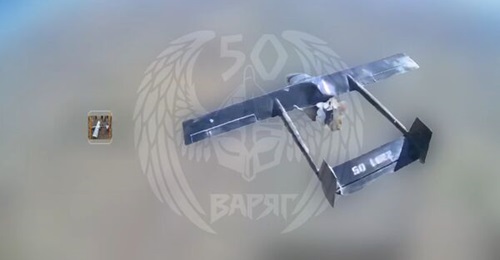
Still image of Ukraine's Maya UAV as labelled by Russia's 50th “Varyag” Separate Brigade of Unmanned Systems Forces in a video published on social media on 13 October 2026. (Russia's 50th “Varyag” Separate Brigade of Unmanned Systems Forces )
Russia's 50 th Varyag Separate Brigade of Unmanned Systems Forces claims a new variant of the Molniya unmanned aerial vehicle (UAV) called Molniya PVO (Protivovozdushnaya oborona) SPP “which is based on AI” has entered into service, the brigade said in a 13 October 2026 social media post.
Russia's 50 th Varyag brigade said the fixed wing Molniya PVO SPP UAV was used to strike down at least five of Ukraine's Maya UAVs and two of Fire Point's FP-1 one way attack (OWA) UAVs.
The Russian brigade provided no further details on the systems. However, the Maya UAVs may have been decoy platforms operated by the Armed Forces of Ukraine (AFU). The Bulgarian Defence Ministry said Maya decoy UAVs are “widely used” by the AFU following the crash of one such near the Romanian border on the morning of 8 August.
An autonomous, AI-enabled variant of the Molniya UAV was referenced on 3 July by Serhii Beskrestnov (also known as Serhii Flash), an adviser to the Ukrainian president. “UAV detectors no longer offer protection,” he wrote, suggesting that the UAV may be integrated with an autonomous target acquisition, tracking, and terminal guidance system. However, he did not specifically identify the system as the Molniya PVO SPP. The video accompanying the 50 th Varyag post from October features green rectangular boxes appearing over targeted Ukrainian UAVs. This suggested the use of a bounding box generated by the Molniya UAV onboard computer-vision or targeting software.
Go beyond the headlines - with direct links to interconnected entities
Get full access to validated equipment, military capabilities, and market insights.