Combat operations spur reviews of US Navy carrier strike group operations
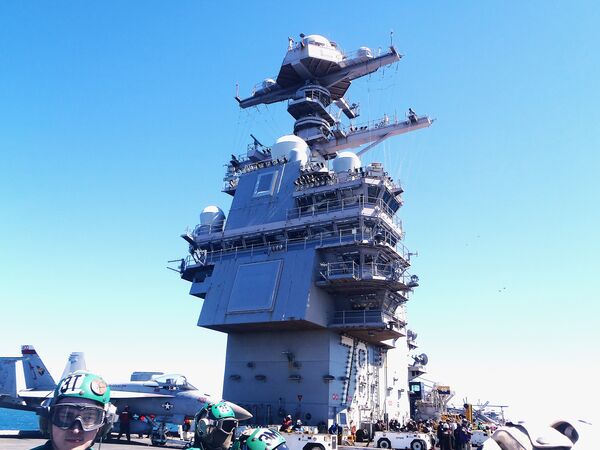

US Navy are are garnering lessons from the long deployment of aircraft carrier USS Gerald R Ford, shown here. (Michael Fabey)
Increasing reliance on extended carrier strike group (CSG) deployments in the Central Command (CENTCOM) region has prompted a reconsideration of CSG operations, according to Admiral Daryl Caudle, chief of naval operations (CNO).
To help alleviate the longer CSG vessel deployments, the US Navy (USN) is looking at how and when it transfers responsibility for incoming and outgoing CSGs and also where the service could send ships for port calls, Adm Caudle told reporters on 26 August during a media roundtable at US Fleet Command headquarters in Norfolk, Virginia.
Acknowledging some logistical shortcomings early in recent naval combat operations against Iran, Adm Caudle said the USN has adjusted operations to address those issues, but he also confirmed that CENTCOM operations are drawing resources from the Western Pacific, where the USN needs to focus on countering Chinese threats.
The CNO said he prefers to avoid the type of extended CSG deployments the USN has been forced to endure in recent combat operations in CENTCOM, but noted the service needs to meet war needs.
However, he cited ways the USN can potentially cut down on the lengths of CSG deployments.
“There's risk sharing that needs to be done,” Adm Caudle said.
For example, the carriers would traditionally transfer regional responsibility when the relieving vessel arrives in theatre while the carrier being relieved is still there.
“We do that transfer in the Indian Ocean perhaps,” Adm Caudle said. “We need conversations between [CENTCOM Commander] Admiral [Brad] Cooper and I.”
Noting the differences between the extended deployments of aircraft carriers USS Gerald R Ford (CVN 78) and USS Abraham Lincoln
Go beyond the headlines - with direct links to interconnected entities
Get full access to validated equipment, military capabilities, and market insights.