AUSA 2026: Raytheon begins testing rocket-powered Coyote interceptor
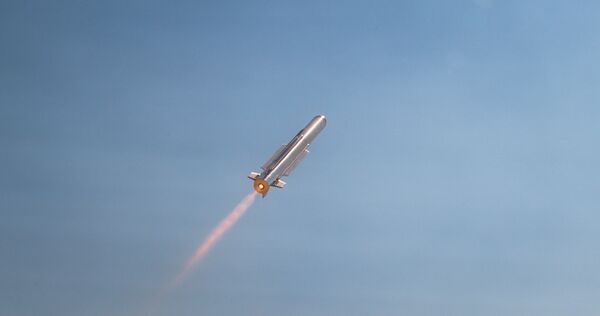

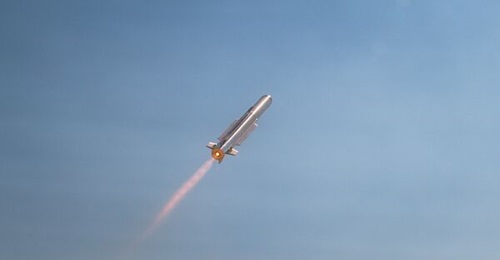
A Raytheon Coyote 2C+RM drone interceptor during a test flight in July 2026 at Dugway Proving Ground, Utah. This version replaces the jet engine with a solid rocket motor. (Raytheon)
Raytheon has conducted initial field testing of the latest variant of its Coyote counter-unmanned aerial system (C-UAS) interceptor, according to a company statement on 12 October.
The Coyote Block 2C+RM features improvements on the Block 2C, including a “new seeker and warhead designed to defeat all classes of current and emerging drone threats”, the statement said.
A solid rocket motor replaces the jet engine that powers current Coyote interceptors, Tom Laliberty, president of Land & Air Defense Systems at Raytheon, told reporters on 8 October ahead of the Association of the United States Army annual conference in Washington, DC.
The rocket motor enables faster launch and higher flight speeds, he said, adding that along with seeker and warhead upgrades, “it really gets after the more cutting-edge drone capabilities that we're seeing from the adversary”.
Laliberty declined to provide specifics about the improved performance of the Coyote Block 2C+RM, saying only that “it's significant in terms of the range difference, and in what I call endgame capabilities of the missile, when you think about where velocity might come to play”.
Upgrades
The current Coyote Block 2C is “the workhorse of the US Army's counter-UAS capability” and has defeated more than 600 attack drones during current conflicts, he said.
“These upgrades are all compatible with the existing infrastructure that are in operational use,” including launch cells, guidance radar, and command-and-control systems, Laliberty said, adding that “we have a scalable, modular system that we're able to rapidly evolve as the threat continues to evolve”.
Go beyond the headlines - with direct links to interconnected entities
Get full access to validated equipment, military capabilities, and market insights.