Update: British Army's Eagle UAV to be upgraded under Tiquila programme
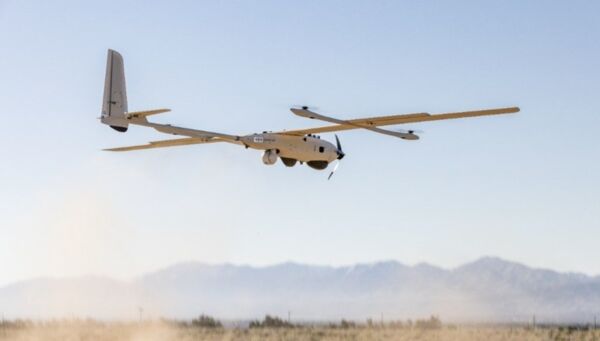

Lockheed Martin's Stalker VXE30 UAV (known as the Eagle in UK service) seen conducting a vertical take-off in Palmdale, California, during a demonstration for the UK MoD. (Lockheed Martin)
The British Army's Eagle unmanned aerial vehicle (UAV) under the Tiquila programme is receiving its first major upgrade in the summer of 2026, Brigadier Matthew Birch, Senior Responsible Owner (SRO) for land intelligence, surveillance, target acquisition, and reconnaissance (ISTAR) confirmed to Janes on 14 May.
The major upgrade to Stalker VXE30 UAV (known as Eagle in UK service) will include its navigation and data pod, a spectrum dominance license , and a long-range antenna.
“We're looking at a follow-on by about the end of the year [2026] which will continue that development cycle,” Brig Birch told Janes on 6 May at Defence IQ's C4ISR Global conference in London.
It is anticipated that a follow-on (second round) of upgrades will include manual flight, enhanced radio, a further improved antenna, and considerations around alternate payloads and AI-enabled sensing tools, according to Brig Birch. The Eagle UAVs will then be used by the British Army during exercise Steadfast Defender 27.
Initial operating capability (IOC) for Eagle and Lockheed Martin's Indago 4 (known as Kestrel in UK service) was declared in April 2025. The Eagle UAV weighs over 20 kg, has a wingspan of 4.88 m, a range of up to 60 km, and provides nearly eight hours of imaging capability, according to a 22 September 2025 news release from the UK National Armaments Director Group. The Kestrel is a quadcopter UAV that weighs over 4 kg, has a range of around 12 km, can be carried in a backpack, and be deployed in approximately three minutes.
Go beyond the headlines - with direct links to interconnected entities
Get full access to validated equipment, military capabilities, and market insights.