AFA 2026: Radia seeks to bring new airlift capabilities to defence, commercial markets
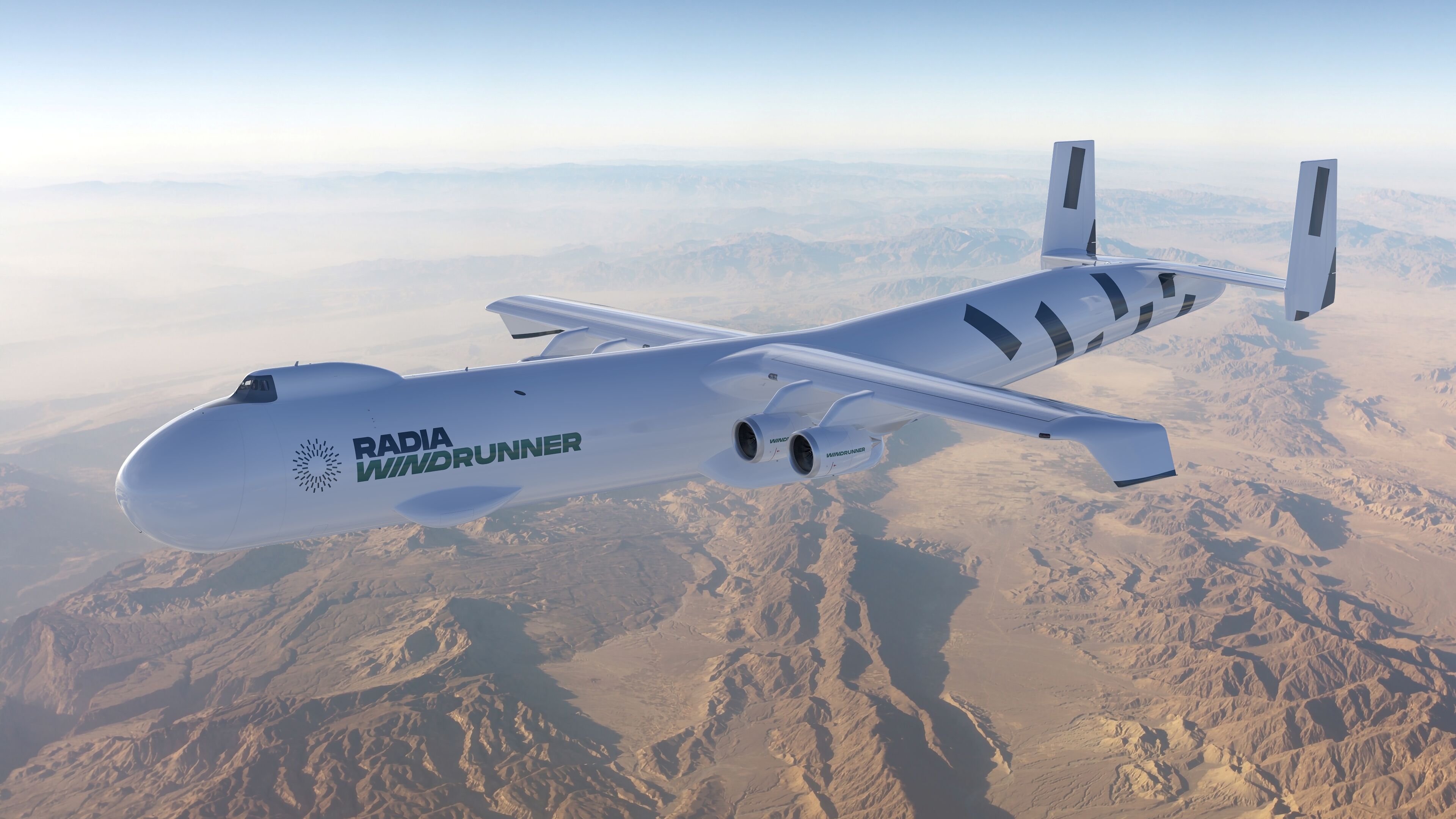

A computer generated image of a WindRunner in flight (Radia)
Radia, headquartered in Boulder, Colorado, displayed a model of its WindRunner large cargo aircraft at the Air & Space Force Association's Air, Space, and Cyber Conference from September 14-16 in National Harbor, Maryland.
The project started as a way to transport large wind turbine blades, Mel Johnson, vice-president of regulatory affairs for Radia, told Janes on 15 September.
The size of wind turbine blades has been constrained by available logistics platforms, he said. Very large blades are being used to build offshore wind farms and Radia aims to “facilitate bringing those [large wind turbines] onshore”, Johnson said, noting that larger blades can generate more electricity.
“That business is very large with lots of work to be done there, and the whole business case is built around that,” he explained.
“About a year and a half ago, there was an awareness that there's other industrial applications, and there's also probably an application for military purposes,” Johnson said.
In May 2025, the company announced a Cooperative Research and Development Agreement (CRADA) with the US Department of Defense (DoD) to evaluate WindRunner as a dual-use capability for oversized cargo operations. Under the agreement, Radia has been working with US Transportation Command (USTRANSCOM), “exploring and sharing information and trying to understand how the airplane can best help contribute towards air mobility for the US”, he told Janes .
Capability
The WindRunner has a length of 109 m (357.6 ft), wingspan of 80 m (262.5 ft), payload volume of 6,800 m 3
Go beyond the headlines - with direct links to interconnected entities
Get full access to validated equipment, military capabilities, and market insights.