Germany to test and field Stark Vanta-6-based USV for reconnaissance
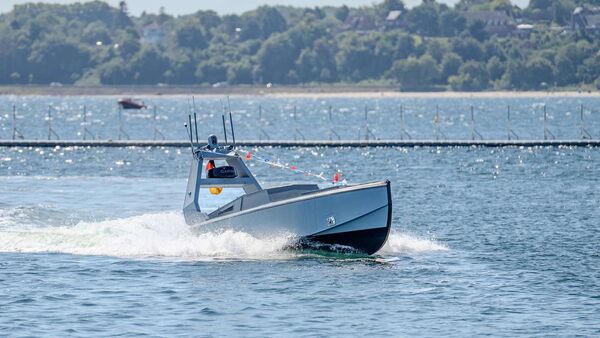

A Bundeswehr Seetaube USV, seen at a christening ceremony in August 2026, before testing and planned entry into service. (Bundeswehr)
The Bundeswehr's Cyber and Information Domain Command (Kommando Cyber- und Informationsraum: CIR command) will test German company Stark's Seetaube unmanned surface vehicle (USV), with plans to put it into service as a reconnaissance platform, the Bundeswehr said in a release on 19 August 2026.
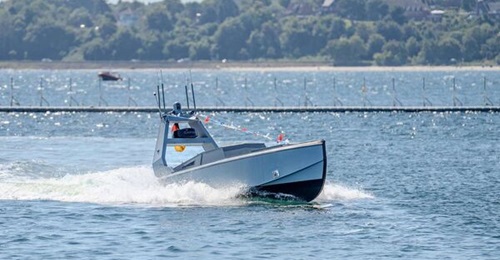
Christened in a ceremony on an unspecified date in August 2026, the Seetaube is based on Stark's Vanta-6 6 m long USV, Stark said in a 20 August release. Testing will continue for “the coming months” before entry into service, the Bundeswehr said without giving an in-service date.
The Seetaube USV will be used to help triangulate threat locations from more than one direction, the Bundeswehr release said. This indicates a concept of operations involving single or multiple Seetaubes working to add extra sensor points feeding into a common operational picture.
The Vanta-6 took part in NATO's Exercise ‘Dynamic Messenger'/‘REPMUS 25' (Robotic Experimentation and Prototyping with Maritime Unmanned Systems) in Portugal in September 2025. During the exercise, Stark said the two USVs undertook missions on a daily basis, including escort of high-value targets, harbour control tasks, over-the-horizon investigations, and night-time ISR patrols.
The Seetaube is equipped with unspecified sensors, cameras, and radar, said the Bundeswehr. The Vanta-6 has a range of 1,685 km. It can operate in up to Sea State four, has a top speed of 45 kt, a weight of 2,100 kg, and a maximum payload of 500 kg, Vanta said.
Go beyond the headlines - with direct links to interconnected entities
Get full access to validated equipment, military capabilities, and market insights.