Special Report: EDA and Joint Research Centre deepen defence collaboration
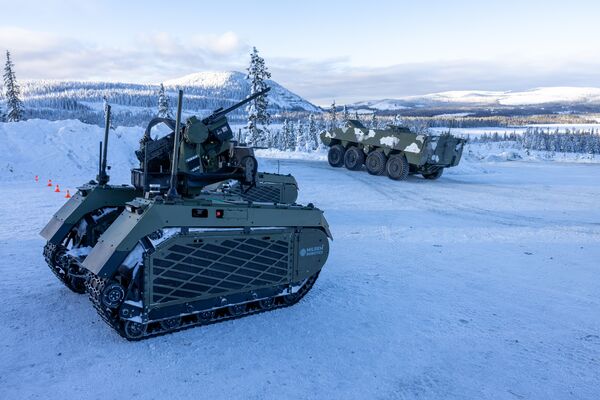

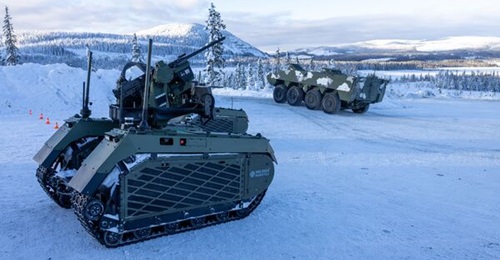
Work is being explored in a range of areas, such as autonomous systems. Above, an EDA exercise focusing on unmanned ground vehicles (UGVs) in Arctic conditions. (EDA)
The new memorandum of understanding (MoU) between the European Defence Agency (EDA) and the European Commission's Joint Research Centre (JRC) will provide significant new research opportunities and facilities for the agency, with an immediate impact expected in advanced materials testing and longer-term benefits in areas such as energy resilience and quantum systems, the EDA has told Janes .
The partnership was signed on 5 June 2026. According to an EDA release at the time, it establishes a framework of cooperation between the two organisations, with work being explored in a range of strategic areas. This includes AI, quantum technologies, critical infrastructure resilience, sensors, advanced materials, autonomous systems, and climate and energy-related technologies.
The agreement boosts work between organisations that sit in different areas within the EU's infrastructure. The EDA is an intergovernmental body representing the 27 member states of the union. The JRC, meanwhile, is a Directorate-General of the European Commission, the EU's main executive body.
They also have historically different research priorities. The EDA provides a framework for EU member states to deepen their work in defence research, technology, and innovation. The JRC, meanwhile, has been largely focused on the civilian sector; it offers a range of scientific tools and databases, alongside more than 50 laboratories and testing facilities, that were not previously available for defence-focused research and technology (R&T).
Core task
Go beyond the headlines - with direct links to interconnected entities
Get full access to validated equipment, military capabilities, and market insights.