Iran conflict 2026: Energy and maritime disruptions expose regional supply vulnerabilities
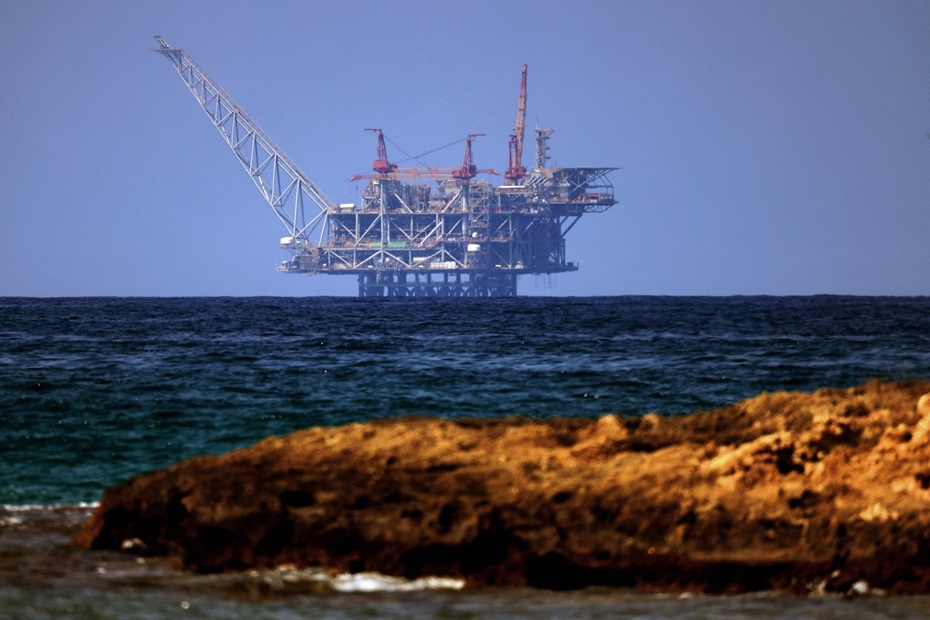
On 1 March, Chevron Mediterranean, the operator of Israel’s Leviathan Natural Gas Project, announced that the Israeli minister for Energy and Infrastructure had ordered the suspension of production activities as a result of the deteriorated security situation resulting from the co-ordinated US-Israel strikes on Iran under Operation ‘Epic Fury’ and Operation ‘Roaring Lion’. Consequently, the cessation of supply of natural gas to Jordan and Egypt via pipelines was confirmed by their respective governments via domestic news sources.
Separately, in comments reported by the Kuwait News Agency state wire service, Kuwait’s Ministry of Commerce and Industry announced on 1 March that exports of food products from the country would be temporarily suspended and commodity price controls introduced to ensure adequate supplies. This suspension of exports was taken in response to disruption to shipping in the Gulf associated with the virtual termination of transits through the Strait of Hormuz that followed Iranian attacks against shipping on 1 and 2 March.

Image caption: A view of the platform of the Leviathan natural gas field in the Mediterranean Sea is pictured from the Israeli northern coastal beach of Nahsholim, on 29 August 2022. Image credit: Jack Guez/AFP via Getty Images
Significance
The events almost certainly underline structural supply vulnerabilities within the region, where limited agricultural capacity and – in some cases – reliance on imported hydrocarbons create exposure to external shocks, and where interruptions to narrow energy and food supply routes can rapidly affect domestic stability and regional markets.
Jordan
At the time of publication, Jordan is highly exposed to the energy trade disruptions that have resulted since 28 February. This exposure is primarily driven because around 85% of its natural gas – which is critical to the generation of electricity – is imported from Israel, with the remainder arriving as liquified natural gas (LNG) shipments. Just under half of electricity demand is met by domestic sources such as renewables.
In the absence of gas from Israel, Jordan can in the short term resort to measures such as power generation from LNG and heavy oil, although such measures will almost certainly come at an elevated cost and with additional supply challenges.
Meeting its energy needs in the short term via LNG supplies always comes with increased risk as these have also been vulnerable to disruption given the cessation of production in Qatar as a result of attacks by Iran, and related disruption in the Strait of Hormuz (through which around a fifth of global LNG must pass).
Imported gas is also critical to Jordan’s mineral processing sectors, which account for around 9% of GDP and 30% of the country’s exports, according to the Jordanian Ministry of Energy and Mineral Resources. The sector is also an important source of employment in a country with persistently high unemployment (16.6% as of 2023 according to the World Bank) and labour-market informality.
Given limited buffers and a challenging fiscal environment that has necessitated long-running support from international donors and intergovernmental institutions, Jordan’s capacity to insulate itself from such external factors are limited and additional labour market and fiscal pressures are likely to create social pressures.
Egypt
Egypt has been a significant customer of gas from the Leviathan field since operations began at the start of the current decade.
In 2025 Egypt signed a long-term supply agreement – described as the largest such export deal in Israel’s history – to buy 130 billion cubic metres (BCM) of natural gas out to 2040, meeting close to a fifth of the country’s annual requirements.
Egypt’s Ministry of Petroleum and Mineral Resources reported that there are contingency plans in place to offset the temporary loss of Israel as a supplier, although this is likely to involve imported LNG at a price close to double that of piped gas from Israel.
Egypt, like Jordan, faces increasing economic vulnerability due to its status as a net gas importer, with high domestic demand and constrained local production. Rising fuel import requirements will further deplete already limited currency reserves and intensify fiscal pressures linked to subsidised household energy consumption.
These dynamics are likely to worsen industrial competitiveness and heighten wider socioeconomic stress, including pressure on public finances, employment, and living costs if such pressures exist in the medium term.
Kuwait
Kuwait’s decision to suspend food exports on 1 March 2026 is almost certainly being taken due to the country’s food import dependence (which stands at -2.7% of GDP) and the consequent logistical difficulties of importing food with the virtual closure of the Strait of Hormuz, rather than due to the country’s ability to pay for such imports given substantial financial buffers associated with oil revenues.
Indeed, virtually all food arrives by sea into Kuwait (via the Shuwaikh and Shuaiba ports) and meeting the nutritional requirements of the population through alternative non-maritime routes would prove challenging. Prolonged disruption to Gulf shipping – on which Kuwait is highly reliant – will create significant challenges in terms of public welfare, although the Ministry of Commerce and Industry has reported via domestic news sources that strategic food stockpiles are at adequate levels.
Outlook
- The economic and social consequences of disruptions to the supply of essential commodities will depend primarily on the duration of current hostilities.
- A de-escalation of the conflict in the immediate term would mean that the impact will be limited given the likely restoration of regional maritime transit routes and the recommencement of regional oil and gas production and transportation.
- Should hostilities persist in the short to medium term, then challenges concerning the supply of critical commodities will likely become a more important national security issue for countries like Egypt, Jordan, and Kuwait, necessitating alternative sources at likely elevated costs, which will – in the case of countries with vulnerable fiscal environments – very likely result in significant economic and potentially social pressure.
Risk positive indicators
- Stabilisation of maritime security in the Strait of Hormuz and the resumption of marine traffic
- Resumption of gas production from Leviathan and cross-border flows from Israel to neighbouring customer
- Reduction of global gas market prices.
Risk negative indicators
- Sustained disruption in the Strait of Hormuz
- Extended suspension of operations relating to the Leviathan field as a result of protracted hostilities
- Ongoing suspension of or disruption to Gulf state gas production.
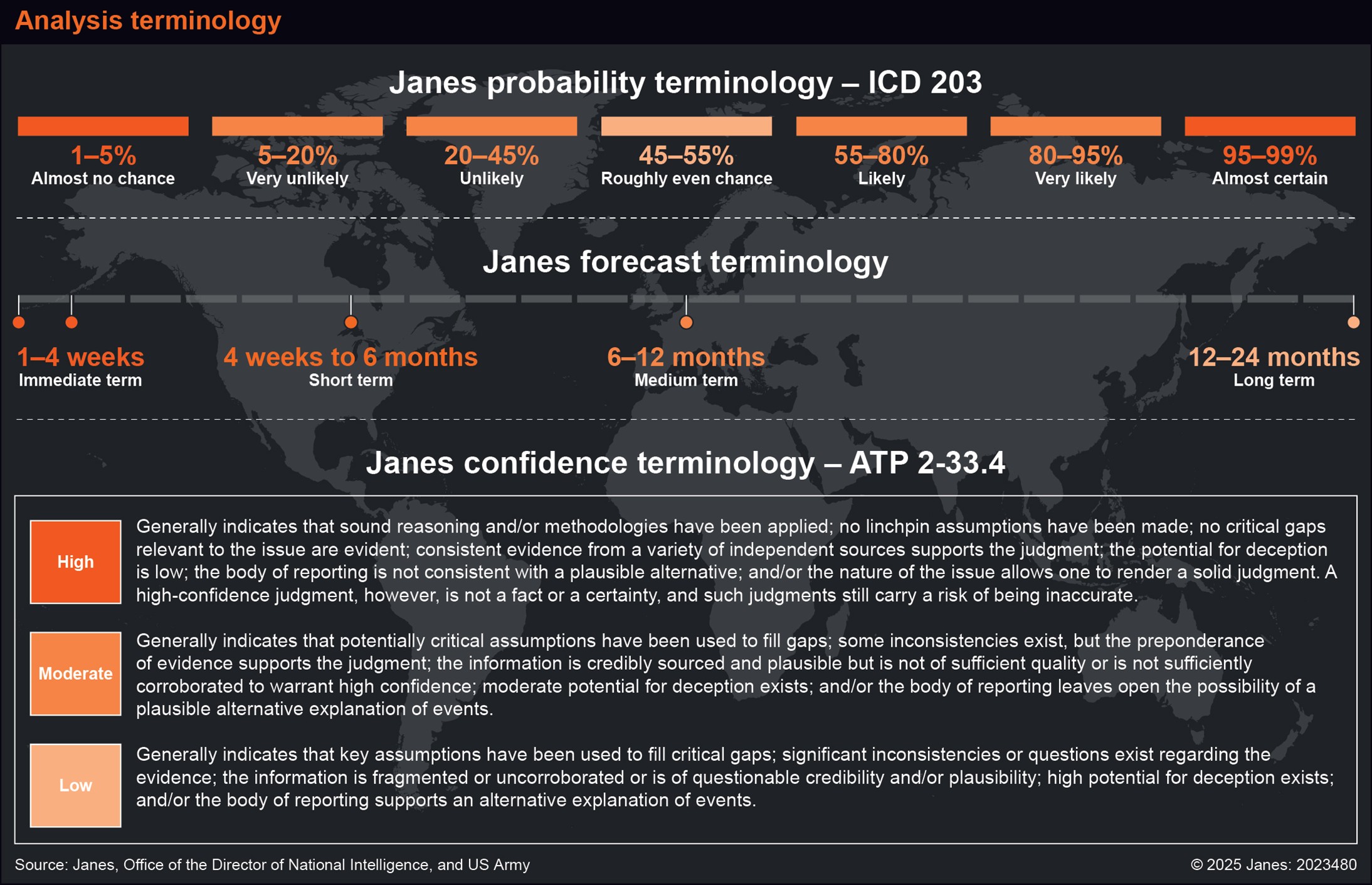
Image caption: Janes analysis terminology. Image credit: Janes