Iran conflict 2026: Disruption to Strait of Hormuz increases energy and food production risks
Event
On 28 February 2026, coordinated US–Israel strikes on Iran under Operation Epic Fury and Operation Roaring Lion triggered regional Iranian retaliation across the Gulf, including attacks against targets in Qatar, the United Arab Emirates (UAE), Kuwait, Bahrain, and Saudi Arabia.
Iran’s actions increased maritime security risks in and around the critical Strait of Hormuz, where at least three commercial vessels suffered damage from suspected projectiles on 1–2 March, according to the UK Maritime Trade Operations (UKMTO) Centre.
The heightened threat environment has already led insurers to withdraw or reprice coverage for transits through the strait, while major carriers - including Maersk - began rerouting traffic via the Cape of Good Hope.
By 2 March, vessel passages through Hormuz had decreased substantially, indicating a widening disruption to global oil and liquified natural gas (LNG) flows and heightening strategic risk for import‑dependent economies.

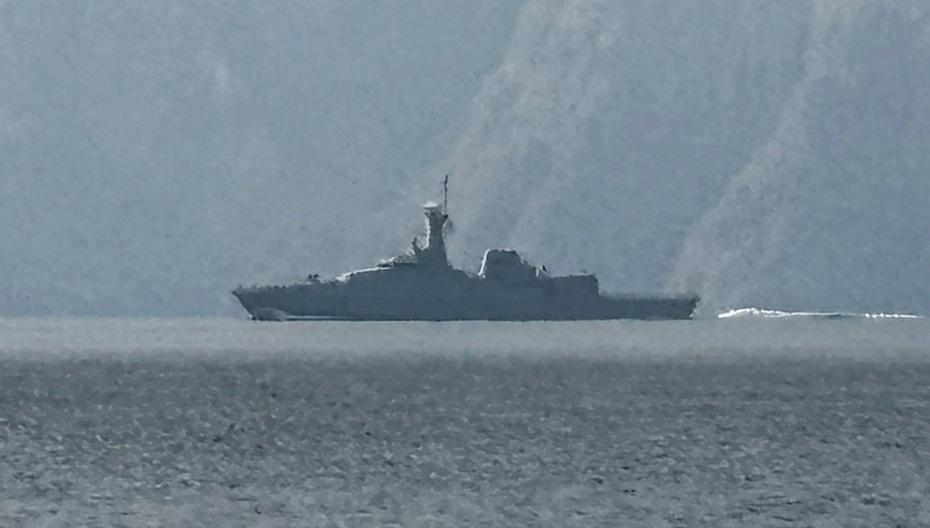
Image caption: A navy vessel is seen sailing in the Strait of Hormuz, a vital waterway through which much of the world's oil and gas passes on March 1, 2026. Two ships were attacked in the Strait of Hormuz on March 1, maritime security agencies said, as Iran pressed a second day of strikes in response to US-Israeli military strikes on Iran killing it's supreme leader.Image credit: Sahar AL ATTAR / AFP via Getty Images
Significance
Approximately 21 million barrels of oil a day – in the form of crude, condensates and petroleum products – pass through the Strait of Hormuz daily, according to the US Energy Information Administration (EIA). This is equivalent to around 21% of global supply.
Qatar and the UAE also account for around a fifth of global Liquefied Natural Gas (LNG) production, with this too passing through the critical strait.
The price of benchmark Brent Crude increased 13% during early trading on 2 March, while European natural gas prices jumped 24% as worries grew about disruption to supply (given Europe’s prior diversification away from Russian gas supplies).
An announcement on 1 March by eight OPEC+ countries - Saudi Arabia, Russia, Iraq, UAE, Kuwait, Kazakhstan, Algeria, and Oman – that they would increase production in an attempt to stabilise markets failed to calm markets, given the limited capacity to offset transit-related disruption.
Prolonged disruption to Hormuz traffic would not only suppress Gulf hydrocarbon revenues but will also generate inflationary pressures across global markets, eroding industrial competitiveness and complicating the fiscal and political stability of key partner economies.
Elevated natural gas prices will also very likely add pressure to increases in global fertiliser costs - given the Gulf’s pivotal role in nitrogen-based fertiliser production – and therefore raise the risk of global food price instability with commensurate effects on political stability in import dependent regions.
Most Gulf states (with the arguable exception of Bahrain) possess fiscal buffers sufficient to absorb short-term shocks; however, extended disruption will likely lead to difficult policy trade-offs.
Peripheral impacts
A more substantial economic impact is likely in the more fragile peripheral Middle Eastern economies, where elevated oil and gas prices and broader contagion effects will almost certainly intensify existing vulnerabilities, while emerging market economies more broadly may face currency pressures as investor flight to safe‑haven assets strengthens the US dollar (USD).
Lebanon – already subject to profound economic and fiscal fragility – faces greater challenges as a result of action by Israel against the Iran-aligned Hezbollah military group.
Broader concerns regarding regional shipping and the potential for further contagion led international shipping groups including Maersk to announce on 1 March that they were rerouting vessels bound for the Red Sea via southern Africa, thus raising economic risks for Egypt and Jordan.
Egypt - indeed, the Suez Canal typically accounts for around 1.5% of Egypt’s GDP and approximately 15% of foreign currency receipts, although transits (and therefore fee income) have yet to recover from the 50% decline associated with the Red Sea crisis that commenced in November 2023.
Jordan – which also faces persistent economic challenges – has three pillars of its economy (in terms of employment and foreign earnings) which are tourism, the extraction (and export) of potash and phosphates, and the Port of Aqaba (which serves as a regional transit hub). All three were severely disrupted by external crises in recent years (including the Covid-19 pandemic and conflict between Israel and Hamas), with the latest disruption likely to further suppress economic activity if it persists in the short-term (1-6 months).
More broadly, sustained elevated oil prices will almost certainly disproportionately affect developing countries that depend heavily on refined petroleum imports and which lack the fiscal buffers (or currency reserves) to absorb price increases.
Elevated prices and depleted fiscal buffers associated with the prior Covid-19 pandemic and the conflict in Ukraine have already constrained the capacity of states in sub-Saharan Africa in particular to cushion households from market prices.
Based on factors including fiscal balance, petroleum import reliance, poverty and national wealth, Janes assesses Burkina Faso, Burundi, Central African Republic, the Democratic Republic of Congo, Liberia, and Mozambique to be particularly vulnerable given acute fiscal fragility and high energy vulnerability.
Outlook
● The broader economic consequences of the US–Israel strikes against Iran will depend on the duration and geographic spread of subsequent instability. A rapid diplomatic deescalation in the immediate-term (next four weeks) would likely reverse recent increases in energy prices and enable the gradual restoration of normal shipping patterns through the Strait of Hormuz, with existing buffers - including hydrocarbons already in transit and the reserves of major consumers - providing sufficient resilience to mitigate short-term disruption.
● If instability persists however in the short-term (one to six months) the economic and strategic impact will deepen. A more protracted conflict would sustain, or potentially elevate, global oil and gas prices, driving broad based inflation across industrial sectors and placing acute pressure on energy import dependent developing countries in particular. Disruptions to fertiliser production and transport would further constrain agricultural output, potentially raising global food price risks and amplifying social and political weaknesses in vulnerable regions.
● Extended volatility is also likely to generate sustained currency pressures. Capital flight toward safe-haven assets - particularly the US dollar - would heighten balance of payments risks in fragile markets both within the Middle East and more broadly, increasing the likelihood of fiscal stress, sovereign downgrades, and political instability.
Risk positive indicator
● A prompt de-escalation with the cessation of kinetic activity and the pursuit of diplomatic solutions.
● Resumption of maritime insurance coverage at or close to prior levels.
● Reduction in oil and gas prices from levels apparent on 2 March 2026.
Risk negative indicator
● An escalation of kinetic activity against oil and gas production and transit facilities in the Gulf region.
● Contagion leading to broader instability and conflict.
● Prolonged instability leading to protracted disruption to shipping in the Strait of Hormuz.
● Acute currency depreciation and related sovereign risk signals in emerging markets in particular.
Image caption:
Analysis terminology. Image credit: Janes