Iran's government very likely to retain control over national political, ideological, and religious institutions over the next 24–48 hours at least
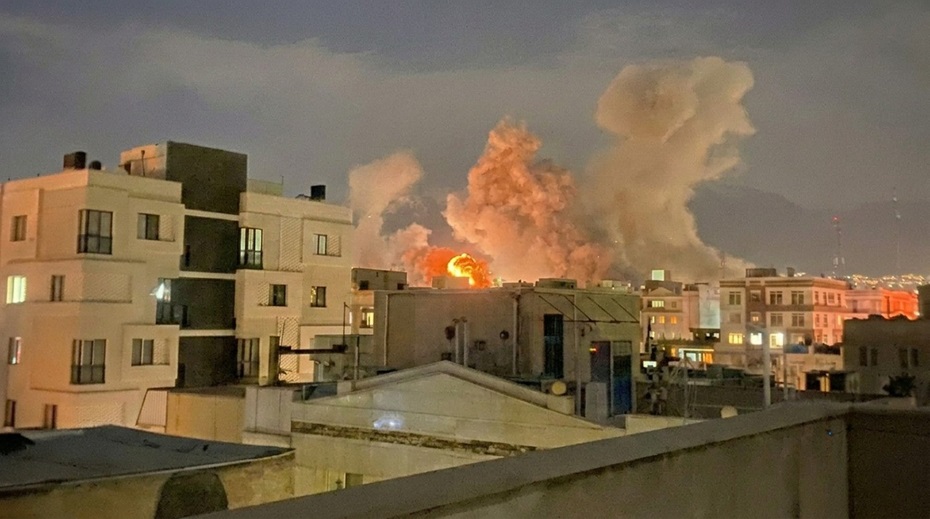
Under Operation Epic Fury and Operation Roaring Lion, US and Israeli forces have launched air strikes against targets in Iran. The strikes have targeted Iranian leadership figures across the government, military, and intelligence services, most notably the previous Supreme Leader Ayatollah Ali Hosseini Khamenei, who was announced dead on 1 March 2026.
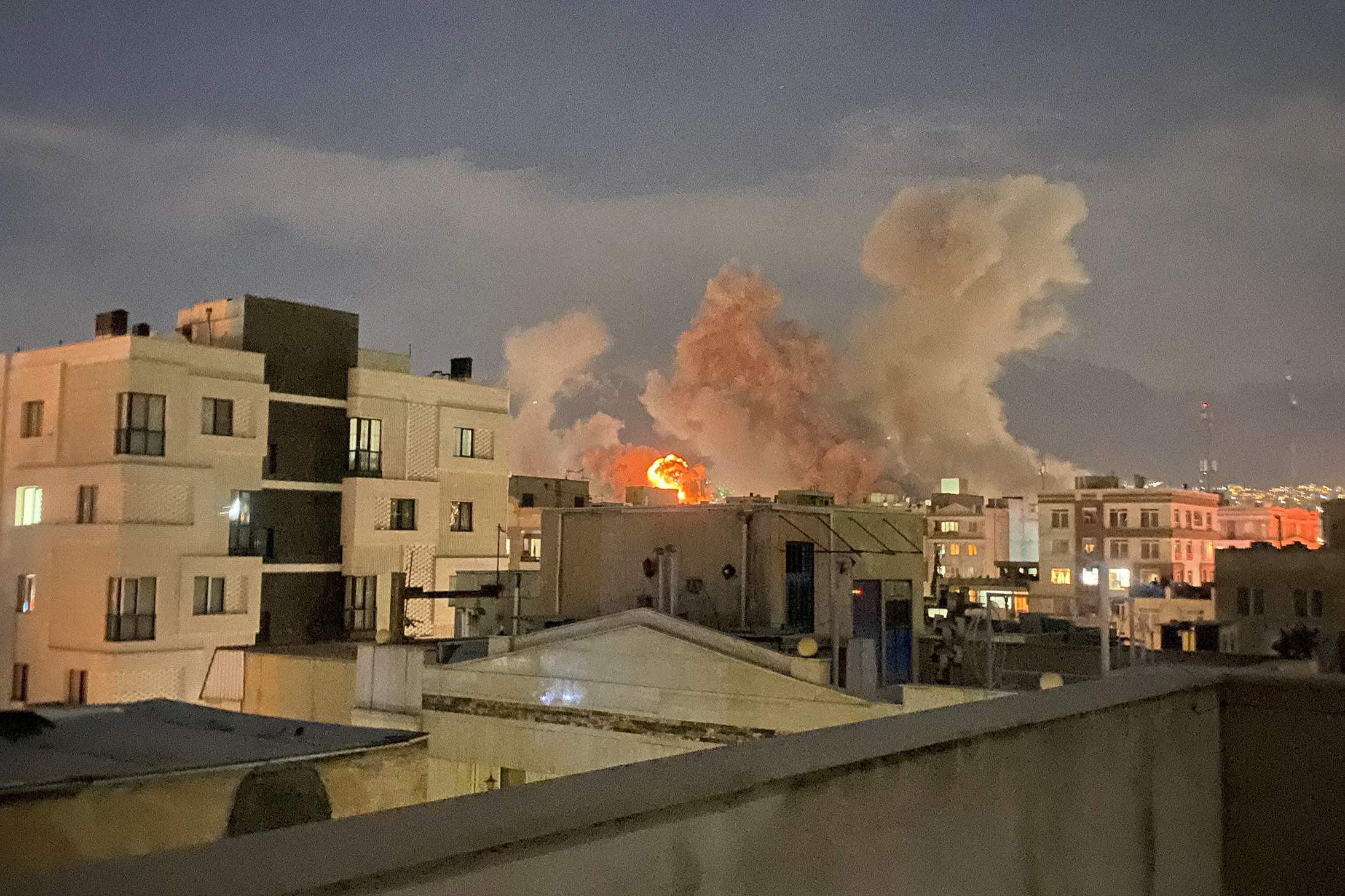
Image caption: Plumes of smoke rise following reported explosions allegedly near Iran's Ministry of Intelligence on Araqi Street in Tehran on March 1, 2026, after Iran's supreme leader, Ayatollah Ali Khamenei, was killed a day earlier in a large U.S. and Israeli attack, prompting a new wave of retaliatory missile strikes from Iran. Image credit: Mowj / Middle East Images / AFP via Getty Images
Following the confirmation of Khamenei's death, Iranian state media published a statement clarifying the next steps for the election of a new Supreme Leader. According to their statement, the constitutional provision in the event of "the demise, resignation, or dismissal of the Leader," means that the Assembly of Experts in Iran is "obliged to take action as soon as possible to appoint and introduce a new Leader."
Until the introduction of the Leader, an interim leadership council is formed, which consists of the President, Masoud Pezeshkian, the Chief Justice Gholam-Hossein Mohseni-Ejei, and Ayatollah Alireza Arafi, who is a member of the Guardian Council. As of the time of publication, there are unconfirmed reports in the open sources that indicate that Alireza Arafi has also been assassinated by the US.
Significance
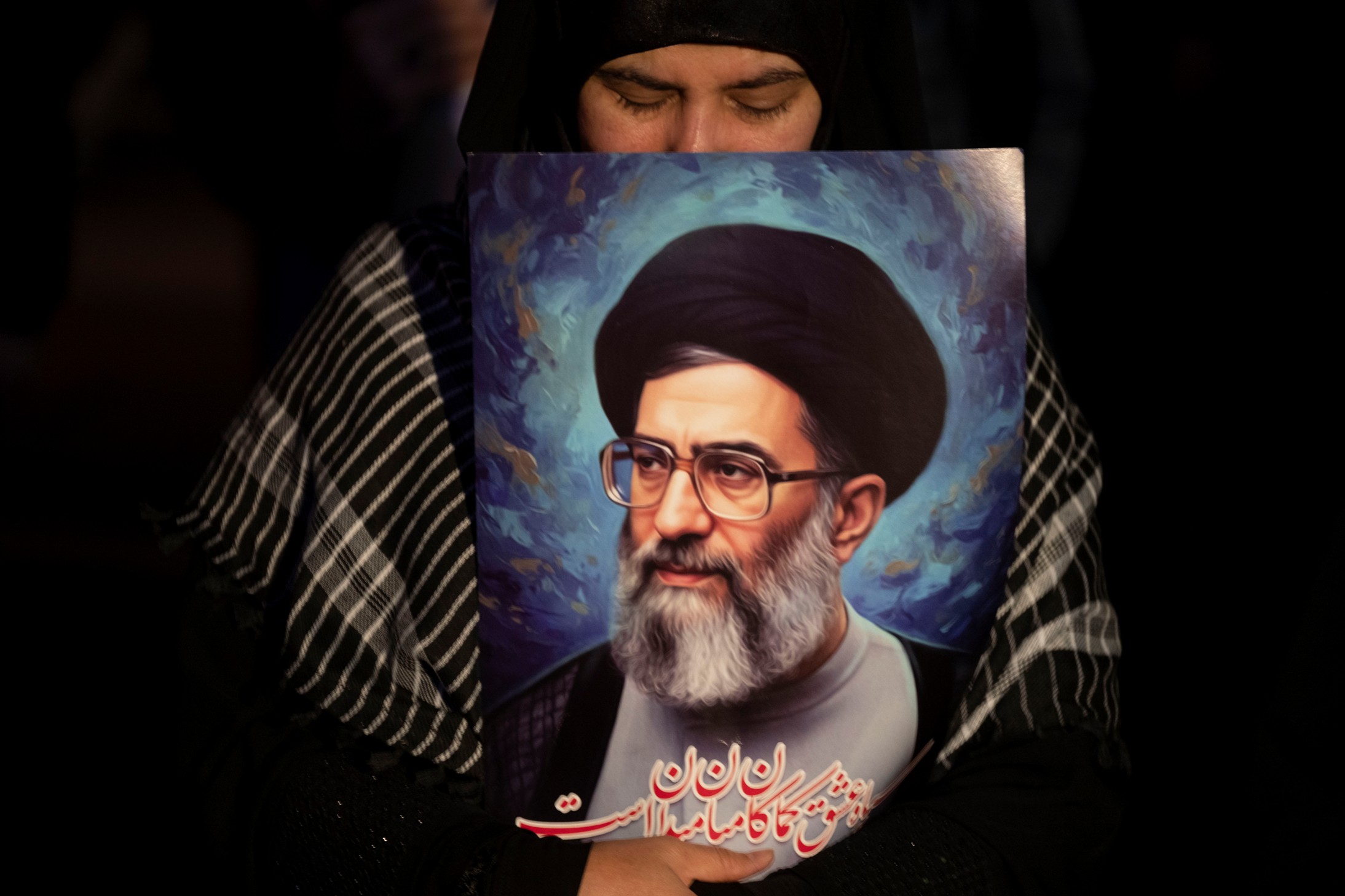 Image caption: An Iranian woman holds a portrait of Iran's Supreme Leader Ayatollah Ali Khamenei while participating in a rally in Tehran, Iran, on March 1, 2026, following the confirmation of Ayatollah Khamenei's death by state TV. Image credit: Morteza Nikoubazl/NurPhoto via Getty Images
Based on available open source information, including the identities of individuals reportedly killed by Israel and the US, Janes assesses that the impact on Iran’s senior political leadership remains limited, aside from the death of the Ayatollah. While the Ayatollah functions as the supreme authority and ultimate decision-maker, he operates within an established advisory structure comprising senior clerics and long-standing political aides who provide counsel during periods of escalation.
The Iranian government has publicly stated that succession arrangements for the position of Supreme Leader are in place. Independent of this, the majority of individuals assessed by Janes as forming part of the Ayatollah’s inner circle or constituting highly influential clerical and political figures remain alive at the time of publication.
Of the 29 individuals assessed by Janes as either members of Khamenei’s inner circle or highly influential clerics, three have been killed. Senior advisers to Ali Khamenei, including Seyyed Esmaeil Khatib, Ali Akbar Velayati, Ali Larijani, Gholam-Ali Hadad-Adel, and Mohammad Mohammadi Golpayegani, remain alive at the time of publication.
Their areas of influence supporting Khamaeni's decision span a wide range of core functions, including national security, nuclear, defence, and foreign policy. Of the 12 permanent members of the Supreme National Security Council (SNSC), ten remain alive; the two fatalities comprise the Commander-in-Chief of the Islamic Revolution Guard Corps (IRGC) and the Chief of the General Staff of the Armed Forces.
There has been a more substantial impact on the IRGC and the broader security apparatus. Israel has claimed to have killed at least 40 “key” commanders within Iran’s defence and security structures, although it has not publicly identified all individuals at the time of publication.
Confirmed fatalities include senior leadership figures, namely Major General Mohammad Pakpour who was the Commander-in-Chief of IRGC and Major General Abdolrahim Mousavi, who was the Chief of the General Staff of the Armed Forces. Both were members of the SNSC. Janes is unable to independently verify the full list of IRGC or Artesh commanders killed.
Janes assesses with moderate confidence that operations within the IRGC and elements of the security structure have been disrupted as a result of leadership losses.
Janes also assesses with moderate confidence that the political and ideological leadership structure surrounding the Ayatollah remains largely intact at the time of publication and will retain continuity of function over the next 24-48 hours.
However, strikes conducted by Israeli forces on 1 March and across 2 March could result in more personnel being announced dead, potentially changing the assessment with regards to the government's ability to carry out state functions and a succession process for the position of Supreme Leader.
Outlook
Government control and viability (in the next 24-48 hours)
The Islamic Republic and its political apparatus will very likely retain control over national political, ideological, and religious institutions over the next 24–48 hours at least.
Political and ideological decision-making will not be significantly disrupted unless a substantial proportion of Ali Khamenei’s inner circle and senior advisory personnel are killed.
Even in the event of significant losses within Khamenei's immediate advisory and clerical network, Janes assesses that preliminary crisis-continuity arrangements have been established to ensure short-term decision-making continuity.
Succession mechanisms and advisory structures surrounding the Supreme Leader will therefore continue to be operational and will contribute to the resilience of the current political framework.
US-Israel Strikes
US-Israel strikes will almost certainly continue to target prominent members of Iran's leadership and individuals who were close to Khamenei.
These targets will almost certainly include potential successors to Khamenei.
These strikes will also likely aim to support anti-government elements, including Kurdish groups, to facilitate their operations against the Iranian government and security apparatus.
Protests and Riots Risks
Pro-government protest activity will continue to materialise despite the risk of US-Israel strikes. Ideologically aligned constituencies will very likely prioritise public demonstrations of opposition to the US and expressions of mourning following the death of Ali Khamenei. This protest activity will not contribute to domestic instability and will instead reinforce government narratives of cohesion and resistance.
Extensive force deployments, arrests, and communications restrictions will continue to constrain large-scale anti-government mobilization over the next 24 hours. The state retains both the intent and capability to suppress unauthorised gatherings rapidly.
Should the US or Israel materially enable protest activity through the provision of protective measures or technical support, including through the widespread facilitation of access to state-independent satellite communications systems, the likelihood and coordination capacity of anti-government protests will increase.
Janes will assess specific protest and riot dynamics in a forthcoming dedicated report.
Alternative scenario
Janes will reassess the likelihood of the Iranian state being able to carry out key functions if, in the next 24-48 hours, both US and Israeli strikes kill a substantial number of key decision makers within the Iranian government. Individuals of highest importance and influence include (but are not limited to) Ali Larijani, Mohammad Ghalibaf, Ali Akbar Velayati, Seyyed Esmaeil Khatib, Masoud Pezeshkian, Mojtaba Khamenei, Alireza Arafi, and Hassan Khomenei.
Information gaps
Information on personnel and individuals in Khamenei’s inner circle who have been killed, but whose information has not been announced by Israel or Iran.
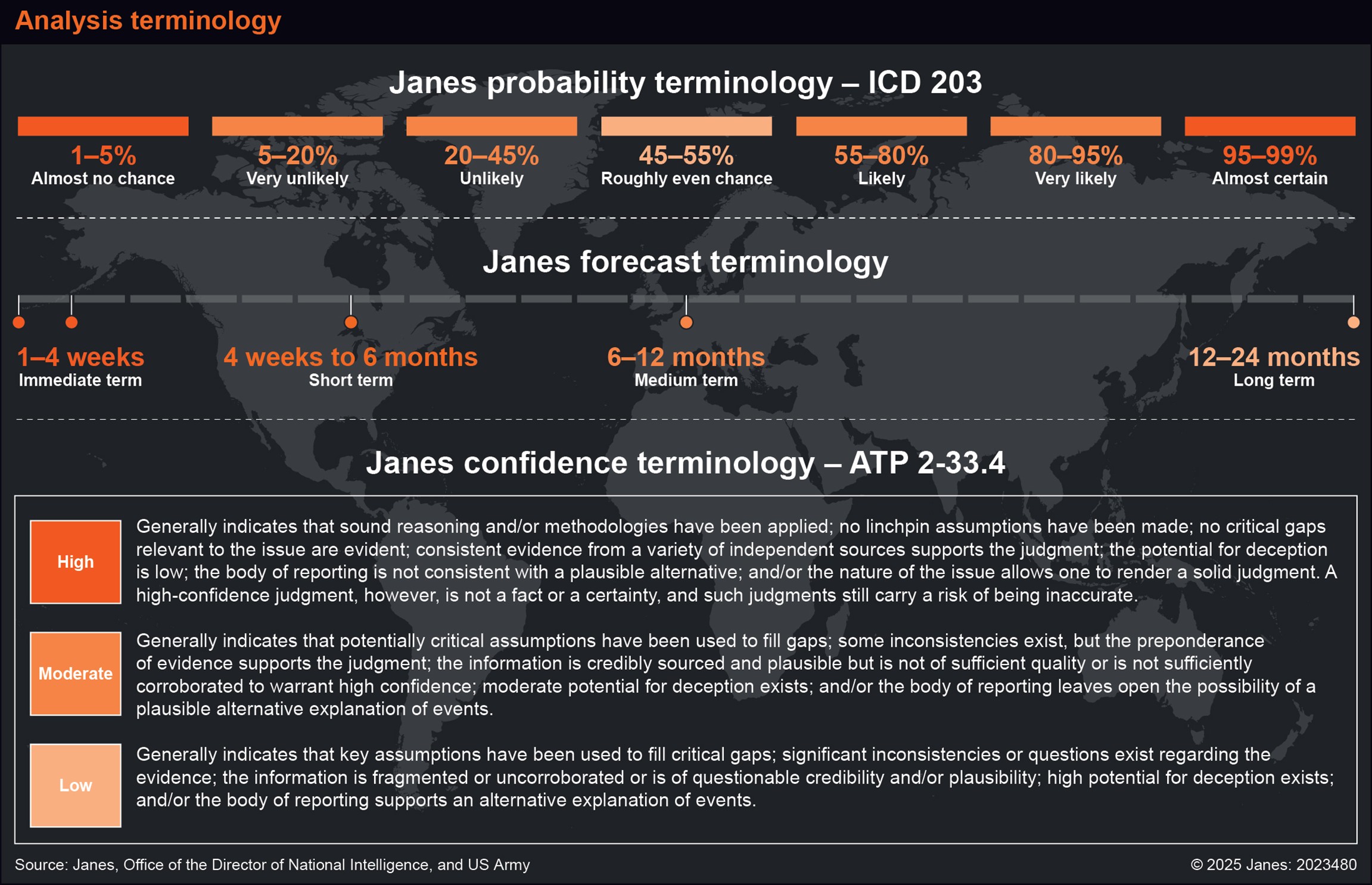
Image caption: Analysis terminology
Image credit: Janes