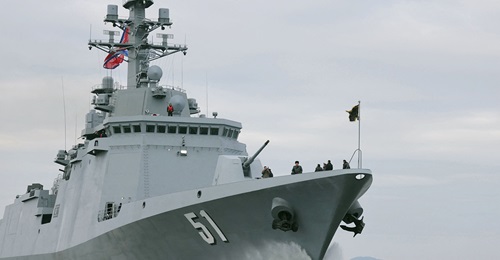
Analysis of 2025 UK strategic defence review from Janes

 The flight deck of HMS Prince of Wales during night flying operations as part of the UK Carrier Strike Group 2025. (MoD/Crown Copyright/2074683)
Analysis of 2025 UK strategic defence review
The much-anticipated 140 pages of the Strategic Defence Review (SDR) 2025 contain an attempt to chart the direction for the UK's defence development and deployment for at least the next decade. While straddling the worlds of military capability and political messaging, the review made recommendations in areas from strategic focus to civil resilience, and weapons procurement to nuclear posture.
Balancing interests, commitments, and responsibilities for Euro-Atlantic security and beyond
A central tension that emerged from the review surrounds the UK’s strategic stance. While repeatedly stressing the need for a ‘NATO first’ policy centered on Euro-Atlantic security following Russia’s full-scale invasion of Ukraine, the authors acknowledge what they call the UK’s “significant interests, commitments, and responsibilities beyond the Euro-Atlantic”.
When it comes to core roles for the British Armed Forces and defence establishment though, attending to the UK’s global presence was a firm third after Role 2: deterring and defending in the Euro-Atlantic, and Role 1: defending the UK. Even as the report was published, a UK Carrier Strike Group was heading for exercises in the Indo-Pacific, partly to, in the report’s words, “retain deeper and broader ‘match fitness’ of the armed forces”.
But a potential dilemma for the UK government was evident in the stipulation that to “ensure such deployments do not detract from delivery of Roles 1 and 2, the armed forces must be able to return at speed to the Euro-Atlantic”. Speed, in defence, can be a relative thing.
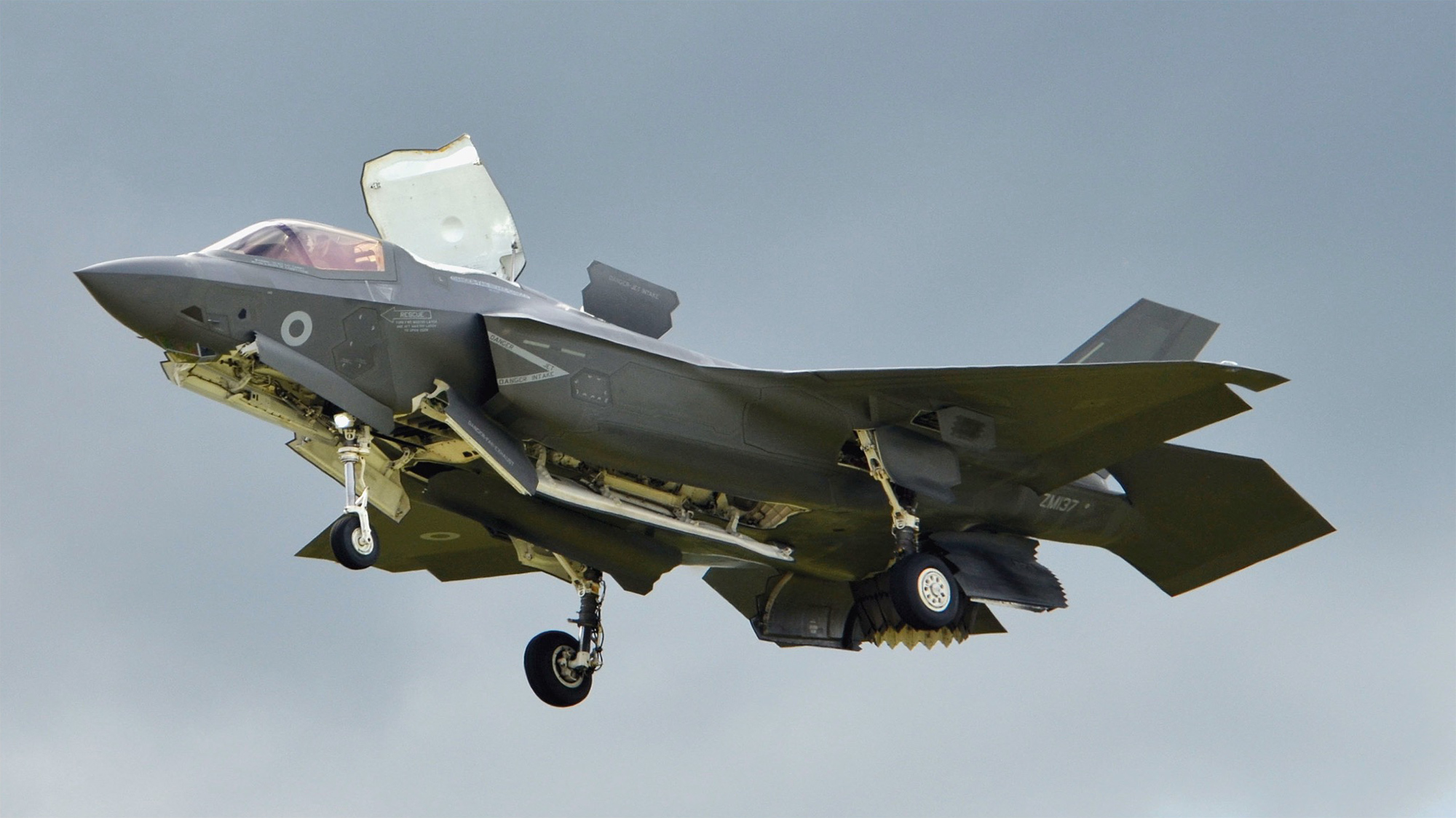
A UK F-35B Lightning II. (Janes/Patrick Allen/1690580)
Air domain
In the air domain, the SDR 2025 set out strong aspirations for the UK’s future aviation capabilities, although it fell short of committing to funding and timelines for their implementation. The review spelt out plans to introduce new aviation platforms and capabilities for the Royal Air Force (RAF) and the Royal Navy (RN), but in most cases caveated this intent with the proviso that the required funding must first be found to implement them.
- Increase E-7 fleet up from three aircraft
- Increase A400M fleet up from 22 aircraft
- Replace Hawks with new “cost-effective” type
- Buy more F-35s
- Return to nuclear role for RAF
- Maritime role for Protector
- Hybrid air wing for Queen Elizabeth carriers
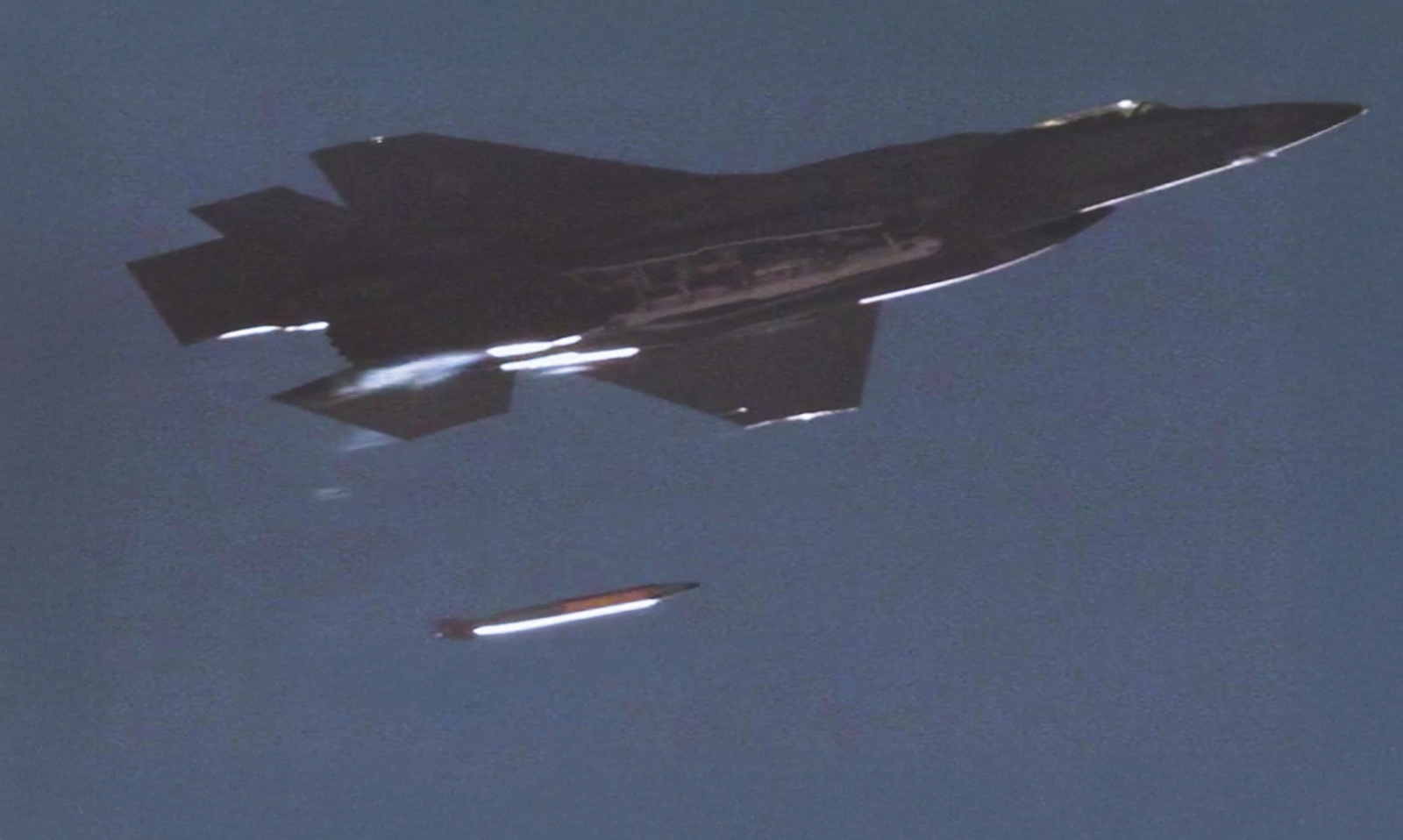
An F-35A Lightning II opens its bomb bay doors and drops a mock B61-12 in a test announced in November 2020, held at Sandia National Laboratories’ test range in Tonopah, US. (Sandia National Laboratories/1818863)
Participation in NATO’s air-launched nuclear deterrent mission
In a move described by one UK parliamentarian as “the UK’s most significant defence expansion since the end of the Cold War”, the SDR said that the country should consider participating in NATO’s air-launched nuclear deterrent mission, for which the US has deployed a limited number of B61 nuclear weapons to certain locations in Europe. Although these are carried by the host country, they remain under US custody and control.
- The SDR posited a return to the nuclear role for the RAF as part of NATO’s shared mission
- This would likely see F-35A aircraft acquired to carry the B61 freefall bomb
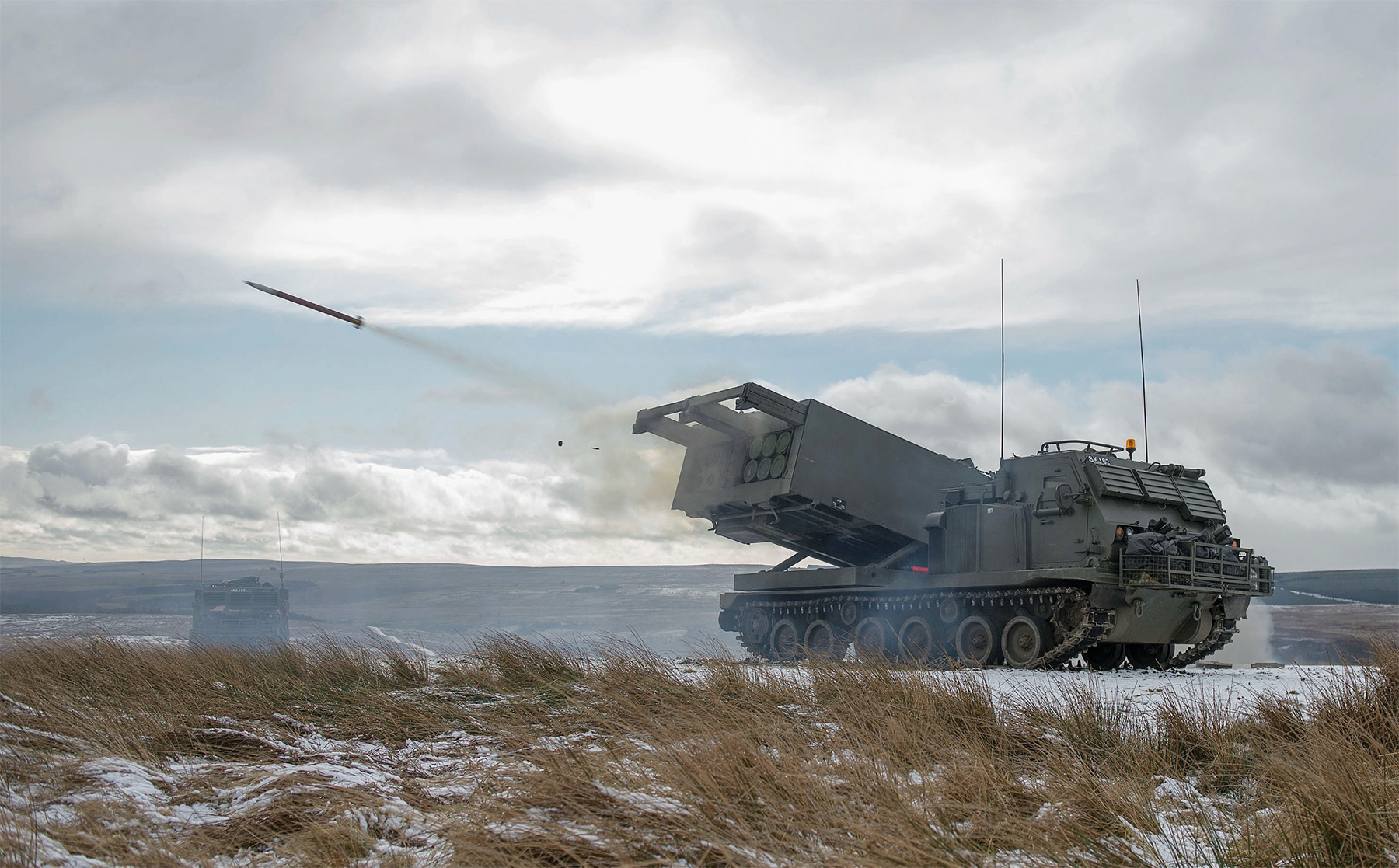
The British Army M270 Multiple Launch Rocket System. (MoD/Crown Copyright/1650451)
Land domain
Calls for significant increases in British Army personnel and capabilities
In the land domain, the SDR 2025 calls on the British Army to be made ten times more lethal. This is planned to be achieved by combining more personnel and armoured capabilities with air defence, communications, artificial intelligence (AI), software, long-range weapons, and unmanned aerial vehicle (UAV) swarms.
Modernisation of two divisions and Allied Rapid Reaction Corps (ARRC):
- 3rd (UK) Armoured Division
- Fully deployable headquarters
- Three mechanised brigades
- Support brigade
- Associated enablers
- Possible integration of Royal Marines Commandos

UK’s 3rd Division Combined Arms Demonstration on Salisbury Plain. (Janes/Patrick Allen/1641276)
Development of the British Army
- At least 100,000 troops, including 73,000 regulars
- Headquarters Standing Joint Command (UK)
- 16 Air Assault Brigade leading global crisis response
- High-low 20-40-40 mix of platforms: 20% crewed; 40% reusable; 40% consumables (munitions)
- Supported by ‘always-on’ manufacturing: long-range fires; missiles; smaller munitions

A concept graphic of a future SSN-AUKUS submarine. (BAE Systems/2048679)
Naval domain
Implications of the Strategic Defence Review for the maritime domain
In the maritime domain there is relatively little that’s new in the SDR for the Royal Navy (RN); rather, the review reaffirms a broad direction of travel – albeit with a more pronounced ‘NATO-first’ tilt – towards a naval force design that will be increasingly defined by digital integration, data, and autonomy.
- More pronounced ‘NATO-first’ tilt
- Force design increasingly defined by digital integration, data, autonomy
- Delivery of a new ‘hybrid’ navy
- Commitment to build ‘up to’ 12 SSN-AUKUS SSNs

RFA Proteus (background), the UK’s first underwater surveillance ship, shadowing the Russian intelligence gathering ship Yantar (foreground), in the Irish Sea in November 2024. (MoD/Crown Copyright/2074686)
The review envisages the navy playing a leading role in securing the UK’s critical undersea infrastructure and maritime traffic. It noted that co-ordination with the rest of government, industry, and allies will be needed to achieve this, and that it could potentially be under a new model for government/industry collaboration.
- ‘Atlantic Bastion’ concept to counter undersea threats highlighted
- Future Air Dominance System (FADS)/Type 83 project endorsed
- Call for more flexible regulation to facilitate experimentation
British soldiers engaged in a counter-UAV exercise in California in March 2025. (MoD/Crown Copyright/2074684)
Aspirations for the UK to be a leader in deeper interoperability with NATO allies
To achieve some of the goals set out above, the authors joined the wave of officials across Europe grappling with the clear need to have a larger and more well-funded defence industrial base. They defined the key route as a “new partnership with industry” to feed more widespread and faster cycles of innovation, so that “industry can scale up production at speed to sustain larger and longer campaigns”. We finish where we began, with the focus on NATO and what is articulated as a need for “a different approach from that taken since the end of the Cold War”. The authors called for a road map to be published on making the UK a leader in deeper interoperability with NATO allies by January 2026 and implementing that within six months. A new era, or perhaps a return to an older one.