University of Delaware designs system that uses RF waves to find hidden objects
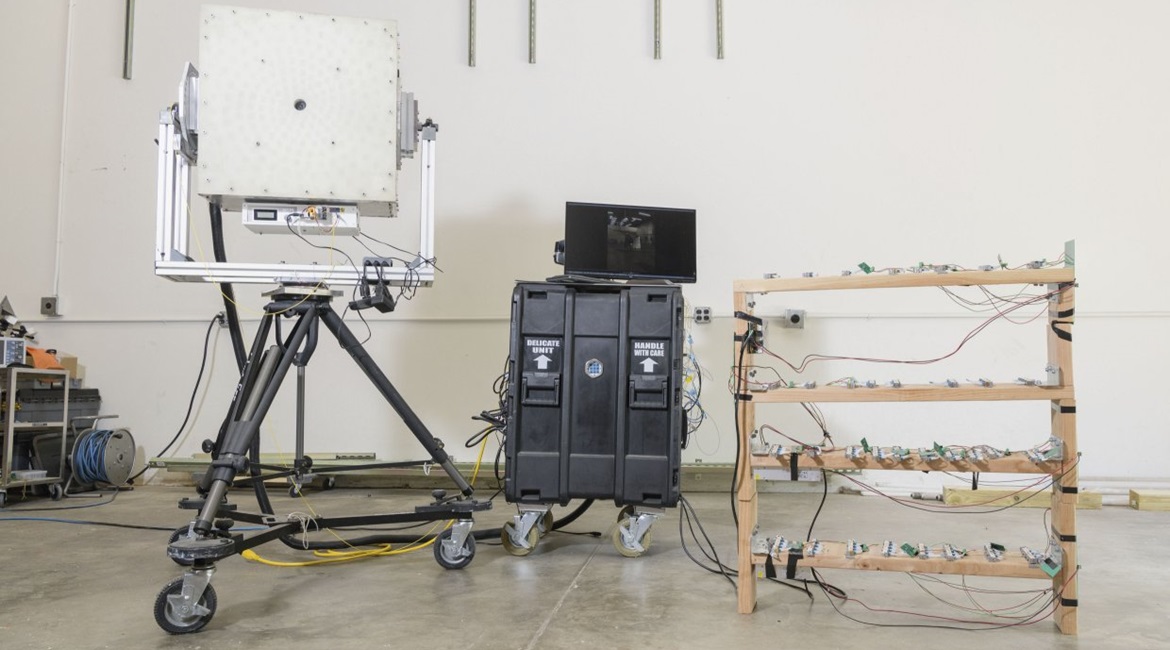
A team of engineers at the University of Delaware has built and demonstrated a real-time mobile video camera that sees the environment through radio frequency (RF) waves as opposed to optical or infrared (IR) waves.
In early demonstrations, the device has shown that using high-frequency waves enables it to ‘see’ through non-metallic objects and detect concealed objects.
In December, the university announced the team received USD1.5 million in funding from the US Department of Defense (DoD) to reduce the size, weight, and power (SWaP) of the device in preparation for a live trial in May.
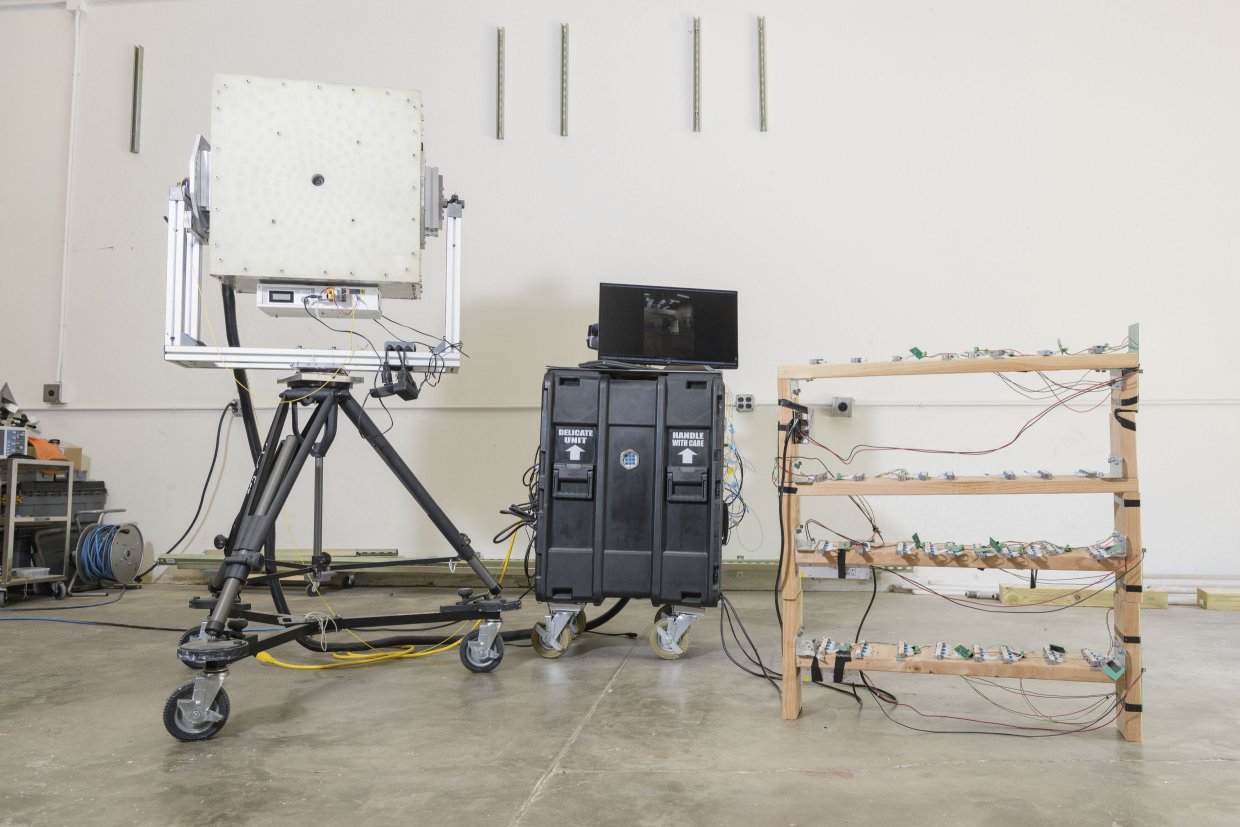
A team of engineers at the University of Delaware has developed a camera-like device that generates and detects millimetre waves to ‘see’ through solid objects. The US DoD has provided USD1.5 million to further develop the device for ‘Trident Specter’, an annual DoD event to test and evaluate emerging technologies. (University of Delaware)
The ability to make the device smaller is important, Dennis Prather, endowed professor of electrical engineering at the University of Delaware, told Jane’s . Typical imaging systems scale in three dimensions (3D) – they have a lens and have to be a certain distance from the focal plane. In an IR camera, or any kind of visible-light camera, the lens focuses the image onto film, or an electronic focal plane array, so they scale in 3D, Prather explained. “If I want to make a bigger lens, I have to make it deeper too, which means they scale volumetrically. If you can do it in a phased array like we do, it only scales in 2D, so it has a ‘pizza box’ scale factor as opposed to a moving box-scale factor,” he said.
Go beyond the headlines - with direct links to interconnected entities
Get full access to validated equipment, military capabilities, and market insights.