Robin Radar sees growing demand for its drone-detection radars
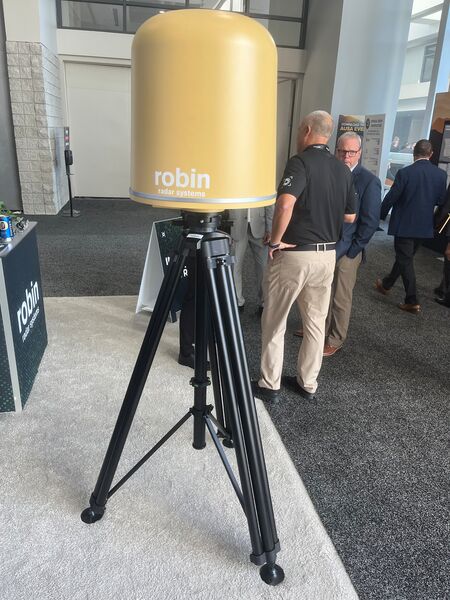

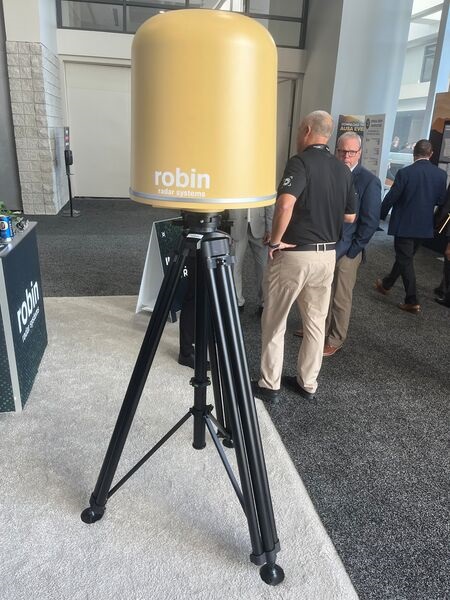
Robin Radar Systems' Iris 3D drone radar on display at the AUSA conference in October 2026 (Janes/Jeremiah Cushman)
Robin Radar Systems, headquartered in Delft, Netherlands, was founded in 2010 with a focus on bird-detection radars to help prevent bird strikes at airports and air force bases.
It subsequently moved into drone detection for the civilian sector, Marcel Verdonk, chief commercial officer of Robin Radar Systems, told Janes on 13 October at the Association of the United States Army annual conference in Washington, DC.
Following the Russian full-scale invasion of Ukraine in 2022, the Dutch Ministry of Defence delivered Robin Radar's systems to Ukraine, he said. Other European countries also purchased systems and donated them, according to Verdonk.
“Through that we learned how to operate this radar in harsh environments. The Ukrainians have been great feedback providers,” he added.
Iris
The Iris drone-detection radar, Robin Radar's flagship product, is “specialised in short-range, small-object detection”, according to Verdonk.
“The base range is 5 km (3.1 mi), which is excellent for Group 1 and 2 drones,” Verdonk said, adding that the company has introduced a new software mode that extends range to 12 km.
The new mode was developed to meet Ukrainian requirements to detect larger Shahed-type drones at greater range. “You want to detect [Shaheds] a bit earlier, around 7-8 km,” he noted.
Robin Radar also developed an on-the-move feature to address concerns about radar emissions, Verdonk said. Active radars like Iris continuously emit, Verdonk said, adding that “it's only 12 Watts, but that still could make you visible to the enemy”.
Iris can continue to detect and track at while moving at speeds of 100 km/h, he noted.
Go beyond the headlines - with direct links to interconnected entities
Get full access to validated equipment, military capabilities, and market insights.