NATO tests underwater comms relay from amphibious vehicle
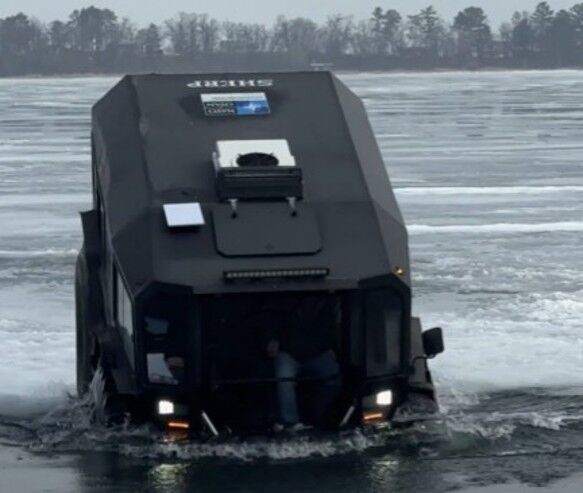

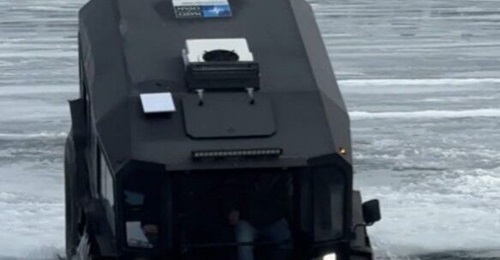
An amphibious all-terrain vehicle moves through broken ice in footage shared by NATO Allied Joint Force Command Norfolk on 3 August 2026 in a post about Task Force X-Arctic. (NATO Allied Joint Force Command Norfolk)
In a press briefing on 10 November 2026, leaders of NATO's Task Force X-Arctic Beacon project described a trial in which an amphibious ground vehicle used an underwater communications relay to connect assets.
NATO's Centre for Maritime Research and Experimentation (CMRE) tested a manned platform as a means of sustaining land and sea communications in regions covered with drifting or fractured ice. The initial demonstration was conducted with a driver, with modifications to make the vehicle autonomous made afterwards.
On 3 August, NATO posted a video on social media with brief footage from several tests in a cold-weather environment. One of these tests showed what appeared to be a Sherp amphibious all-terrain vehicle, made by Ukrainian company Quadro Mechanics, operating on cracked ice. This likely aligns with the initial Task Force X-Arctic trial held in Iceland throughout June and July, indicating that this was at least one of the vehicles carrying the above-and-below water communications relays.
The amphibious vehicle operates on ice and in water, establishing communication links between aerial vehicles and systems beneath the ice, said João Alves, Task Force X-Arctic lead at NATO's Centre for Maritime Research and Experimentation (CMRE). The vehicle could extend coverage to remote areas with little or no communication infrastructure, he added.
Clarifying the operational details to Janes
Go beyond the headlines - with direct links to interconnected entities
Get full access to validated equipment, military capabilities, and market insights.