BAE Systems announces advances in ammunition supply chain
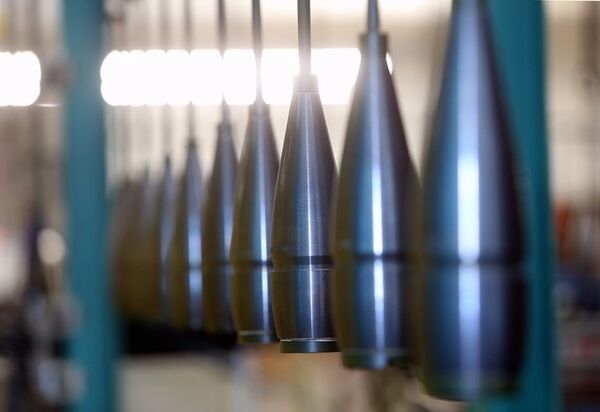

105 mm shells under production at BAE Systems' plant in Glascoed, UK. (BAE Systems)
BAE Systems has made advancements in continuous flow processing production methods for explosives and propellants, meaning reduced running costs and greater safety in its factories, the company said in a 21 April press release.
The company said that it had invested GBP8.5 million (USD11.4 million) since 2020 in new manufacturing methods, leading to breakthroughs in the production of next-generation ammunition.
Continuous flow processing reduces the amount of explosives on the production line at any one time, meaning less containment needed around the chemicals and fewer risks such as damage from accidental detonation or from batch contamination. Flexibility in production is increased while running costs are reduced.
BAE Systems said it will use continuous flow to synthesise explosive material and remove the need for nitrocellulose and nitroglycerine, which are in high demand across global supply chains for propellant production.
The company said it has already conducted some pilot, small-node production runs that demonstrated that the technology and methods remove the need for large-scale explosives factories.
As a result, the company said it anticipates its domestic UK explosive and propellant production will be enough to meet UK Ministry of Defence (MoD) and export requirements. The initial phase of increasing the capacity is expected to end by the fourth quarter (Q4) of 2026.
These production developments follow more than GBP150 million of investment by the company in its UK munitions facilities since 2022. This, it added, will deliver a 16-fold increase in production capacity of 155 mm artillery shells when its new melt cast explosive filling facility at Glascoed, South Wales, becomes operational in Q3 2025.
Go beyond the headlines - with direct links to interconnected entities
Get full access to validated equipment, military capabilities, and market insights.