UK parliamentary committee calls for RN focus on CUI skills and capabilities
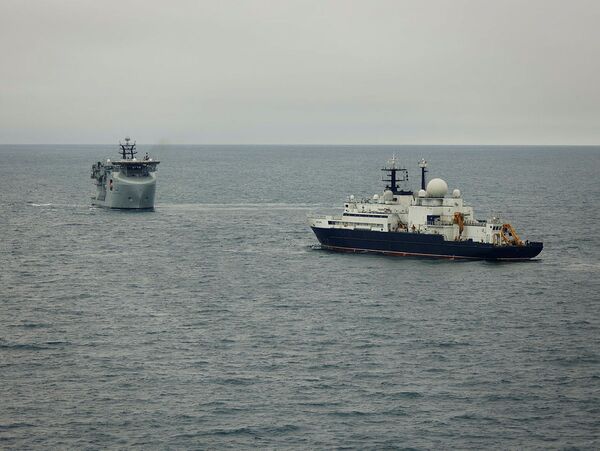

RFA Proteus (background), the UK's first underwater surveillance ship, shadowing the Russian intelligence gathering ship Yantar (foreground) in the Irish Sea in November 2024, is part of the UK's specialist CUI security capability. (Crown Copyright)
A UK parliamentary committee report has recommended that the Royal Navy (RN) develop specific operational outputs to tackle the enduring threat to critical underwater infrastructure (CUI).
The House of Lords Joint Committee on the National Security Strategy report – titled Subsea telecommunications cables: resilience and crisis preparedness , published in late September – said the United Kingdom's strategic reliance on CUI like seabed cables is likely to continue for the foreseeable future. It also pointed to a deteriorating security environment over the next decade, and to the UK's National Security Strategy and Strategic Defence Review (SDR) 2025 initiating significant preparations for future crises.
Regarding the CUI risk, “The UK faces a strategic vulnerability in the event of hostilities,” the report concluded. “Publicly signalling tougher defensive preparations is vital and may reduce the likelihood of adversaries mounting a sabotage effort in the first place.”
RN roles
Although noting that military operations to protect seabed CUI remain difficult, the report identified two new roles for the RN.
Go beyond the headlines - with direct links to interconnected entities
Get full access to validated equipment, military capabilities, and market insights.