DSEI 2025: Origin Robotics showcases Beak bomber and Blaze interceptor UAS


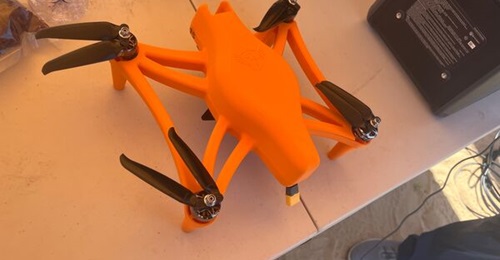
Origin Robotics' Blaze autonomous high-explosive C-UAS interceptor, displayed at DSEI 2025. (Janes/Sean Reardon)
Latvia-based Origin Robotics showcased its manportable bomber and interceptor unmanned aircraft system (UAS) at the Defence and Security Equipment International (DSEI) 2025 exhibition held in London from 9 to 12 September.
Blaze interceptor
Origin Robotics CEO Agris Kipurs told Janes at DSEI 2025 that the newly developed Blaze interceptor's manportable technology can be assembled and deployed within 10 minutes. Once deployed, Blaze has fully autonomous detection, take-off, and target acquisition capabilities.
Final human visual confirmation is prompted when the interceptor is within striking range of the target. The system is integrated with localised radar detection and sensors that identify hostile loitering munitions and UASs and automatically deploy the interceptor. The onboard radar system and electro-optic/infrared (EO/IR) sensor suite allow Blaze to autonomously identify and track a target and conduct an initial approach. The operator is then prompted to confirm whether to attack, return to base, or self-destruct; should communication be lost or critical failure occur.
Blaze is intended to intercept loitering munitions and UASs operating at speeds up to 200 kph within a 16 km range. Once in the terminal engagement phase, the interceptor strikes from beneath, detonating a high-explosive fragmentation charge into the target's fuselage. The system is currently in use with undisclosed NATO and allied NATO forces. The platform, while capable of engaging smaller first-person view (FPV) UASs, has a particular mission focus on countering the Shahed/Geran scale of threat, as it costs around one tenth of common air-defence missile systems.
Beak bomber
Go beyond the headlines - with direct links to interconnected entities
Get full access to validated equipment, military capabilities, and market insights.