US Army to trim UH-60 Black Hawk fleet
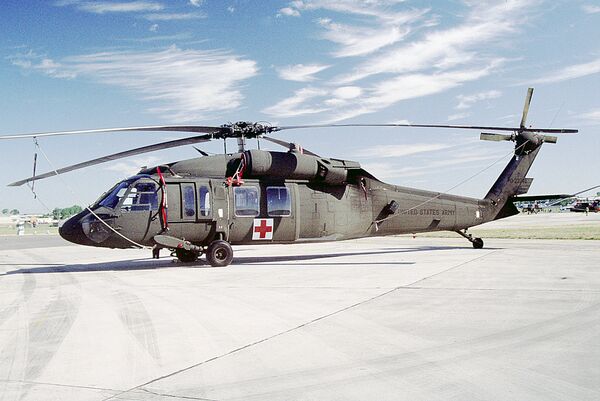

A US Army Sikorsky UH-60L in medical evacuation markings. (P Jackson)
The US Army is set to divest 157 Sikorsky UH-60 Black Hawk utility helicopters as the service sheds excess capacity and prepares for Bell V-280 Valor's entry into service.
“The majority of the reduction comes from older UH-60 Lima models along with a few remaining UH-60 Alpha models,” the Program Executive Office (PEO) for Aviation told Janes on 21 December.
The UH-60s are to be culled from units not deploying or preparing to deploy, PEO Aviation said.
The army today operates more than 600 UH-60Ls, according to Janes: World Armies.
“This is utility helicopter fleet optimisation,” PEO Aviation said. “The army grew its UH-60 fleet throughout [the wars in Afghanistan and Iraq], and now it is optimising the fleet for current end strength and fleet modernisation. The decision balances current and future readiness as the army prepares to procure the Future Long-Range Assault Aircraft (FLRAA).”
The army selected the Bell V-280 Valor to fulfil the service's FLRAA requirement in 2022, intended to augment and eventually replace the UH-60 fleet; its entry into service is scheduled for 2030.
The army's Boeing CH-47F fleet is set to undergo a similar review even as the service considers purchasing CH-47F Block IIs, which feature increased range among other modifications. The Boeing AH-64 attack helicopter fleet will not undergo such a fleet adjustment, PEO Aviation said.
Go beyond the headlines - with direct links to interconnected entities
Get full access to validated equipment, military capabilities, and market insights.