Second incident highlights Iranian threat to US unmanned fleet
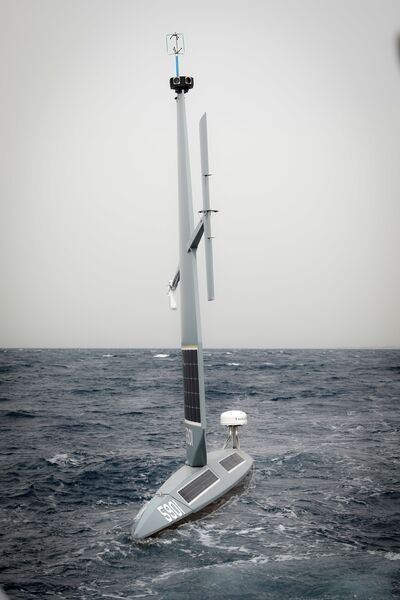

A Saildrone Explorer sails in the Gulf of Aqaba off Jordan during testing in December 2021. The latest incident confirmed that the 5th Fleet is using the type for very long-range patrols in the Red Sea. (US Naval Forces Central Command / US 5th Fleet)
Iran's naval forces have highlighted the vulnerability of the US 5th Fleet's new fleet of unmanned surface vessels (USVs) by seizing at least three in less than a week, claiming they were a threat to navigation.
Iranian television broadcasted footage on 2 September showing two Saildrone Explorer USVs on the flight deck of a frigate and then being pushed over the side by sailors.
Iranian media reported that IRIS Jamaran , a frigate that is part of the Islamic Republic of Iran Navy's (IRIN's) 83rd squadron patrolling the Red Sea, picked up the USVs after repeatedly finding them in shipping lanes and warning their operators that they were a hazard to navigation. The USVs were then released in a safe area where they were recovered by US units.
The 5th Fleet confirmed that Jamaran detained two Saildrone Explorers in the Red Sea on 1 September, saying the USVs were loitering in an assigned patrol area at least 4 n miles from the nearest shipping lane. “The vessels posed no risk to naval traffic and had been operating in the general vicinity of the southern Red Sea for more than 200 consecutive days without incident,” it said.
The destroyers USS Nitze and USS Delbert D Black
Go beyond the headlines - with direct links to interconnected entities
Get full access to validated equipment, military capabilities, and market insights.