AFRL to flight test LASH system for personnel recovery from light aircraft

The US Air Force Research Laboratory (AFRL) is to commence airborne evaluations of a helmet-mounted night-vision system designed to enable pilots to fly military personnel recovery missions at low-level and low-speeds in darkness.
Known as Project Lysander, the research effort is to use a CubCrafters XCub light aircraft recently acquired by AFRL to demonstrate the laboratory’s Low Altitude Sensing Helmet (LASH) system.
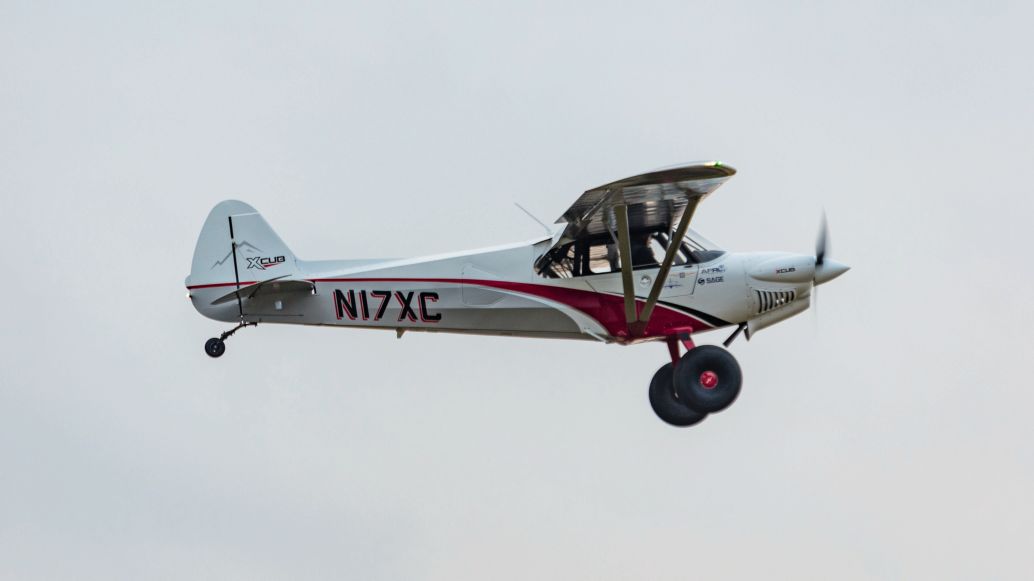
The XCub aircraft was ferried to the AFRL 711th Human Performance Wing’s contracted research flight test organisation facility in December 2020. The aircraft was acquired to support LASH testing. (AFRL)
Project Lysander is exploring the use of small general aviation aircraft to perform personnel recovery missions in both defended and undefended airspace, reflecting a view that the large aircraft previously used for such missions are unsuitable for operations in denied environments. The name Lysander is a homage to the Westland Lysander, a single-engine high-wing monoplane design used by the UK Royal Air Force in the Second World War for night exfiltration operations.
AFRL determined that carry-on equipment could endow the pilot with the sensory situational awareness required to fly safely, at night, at extremely low altitudes and slow airspeeds. The laboratory asked the 711th Human Performance Wing’s Airman Systems Directorate to lead the research effort that ultimately produced the portable LASH kit.
After studying mission requirements and aircraft capabilities, AFRL researchers designed the LASH equipment using mostly commercial-off-the-shelf components, including a flight helmet, a thermal camera, and night-vision goggles. The equipment has been packaged into a compact, one-person carry-on system that can be temporarily installed in most small aircraft without modification.
Go beyond the headlines - with direct links to interconnected entities
Get full access to validated equipment, military capabilities, and market insights.