
skip to main content
White Paper

Details

European defence spending has entered a new era. Following years of sustained growth, defence budgets across the continent are substantially higher than they were before 2022, creating significant opportunities across procurement, capability development, and industrial cooperation. However, growing investment is only part of the story. As governments seek to modernise armed forces, address capability gaps, and strengthen defence resilience, organisations must navigate a complex and fragmented market landscape.

In this white paper, Janes examines how increased defence spending is translating into capability transformation, where the most significant opportunities will emerge through 2035, and what industry leaders need to understand to align strategy with evolving defence priorities. Janes validated intelligence connects budgets, programmes, and capabilities to help organisations identify opportunities, anticipate change, and make better-informed decisions.

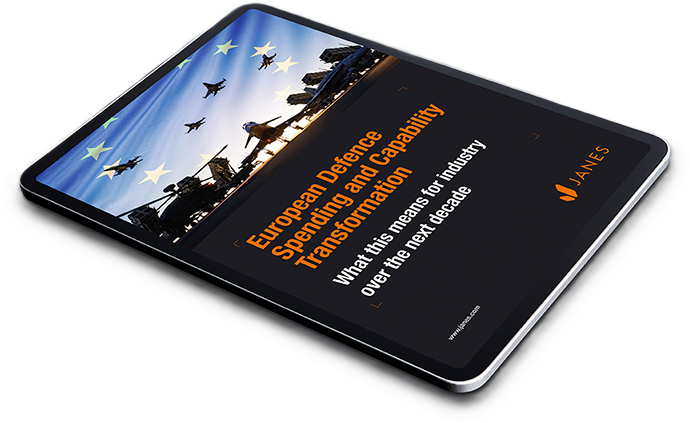
European Defence Spending and Capability Transformation

What You'll Learn

  • European defence spending is significantly higher than before the full-scale invasion of Ukraine, with acquisition expenditure increasing at an even faster rate.
  • Procurement and delivery activity is expected to exceed USD 3.4 trillion through 2035.
  • Demand spans multiple capability areas, including air and missile defence, weapon systems, unmanned systems, platforms, and C4ISR.
  • Defence organisations are prioritising integrated, networked capabilities that support operational effectiveness and decision advantage.
  • Delivery capacity, industrial resilience, and the ability to execute at scale are becoming key differentiators in an increasingly competitive market.  

Never miss updated intel from Janes.

Signup for our newsletter to receive the latest developments in defence and security.

Message Received!

Message received. Thank you for getting in touch, our team will reach out to you soon.


In the meantime... check out our OSINT insights