Omani SSF operating self-propelled mortar
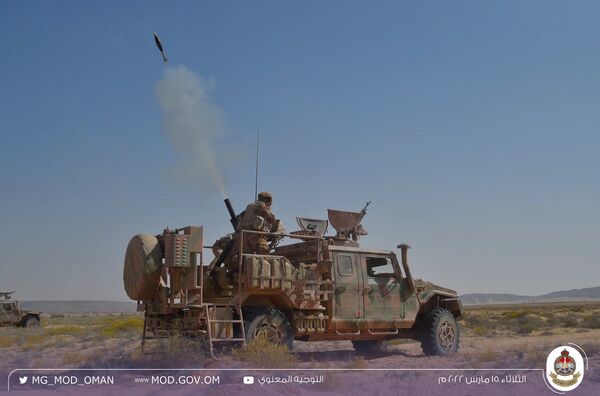

Omani soldiers firing what appears to be an ESLAIT A3MS. (Omani Ministry of Defence)
The Omani Sultan's Special Force (SSF) is using an advanced, low-recoil mortar system, coverage of its annual day event on 15 March revealed.
A montage of training footage broadcast by Omani television showed SSF soldiers firing a weapon from the back of a VAMTAC tactical vehicle that appeared to be the 81 mm variant of the Advanced Automatic Autonomous Mortar System (A3MS) promoted by the Austrian company ESL Advanced Information Technology (ESLAIT).
ESLAIT uses photographs of the A3MS and the associated Hawk electro-optical targeting system mounted on VAMTACs in its promotional material, as well as Omani G6 self-propelled howitzers. The Hawk and A3MS are linked by the company's Mortar Command Control System (MCCS) so that targeting data can be rapidly transferred to the weapon, which automatically lays on to the co-ordinates.
The A3MS is similar to the Cardom made by the Israeli company Elbit Systems. When the Danish military announced in 2017 that it was buying 120 mm Cardom 10 mortar systems from ESLIAT, it identified the company as an Elbit subsidiary, although this is not stated on either companies' website.
However, the Omani mortar is visually different from the VAMTAC-mounted 81 mm Cardom variant the Spanish Army acquired from Elbit in 2012 for use in Afghanistan, most noticeably in that it does not have a prominent shield around its barrel.
Go beyond the headlines - with direct links to interconnected entities
Get full access to validated equipment, military capabilities, and market insights.