Hellenic Navy conducts Spike missile acceptance firings
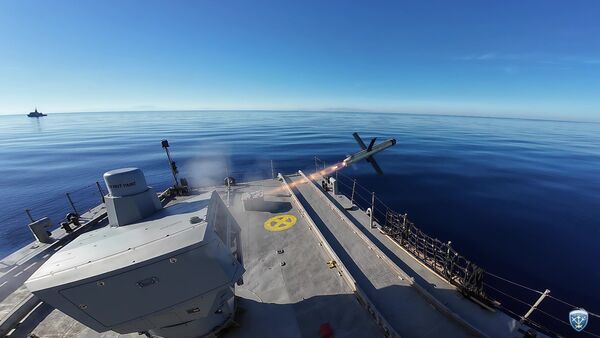

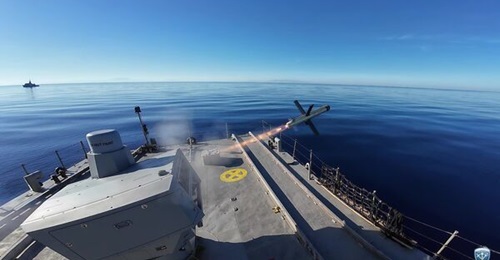
Hellenic Navy conduct acceptance firing of Spike NLOS missile in the North Cretan Sea on 21 October 2026. (Hellenic Navy)
The Hellenic Navy (HN) conducted acceptance firings of Spike non-line-of-sight (NLOS) and extended-range (ER) missiles during a joint exercise with the Israeli Navy's Missile Ships Flotilla (Flotilla 3) in the Mediterranean Sea on 21 October 2026, the HN announced on 23 October.
An HN Machitis-class gunboat and a Mark V special operations craft fired the missiles at the decommissioned HN frigate Bouboulina (F 463), which served as the target. An HN submarine subsequently sank the vessel with an SUT torpedo. The HN did not specify which craft launched each missile variant or whether both craft fired ER and NLOS missiles.
The HN described the launches as acceptance firings but did not identify the equipment being accepted or say whether the activity related to newly delivered missiles, launch systems, or their integration aboard the two craft types.
Separately, Rafael announced Greece's procurement of naval-, air-, and land-based Spike missiles in April 2023. Neither government disclosed the quantities acquired, the allocation between variants and services, or the value and delivery schedule of the naval component. No official source has confirmed that the agreement was associated with the latest firings. The procurement followed a Rafael presentation to the HN on naval Spike ER/NLOS on 10 February 2021.
Go beyond the headlines - with direct links to interconnected entities
Get full access to validated equipment, military capabilities, and market insights.