Marine AI outlines autonomous sonar and NATO tasking at REPMUS
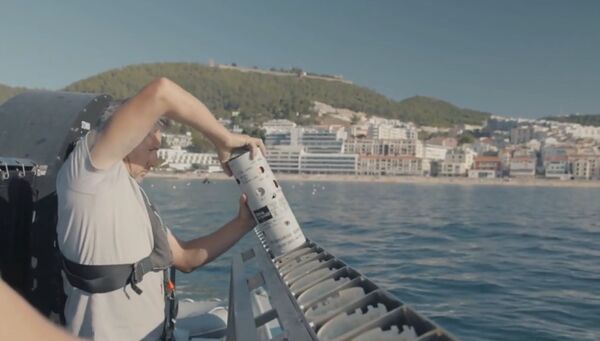

Sonobuoys being loaded into launch racks on a USV during the REPMUS exercise in Portugal in September 2026. (MarineAI)
UK maritime software developer Marine AI said its GuardianAI Orion autonomy system enabled the autonomous deployment of a variable depth sonar (VDS) and receipt of live NATO tasking during Exercise Robotic Experimentation and Prototyping using Maritime Unmanned Systems (REPMUS) 2026 in Portugal.
The company outlined its experience in a webinar on 29 October 2026. It described the VDS deployment as a “world first” and reports mid-mission sonobuoy deployment in collaboration with the UK Defence Science and Technology Laboratory (Dstl).
Company representatives said during the webinar that during the exercise, a total of 40 of Lockheed Martin subsidiary Ultra Maritime's acoustic sonobuoys were deployed from the port and starboard sides of an Oceanus USV. The USVs are manufactured by UK company ZeroUSV.
In terms of an operational scenario, MarineAI's chief technology officer, Don Scott, explained: “ZeroUSV comes on the scene, it reports that it's available, and central command can tell it to transit to a specific location. Central command doesn't really care how it gets there, what it needs to do to get there, such as steering around an island or avoiding a bunch of container ships. Once it's there, it can be tasked to survey or patrol an area.”
REPMUS (Robotic Experimentation and Prototyping using Maritime Unmanned Systems) ran from 31 August-25 September 2026 in Portugal's Troia area. NATO said the exercise brought together allied and partner navies, industry, and research organisations to test unmanned maritime vehicles and their integration with conventional forces.
Go beyond the headlines - with direct links to interconnected entities
Get full access to validated equipment, military capabilities, and market insights.