DragonFire laser programme accelerates to equip UK Royal Navy ships
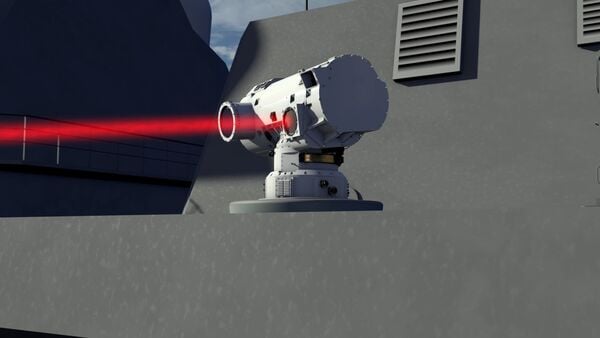

The Royal Navy is planning to deploy the DragonFire laser weapon (pictured) from one of its warships in 2027. (Crown Copyright)
The UK Royal Navy (RN) will install the DragonFire laser directed energy weapon (LDEW) onboard one of its warships five years earlier than planned under new procurement reforms introduced by the UK Ministry of Defence (MoD) in April.
Announcing the accelerated schedule on 12 April, the RN said that earlier plans to deploy the system in 2032 are being brought forward to 2027 as the need for weapons to counter drones and missile threats – such as those fired by Ansar Allah (Houthi) rebels – continues to grow.
The decision will see the DragonFire laser weapon system rapidly developed from a demonstration programme to an operational capability for the RN.
“We recognise this cutting-edge UK laser weapons technology as highly relevant and the need to accelerate it into service onboard our ships at the earliest opportunity,” said Captain Matt Ryder, head of Above Water Battlespace in the RN's Develop Directorate.
“Noting the quantity and varied sophistication of air and missile threats seen in the Southern Red Sea, we see a very relevant and current example of where laser weapons could provide an additional layer of defence to protect shipping at a potentially much lower cost per shot and without the inherent onboard magazine and silo capacity constraints associated with interceptor missiles,” he added.
Go beyond the headlines - with direct links to interconnected entities
Get full access to validated equipment, military capabilities, and market insights.