Schiebel tackles icy conditions with S-100 Camcopter UAV
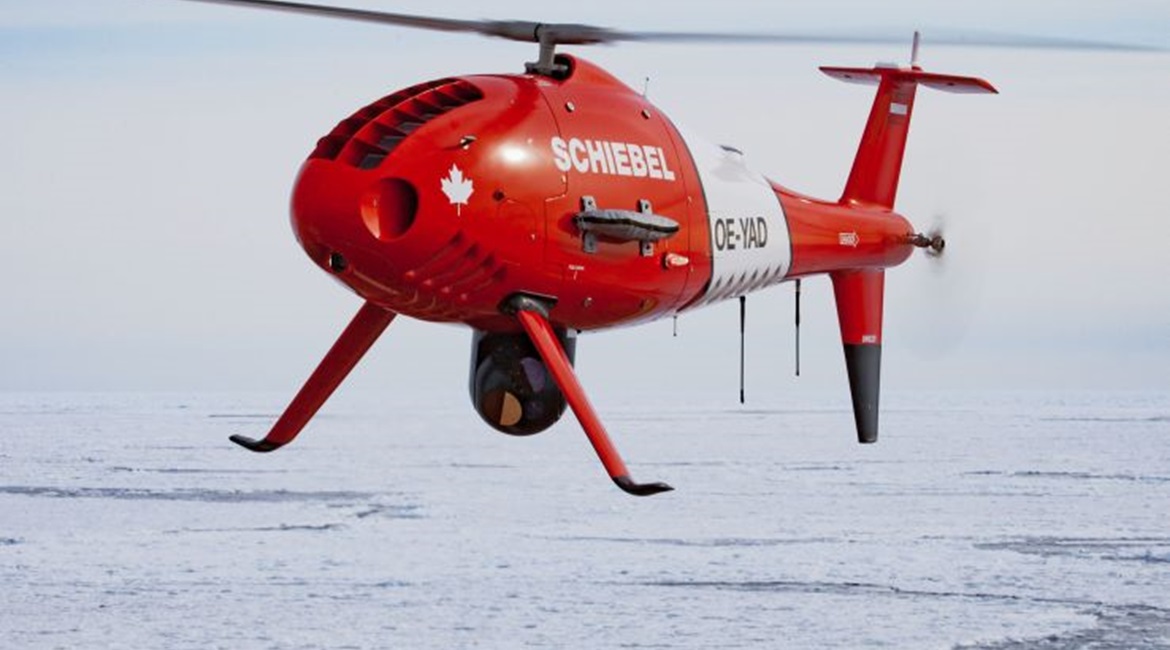
A compact aircraft design and fast spinning rotor are a few of the technical designs that enable Schiebel’s S-100 Camcopter unmanned rotorcraft to perform in icy conditions.
Icing is dangerous to both fixed-wing and rotor-propelled aircraft because it adds weight as it accumulates. This additional weight not only limits performance as it accrues by forcing the engine to work harder, but it can, in a worst-case scenario, cause an aircraft to crash.

The Schiebel S-100 Camcopter UAV has unique features, such as a compact design that heats components, which enables it to fly in icy conditions. (Schiebel)
Chris Day, Schiebel chief technology officer (CTO), told Jane’s on 5 June that the -4° to 4° Centigrade temperature range is where aircraft are most vulnerable to icing due to high levels of moisture in the air. Day said the S-100’s compact design, with barely a finger’s worth of space between any two components, allows for parts to heat each other.
The biggest contributors of heat in the S-100 are the engine, exhaust, and gearbox. The combination of these parts, Day said, also warms critical components that operate outside the aircraft in the cold temperatures.
The S-100 is a vertical take-off and landing (VTOL) aircraft that does not need a prepared area or supporting launch or recovery equipment. The aircraft navigates automatically via pre-programmed Global Positioning System (GPS) waypoints or can be operated directly with a pilot control unit. The aircraft has a range of out to 200 km, both on land and at sea, and has an endurance of up to six hours.
Go beyond the headlines - with direct links to interconnected entities
Get full access to validated equipment, military capabilities, and market insights.