Poland orders SHORAD with CAMM effectors
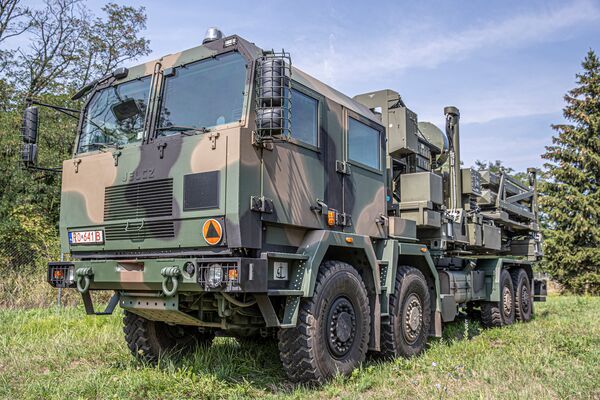

The Polish MND signed a contract with the PGZ-Narew consortium on 14 April for a SHORAD system with a CAMM system (pictured above is the MBDA iLauncher on Jelcz chassis). (PGZ)
The Polish Ministry of National Defence (MND) signed a contract with the PGZ-Narew consortium on 14 April for a ground-based short-range air-defence system (SHORAD) based on the MBDA Common Anti-Air Modular Missile (CAMM) system.
The Polish army will receive two firing units with three MBDA CAMM iLaunchers each integrated into a Polish Jelcz 8×8 truck chassis, transporter and loader vehicles, and deployable Soła 3D radars. The first unit is expected to be delivered in September and the second one in the end of 2022 or in the beginning of 2023. Under the contract, the value of which has not been disclosed, logistics and training support will be provided.
The PGZ-Narew consortium will integrate MBDA effectors and launchers with Polish-made sensors and a command-and-control (C2) system. The first two firing units will constitute a preliminary Narew SHORAD configuration, which will be improved.
Armaments Agency spokesperson Lieutenant Colonel Krzysztof Płatek told Janes that, in future, the Soła radars would be replaced by Sajna fire-control radars under development. Moreover, the CAMM batteries will be plugged into the Polish C2 system, which Lt Col Płatek said would be developed based on PGZ solutions and integrated with the original effector system.
Go beyond the headlines - with direct links to interconnected entities
Get full access to validated equipment, military capabilities, and market insights.