Ocius, UNSW collaborate to improve Bluebottle USV operations


Ocius hybrid-powered Bluebottle variant, which supplements the renewable energy sources with a 400-litre diesel generator. (Defence Trailblazer )
Ocius Technology is collaborating with the University of New South Wales (UNSW) Canberra to advance control systems for its Bluebottle unmanned surface vehicle (USV).
Under an arrangement announced on 3 July, Ocius will work with the Decision Support & Analytics Research Group (DSARG) at UNSW Canberra to develop autonomous control systems that optimise Bluebottle's power usage while enhancing sailing performance and autonomous decision-making.
The project is supported by Defence Trailblazer, a government-backed initiative that promotes collaboration between Australian universities and industry.
Defence Trailblazer said the project will also develop a “predict-then-optimise” power-consumption model for Bluebottle that integrates artificial intelligence (AI)-driven predictions of vessel behaviour.
The model will incorporate sailing-performance predictions under varying conditions, propulsion systems management for greater efficiency, and a power model to improve performance while minimising energy consumption.
The model will also integrate an advanced autopilot capability, enabling a single operator to manage multiple vessels simultaneously.
Nick Rozenauers, Ocius project investigator, said, “By integrating a more advanced autopilot system, the Bluebottle will require significantly less human oversight, reducing crew workload and enabling the [Royal Australian Navy (RAN)] to optimise its force structure.”
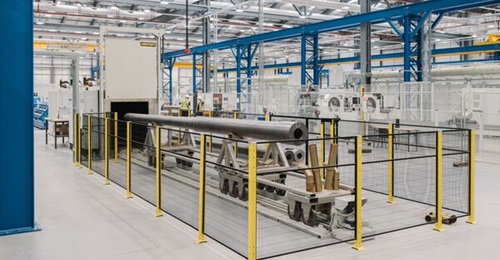
This is the second research and development (R&D) project involving Ocius and UNSW Canberra focused on Bluebottle. In July 2025, Defence Trailblazer announced that the two organisations had initiated a project to establish an integrated Bluebottle production and maintenance facility and an AI-powered logistics support framework.
The initial aim of that project was to design a “flexible workspace layout” to support efficient manufacturing and rapidly meet growing RAN demand.
The next phase will develop a predictive-maintenance model tailored for integrated logistics support.
Go beyond the headlines - with direct links to interconnected entities
Get full access to validated equipment, military capabilities, and market insights.