Special Report: Amentum proposes distributed sustainment architecture for Australian Army
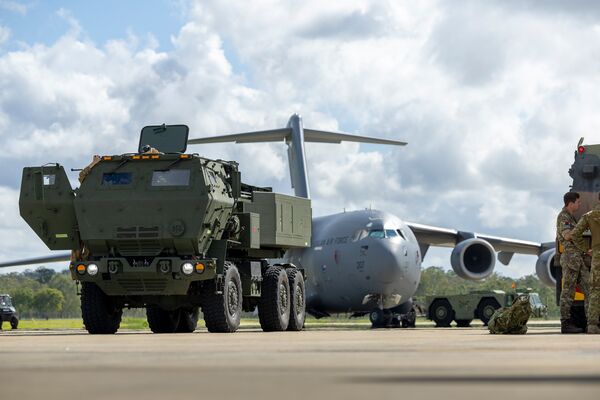

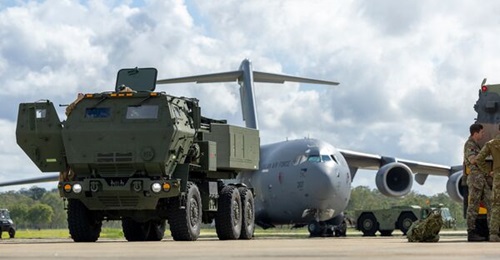
An Australian Army HIMARS during a rapid-deployment exercise. (Commonwealth of Australia)
As the Australian Army prepares to field long-range strike, air-defence, and littoral manoeuvre capabilities, the challenge of sustaining dispersed forces across the Indo-Pacific is emerging as a key focus area for the Australian defence industry.
At Land Forces 2026, Amentum Australia showcased a contested-logistics concept designed to help the Australian Defence Force (ADF) maintain operations when traditional supply chains and infrastructure come under pressure.
Speaking to Janes on 2 October, ahead of Land Forces 2026, Georgia Cater, Amentum Australia's group director of growth and strategy, said the company's focus is centred on helping the ADF sustain dispersed forces operating far from traditional support infrastructure.
The emphasis reflects broader changes under Australia's National Defence Strategy (NDS) 2024. The NDS 2024 prioritises deterrence, long-range strike, northern force posture enhancements, and greater operational readiness, while identifying theatre logistics, supply-chain resilience, fuel security, and force mobilisation as key enablers of the ADF's transition to an integrated, focused force.
For the Australian Army, this transformation includes the introduction of the Lockheed Martin M142 High Mobility Artillery Rocket System (HIMARS), Raytheon-Kongsberg National Advanced Surface-to-Air Missile System (NASAMS) batteries, long-range precision strike munitions, and expanded littoral manoeuvre capabilities.
Cater said the sustainment challenge associated with these capabilities extends beyond maintaining individual platforms. “HIMARS, for example, need to be moved rapidly, so the logistics system has to be capable of doing the same thing,” she said.
Go beyond the headlines - with direct links to interconnected entities
Get full access to validated equipment, military capabilities, and market insights.