Republic of Korea Army completes Surion acquisition
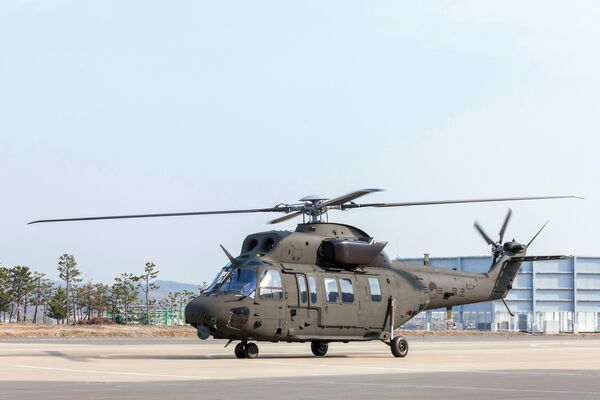

South Korea's DAPA has said that KAI Surion's engine powertrain will be improved to ensure the helicopter's combat effectiveness. (KAI)
The Republic of Korea Army (RoKA) has completed its acquisition of Korea Aerospace Industries (KAI) KUH-1 Surion helicopters, the Defense Acquisition Program Administration (DAPA), the national arms procurement agency, said on 24 June.
The announcement by DAPA comes over a decade after the first Surions were delivered to the RRoKA in December 2012, according to DAPA. KAI added that it has delivered the final Surion to the RoKA in 4 June. “With the delivery of the final unit [to the army], KAI has ended the army Surion production project that has continued for approximately 14 years since the first production began in December 2010,” the company said.
According to DAPA, the RoKA formally announced completion of the Surion acquisition on 24 June. The announcement indicates that the army has 210 KUH-1s and 8 KUH-1Ms in service, according to Janes data.
According to DAPA, the fleet will be subject to periodical improvements. Cho Hyun-ki, deputy minister of DAPA's Current Capability Program, said that improvements will be introduced to ensure that the Surion's performance stays “in-line” with worldwide rotary-wing advances.
According to DAPA, a project is under way to improve the helicopter's engine powertrain system. “Performance improvements are [also] planned to enhance pilot and crew survivability,” DAPA said.
Go beyond the headlines - with direct links to interconnected entities
Get full access to validated equipment, military capabilities, and market insights.