Strike payload makes SSGNs increasingly valuable for global missions
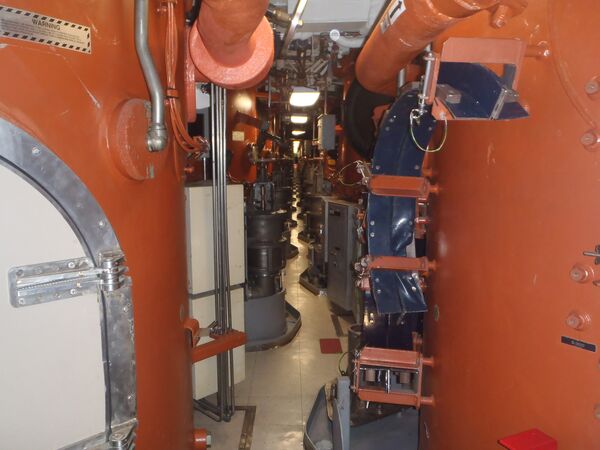

With their modified missile tubes, shown here on USS Ohio , SSGNs can launch 154 Tomahawks. (Janes/Michael Fabey)
A great deal of the sales pitch for the guided missile submarine (SSGN) conversion – and the recent acclaim for the submarine's operational potential – was and remains focused on the ability to deliver and then launch 154 Tomahawk Land Attack Missiles (TLAMs) from a single platform at a single place and time in a stealthy manner.
“People don't understand the payload we bring,” Captain Eric Hunter, commanding officer of USS Ohio (SSGN 726), told Janes on 12 August during a two-day tour and set of briefings aboard the submarine as it conducted operations in the Pacific Ocean off the coast of Guam.
“[This is] what [a] strike looks like from a [guided missile] submarine – to hold a whole region at risk versus a small area. Not until I came to the [SS]GN did I see the interest of the combatant commanders – where they want us, who gets us, [and] what the nation needs from us. It's tangible.”
Lieutenant Isabella Back, Ohio assistant weapons officer, told Janes during an interview on the submarine, “Naval strike is a big part of what we're doing in the world. Submarines are important to that. I don't think anything will replace what the [SS]GN is capable of because a retrofitted Ohio hull is difficult to replicate. The benefit of a retrofitted boomer is that [it] outnumbers [in terms of Tomahawks carried] any DDG [guided missile destroyer] and any Virginia [-class attack submarine].”
Go beyond the headlines - with direct links to interconnected entities
Get full access to validated equipment, military capabilities, and market insights.