Serbia displays new radar during exercise


The Serbian Armed Forces is deploying the DRS RADA MHR radar (right), revealed during the ‘Fire strike 2024' live training exercise held in July. (Vojska Srbije)
The Serbian Armed Forces (Vojska Srbije: VS) is deploying the DRS RADA Technologies' 3D multimission hemispheric radar (MHR), it was revealed during an experimental tactical live shooting Exercise ‘Vatreni udar 2024' (‘Fire strike 2024') held at Pasuljanske Livade training ground in Serbia on 4 July.
Known locally as Kobac-1 (Sparrowhawk-1), the MHR system is employed with the VS as a “primary sensor for [the] detection and identification of unmanned aerial vehicles (UAVs) and drones”, the exercise moderator described in a video published by local news company Alo.
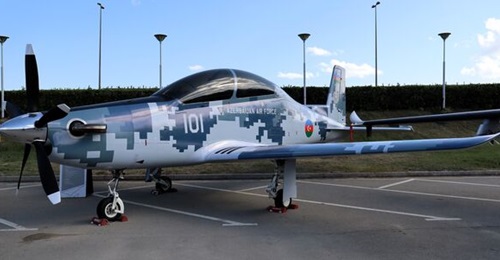
Kobac-1 should not be mistaken with ‘Kobac', a designation for an indigenous light attack aircraft being developed based on the Serbian Utva Lasta-95 light military trainer aircraft.
The MHR is an S-band (2–4 GHz) 3D pulse-Doppler surveillance radar designed to detect, classify, and track aerial and surface threats such as slow and small aircraft, vehicles, vessels, and pedestrians at ranges of up to 40 km. Along with its counter-unmanned aircraft system (C-UAS) applications, the MHR can be used in very short-range air defence (VSHORAD) and Counter Rocket, Artillery, and Mortar (C-RAM) missions. The system is in-service with Israel, the UK, and US.
For more information on the radar, please seeRADA 3D perimeter surveillance radars .
Go beyond the headlines - with direct links to interconnected entities
Get full access to validated equipment, military capabilities, and market insights.