Conflict lessons show need for small, distributed C-UAV radars, says Leonardo
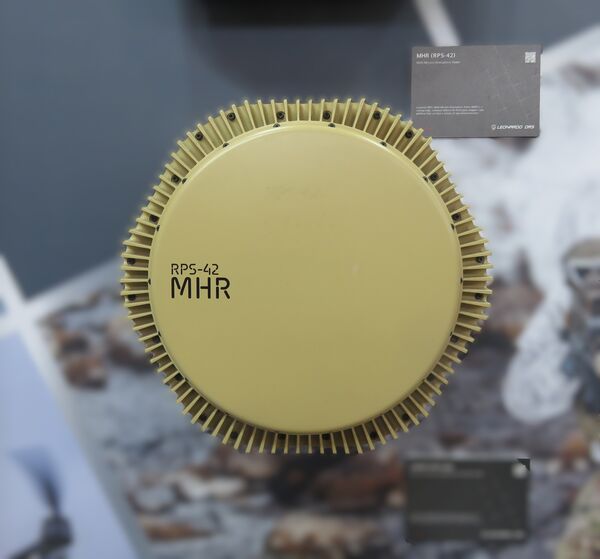

Leonardo DRS's Multi-Mission Hemispheric Radar (MHR) displayed at Eurosatory 2026. (Giles Ebbutt)
In counter-unmanned aerial vehicle (C-UAV) operations one size of system does not fit all, and large, exquisite air defence and counter-missile systems are not always a match for UAVs, Leonardo DRS has told Janes .
In Israel, Ukraine, and in the Gulf the locations of exquisite systems are often known, and they can be overwhelmed through weight of UAV numbers. “If you supply enough drones, you can take them out, and so very expensive, ground-based, and in the case of Israel, even aerostat-type sensor systems get taken out very early in the conflict,” Bill Guyan, Leonardo DRS senior vice-president and general manager, land electronics, told Janes at the Eurosatory 2026 exhibition in June.
He said that Leonardo DRS is supplying several of its technologies to clients to try and address threats which have emerged from current conflicts in Ukraine and the Middle East.
“What we've seen through our fielded base of radars in Israel and in Ukraine is that both nations have been able to network together our smaller, lower cost mobile radars, first of all to create gap fillers for the more exquisite systems and secondly to create a resilient backup for the exquisite systems when they get targeted and destroyed. Also [having] mobile radars means that you can rapidly move to fill a gap and network it into a solution,” Guyan said.
Go beyond the headlines - with direct links to interconnected entities
Get full access to validated equipment, military capabilities, and market insights.