Afghan withdrawal exposes critical data management gaps
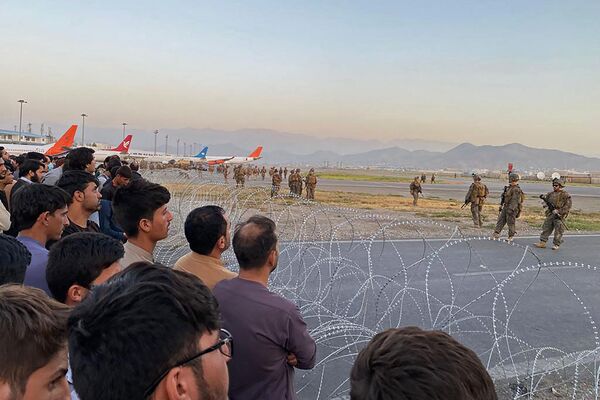

Afghan crowds gather at the airport as US soldiers stand guard in Kabul on August 16, 2021. (AFP via Getty Images)
The chaotic withdrawal of US armed forces from Afghanistan exposed a series of critical gaps in tactical-level data management operations, prompting senior US Department of Defense (DoD) leaders to reconsider whether American and allied forces are prepared to wage war on an increasingly networked battlefield.
The inability for US armed forces to have timely access to vital data feeds and sources, providing information on everything, from basic combat situational awareness to active threats facing US force protection units, was one of several battlefield information failures that faced American and allied units overseeing the pull-out from Afghanistan. Those failures and the subsequent challenges they posed to US armed forces on the ground in Kabul “exemplified what a future joint war fight might look like in terms of data”, said US Army Brigadier General Rob Parker.
Gen Parker, who serves as the deputy director for the Joint Staff's command, control, communications and computers, and cyber directorate, said the problems that plagued the Pentagon-led effort during the final tumultuous and deadly weeks of the US mission in Afghanistan ran the gamut, from gaining reliable access to “authoritative data sources” to having the data-sharing policies and authorities in place to co-ordinate with international allies – as well as other US government agencies working the withdrawal mission – in Kabul and elsewhere across Afghanistan.
Go beyond the headlines - with direct links to interconnected entities
Get full access to validated equipment, military capabilities, and market insights.