US Army to test UAS, UGV voice control through experimental units


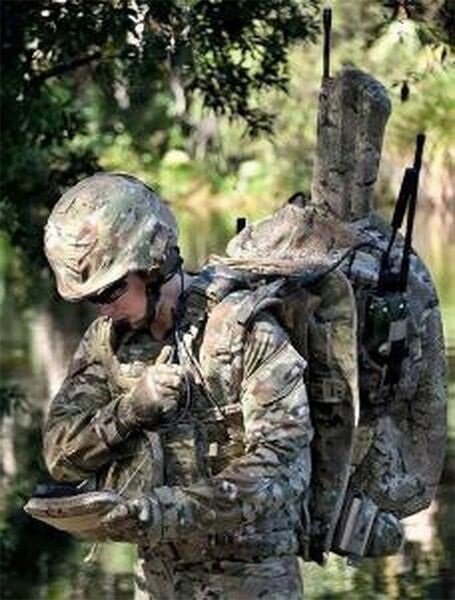
US Army Special Forces' soldiers are able to control UASs using their voices with Primordial Labs' Anura software. (Janes/Meredith Roaten)
Soldiers will test a voice command software paired with multiple unmanned aircraft systems (UASs) as part of a series of exercises with US Army Transformation in Contact (TiC) units, executives told Janes on 27 February.
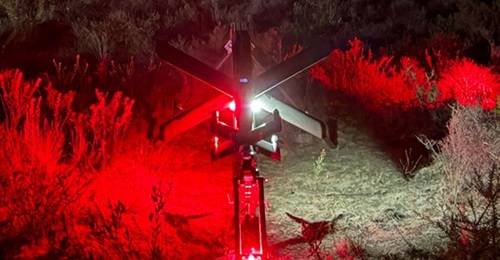
Primordial Lab's software Anura will be connected with three different types of small UAS over the following months through formations in the 10th Mountain Division and the 3rd Infantry Division, Lee Ritholtz, CEO of Primordial Labs, told Janes at a media demonstration in Leesburg, Virginia. During the demonstration, operators flew Teal Drones' Black Widow and Skydio's X10D using their voices to mimic how US Army Special Operations Command like Green Berets and Rangers are using the software to command UAS.
Anura can operate across all of the UAS that TiC 2.0 units will be equipped with: Soldier Borne Sensor (SBS), Short Range Reconnaissance (SRR), and materiel prototypes for the two candidates for Medium Range Reconnaissance (MRR). Black Hornet 4 is the programme of record system for SBS, and Black Widow is the programme of record system for the second tranche of SRR.
Primordial Labs is working on contracts across four Program Executive Offices (PEOs) and five equipment manufacturers, a company spokesperson told Janes on 4 March.
The army has a “minimum of 8,000 Anura licences in 2025 to support experimentation, testing, and training of major army human-machine integrated formation initiatives”, the spokesperson added.
The TiC unit experimentation could also involve working with unmanned ground vehicles (UGVs) in the army, said Ritholtz. He declined to say which specific platforms but said the company is working with PEO Ground Combat Systems.
Go beyond the headlines - with direct links to interconnected entities
Get full access to validated equipment, military capabilities, and market insights.