Navy League 2024: MQ-4C Triton programme picks up speed after attaining IOC
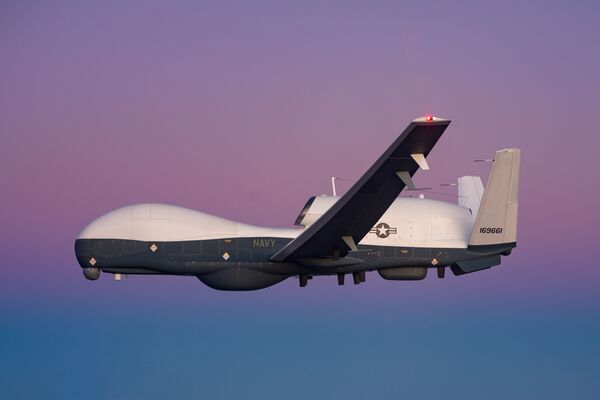

An MQ-4C maritime unmanned aerial vehicle in flight. (Northrop Grumman)
Northrop Grumman's MQ-4C Triton unmanned maritime intelligence, surveillance, and reconnaissance (ISR) aircraft achieved initial operational capability (IOC) with the latest multi-intelligence (multi-INT) Integrated Functional Capability–4 (IFC-4) in August 2023. The first orbit of four air vehicles is operating with 7th Fleet out of Guam.
Since reaching IOC, the MQ-4C is meeting the fleet's mission capability rate requirement and has become an integral ISR capability for US Indo-Pacific Command (INDOPACOM) as well as bringing a high level of maritime domain awareness, Rho Cauley-Bruner, the Triton programme director for Northrop Grumman told Janes on 4 April, ahead of the Navy League Sea-Air-Space 2024 global maritime exposition held from 8 to 10 April in National Harbor, Maryland.
The US Navy (USN) has begun building its next orbit for 6th Fleet at Naval Air Station Sigonella, Italy, where the first MQ-4C arrived on 30 March, according to a navy statement on 1 April. This marks the start of work to stand up the orbit, with operations expected to begin soon, Cauley-Bruner said.
Later in 2024 work will begin to stand up the third orbit with 5th Fleet in the Middle East. Northrop Grumman hopes to see the same positive performance from the MQ-4C as the other orbits stand up, meeting the specific mission requirements of those regions, she said.
Go beyond the headlines - with direct links to interconnected entities
Get full access to validated equipment, military capabilities, and market insights.